Mohammad Bagher Ghalibaf: Iran’s executive pivot in a time of turbulence
As Iran navigates a post-Larijani power vacuum, Ghalibaf emerges at the crossroads of security, politics, and governance—shaping both domestic strategy and regional influence.
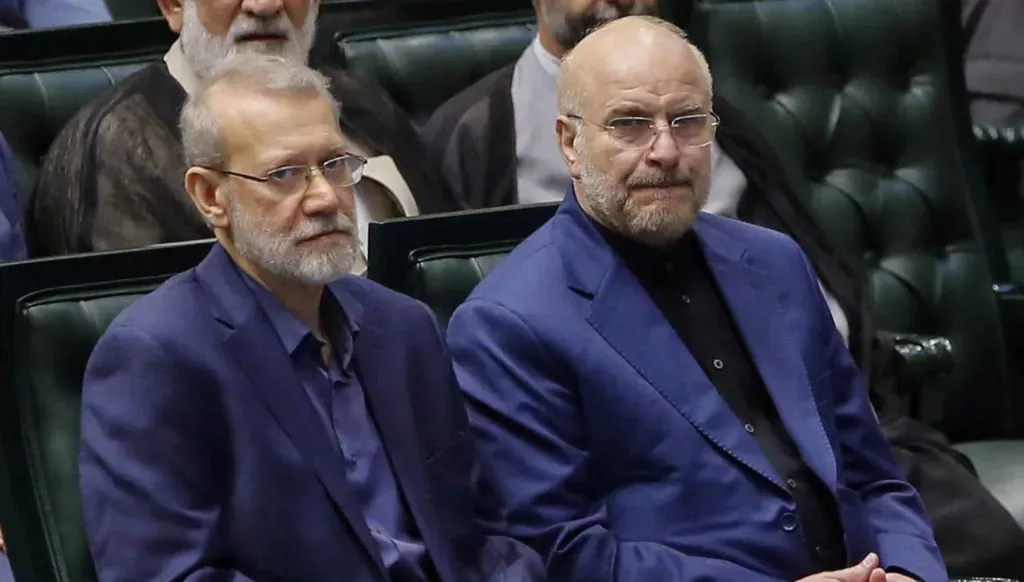
(From the right) Mohammad Bagher Ghalibaf and Ali Larijani.
With the absence of Ali Larijani from the heart of the Iranian regime, the search for a new figure begins, and Mohammad Bagher Ghalibaf returns to the forefront.
Following the assassination of Ali Larijani, the secretary of the Supreme National Security Council and the man considered the "de facto leader" of Iran during the transitional phase in March 2026, the absence of this pivotal figure did not merely highlight the situation but opened the door to a reorganization of the balance of power within the regime.
In this vacuum, the name of Mohammad Bagher Ghalibaf, the current parliament speaker, emerges as a prominent candidate to fill the leadership gap.
The pressing question today is: why Ghalibaf in particular, and is he truly the right man for the next phase?
Mohammad Bagher Ghalibaf (born 1961) is a rare figure within the Iranian regime who combines a military background with executive experience and political influence. He began his career in the Revolutionary Guard at an early age, distinguishing himself as one of its leaders during the Iran-Iraq War, later heading the Guard's Air Force from 1997 to 2000 and contributing to its capabilities, including missile programs. He then transitioned into security, serving as head of the internal security forces in 2000, where he oversaw a modernization process while maintaining a strict approach to protests.
He solidified his image as an executive during his tenure as Tehran's mayor (2005–2017) through extensive infrastructure projects, despite facing numerous corruption allegations. Since 2020, he has served as the Speaker of the Islamic Consultative Assembly and is also a member of the Supreme National Security Council. In short, he is a former general, an experienced executive, and a central political figure within the regime.
Why is Mohammad Bagher Ghalibaf's name being raised now?
The mention of Ghalibaf's name at this moment is not incidental but reflects a structural need within the regime. He possesses dual expertise, combining field security experience with the capacity to manage state institutions during crises.
His proximity to decision-making centers positions him as a trusted figure within the upper echelons, with strong connections to both the Revolutionary Guard and the broader political establishment.
After Mojtaba Khamenei's appointment as leader, there is a clear lack of executive experience, making Mohammad Bagher Ghalibaf the choice to provide the regime's "executive arm," particularly in coordinating security, politics, and managing sensitive files.
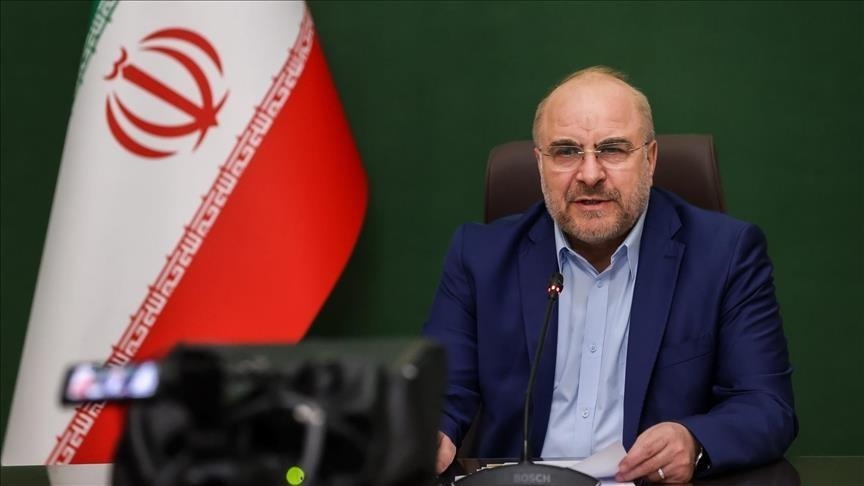
Mohammad Bagher Ghalibaf
What does Mohammad Bagher Ghalibaf represent within the regime?
Ghalibaf does not merely represent an individual but embodies a specific model within the power structure. He represents the new conservative current, a faction that blends ideology with pragmatism in state governance.
Ghalibaf's role as an extension of the Revolutionary Guard, being a product of the military institution, grants him legitimacy within security and military agencies. He may not be the most ideological, but he is the most "manageable."
Despite his strong presence, power in Iran cannot be reduced to a single person; decisions are not made individually but rely on a balance among several power centers.
The power triangle in Iran consists of the leader (the religious institution), the Revolutionary Guard (the military institution), and the political bureaucracy (government and parliament).
Ghalibaf's role is not that of a "ruler," but of an executive coordinator who manages interactions among these centers. His membership in the Supreme National Security Council gives him direct influence in shaping strategic decisions, particularly following Larijani's absence.
In this context, scenarios linked to the rise of Mohammad Bagher Ghalibaf span three potential paths. The first envisions his transformation into the de facto leader of the regime, effectively managing the state behind the façade of Mojtaba Khamenei's leadership, potentially steering Iran toward a model closer to a security-military republic where the security institution dominates other institutions. The second scenario sees Ghalibaf playing a functional interim role, limited to managing the current crisis and ensuring systemic transition, before roles are redistributed to reflect internal power balances. The third scenario allows for the possibility that he may be a temporary figure, with his rise obstructed by internal opposition, especially in light of the corruption files previously pursued against him, potentially limiting his chances of securing a permanent position within the power hierarchy.
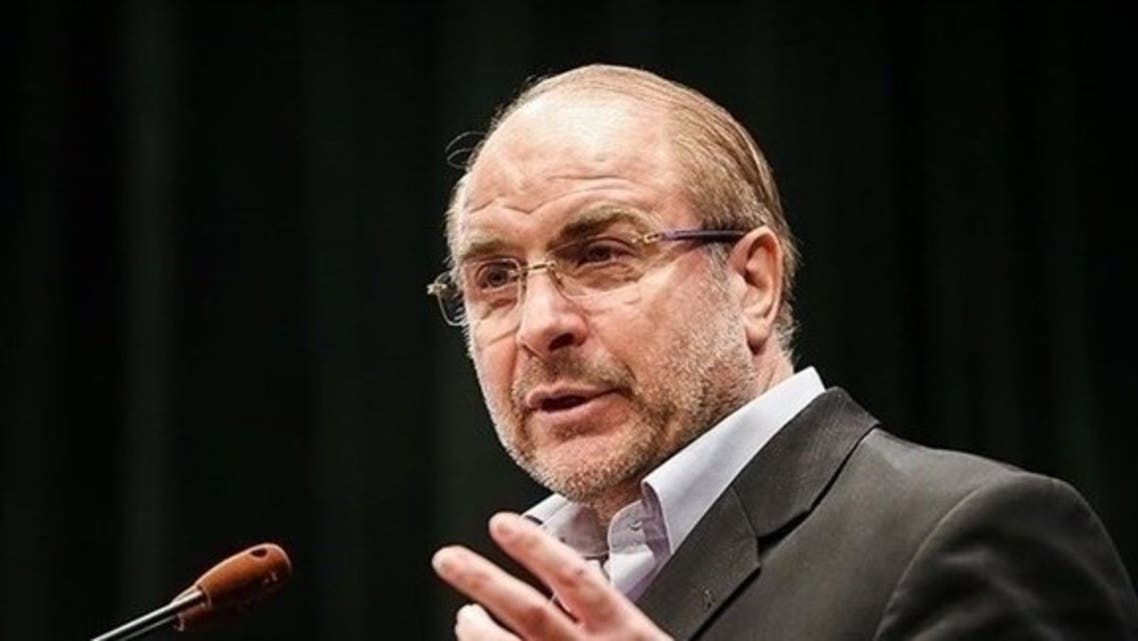
Mohammad Bagher Ghalibaf
What does Mohammad Bagher Ghalibaf mean for the region?
Ghalibaf's presence at the forefront of decision-making has direct implications for Iran's regional behavior, reflecting an approach that combines security toughness with political pragmatism. Regarding Lebanon, Hezbollah is considered an integral part of Iran's national security framework, with any settlement that would weaken its position being firmly rejected. His previous visit to Beirut, during which he piloted the plane himself, sent a clear symbolic message in this context. In contrast, Ghalibaf tends to adopt a "defensive-offensive" strategy, managing conflict through asymmetric tools such as pressuring navigation lines in the Strait of Hormuz and leveraging regional influence. Nevertheless, despite this hardline approach, his recognized pragmatism keeps him open to conditional settlements, ensuring the regime's continuity and protecting its regional influence network.
Ghalibaf is not merely a proposed name but represents a function sought by the regime in a moment of turbulence. He serves as a convergence point between security, politics, and administration, standing at the crossroads of the relationship between the Revolutionary Guard and state institutions. Thus, the real question is not simply whether he will become the decision-maker, but extends to a deeper issue: does the structure of the Iranian regime even allow for the emergence of a "single man" at this stage?



 Messenger
 Whatsapp
 Threads
 Email
Email
 Print
Print
 X
X
 Facebook


 Mohammad Bagher Ghalibaf
 Mohammad Bagher Ghalibaf