

Basij Commander Targeted by Israeli Fire... What Does Targeting Iran’s Regime's Prominent Tools Mean?
His military activities began in 1981, and during the Iran-Iraq war, he rose to the rank of platoon commander and then battalion commander.


 Messenger
 Whatsapp
 Threads
 Email
Email
 Print
Print
 X
X
 Facebook
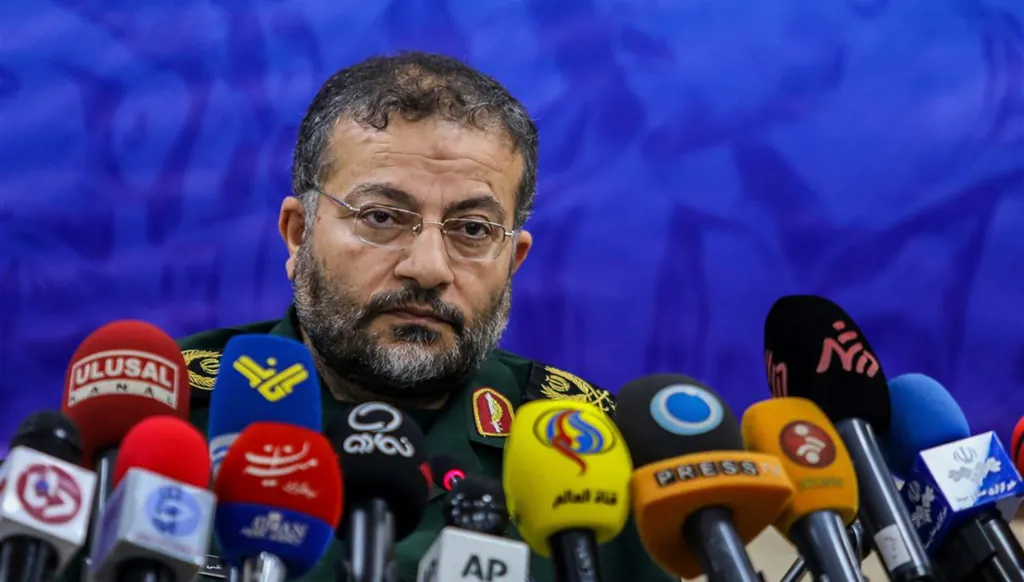


The commander of the 'Basij' forces, Gholamreza Soleimani, who Israel announced was killed on Tuesday, is considered a significant tool of the Iranian regime against its opponents.
In recent years, he led the suppression of protests in the streets.
Soleimani, born in the city of Farsan in the Chaharmahal and Bakhtiari province in southwest Iran, served as the commander of these forces for six years, participated in the Iran-Iraq war that erupted in 1980 and lasted for eight years, and led numerous military operations.
He obtained a bachelor's degree in history from Isfahan University and completed military courses at the Revolutionary Guards Military University from 2000 to 2004.
He was the commander of the 'Fajr 19' brigade of the Revolutionary Guards, then the commander of the 'Thar Allah' brigade in Tehran, and was the commander of the 'Imam Hussein 14' brigade until 2009, after which he served as the military commander in Isfahan province for 11 years.
His military activities began in 1981, and during the Iran-Iraq war, he rose to the rank of platoon commander and then battalion commander.
On January 10, 2020, the Office of Foreign Assets Control (OFAC) of the US Department of the Treasury placed Soleimani on the sanctions list for his role in advancing the destabilizing goals of the government in the region and globally.
The European Union imposed sanctions on him on April 12, 2021, for his plan to suppress popular protests in November 2019.
Britain imposed sanctions on him in October 2020, under the Sanctions and Anti-Money Laundering Act 2018, which included asset freezes and travel restrictions, in response to his role in suppressing civilians, according to 'The Guardian'.
Canada also imposed sanctions on him in October 2022, under the Special Economic Measures Regulations on Iran for committing widespread and systematic human rights violations during anti-regime demonstrations, which included asset freezes, arms prohibitions, and financial transaction bans, and listed him on the no-entry blacklist to Canada.
The message is clear
The targeting is no longer limited to nuclear facilities or military bases. Today’s strike has hit the 'nervous system' of the regime: the Basij forces.
Why the Basij? Because it is the backbone of security deployment and street control. The assassination of its leaders in the heart of Tehran is not just a human loss but a significant security breach that undermines the state's prestige and cripples its field capabilities.
The battle has surpassed the military dimension. The goal now is to undermine the ability to control the internal situation and open the door to new power equations. Has the regime lost control over its internal security?
The Basij forces, meaning 'mobilization' in Persian, or officially the 'Organization for Mobilizing the Oppressed,' was founded at the end of 1979 at the call of Khomeini himself, who demanded the creation of a '20 million man army' to protect the revolution and its political and religious system.
The Basij was formed from his loyal supporters as a volunteer paramilitary force. Its members are recruited out of loyalty to the country, and it is believed that some youth join it also to obtain privileges and improve their economic conditions.
The Basij is part of the forces affiliated with the Iranian regime and has overseen central suppression operations during protests, especially recently with their escalation, using violence and widespread arrests and force against civilian protesters, according to an Israeli army statement.