

Combining Security and Diplomacy... Who is Ali Larijani and Why Was He Targeted?


 Messenger
 Whatsapp
 Threads
 Email
Email
 Print
Print
 X
X
 Facebook
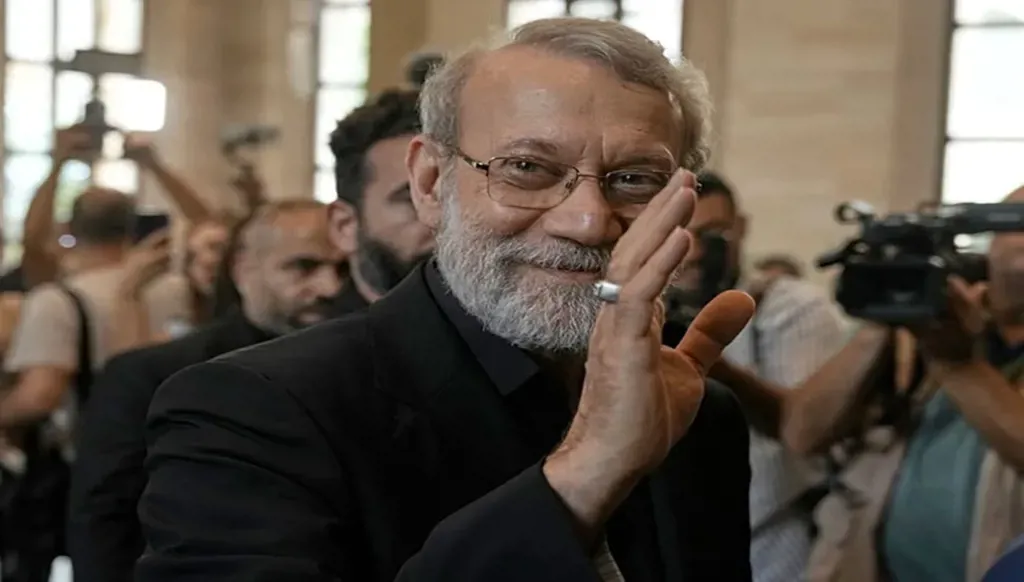


Who is Ali Larijani, whom Israel announced it targeted amid the escalation with Iran?
Iran has not confirmed the news of Larijani's assassination, but official Iranian media reported that he would deliver a statement, followed by the publication of a handwritten statement on his account on the platform 'X'.
However, this targeting is not ordinary. When Ali Larijani's name is mentioned in the context of strikes, the question is not only 'Who is he?', but: Why him specifically?
In a complex entity like the Islamic Republic, importance is not measured only by official positions but by proximity to the center of decision-making. From this perspective, Larijani emerges as one of the most influential and trusted figures with Ali Khamenei, the man called upon during critical moments when politics intersects with security and diplomacy with war.
Larijani (born 1958) holds the position of Secretary of the Supreme National Security Council, a position that places him practically at the heart of strategic decision-making, not on its fringe.
But his importance does not stem solely from his current position but from a long trajectory within the system's structures: from the Revolutionary Guards, to presiding over the parliament between 2008 and 2020, to his role as a nuclear negotiator in one of the most sensitive files.
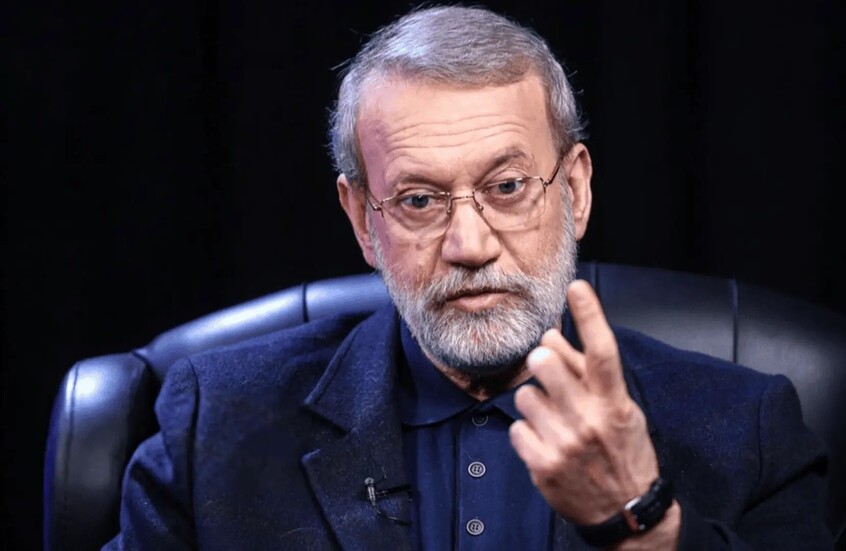
This is where the explanation of his targeting begins.
He does not represent a traditional political faction but serves as a link between multiple circles: security, negotiation, and international relations. In recent months, he moved between Muscat and Moscow, engaging in indirect negotiation channels with Washington, while simultaneously accompanying the reestablishment of Tehran's relations with its allies, from Russia to China. This multifaceted presence within the decision-making circles makes his targeting a signal that goes beyond immediate military dimensions.
In other words, any targeting of him cannot be separated from his position within the power structure.
Meanwhile, Larijani has a more solid internal face. His name was placed on the U.S. sanctions list last January, due to accusations of playing a key role in repressing the protests that took place in Iran, which were described as one of the most violent disturbances since the Iranian Islamic revolution. While he showed understanding for economic demands, he emphasized the need to distinguish between 'protests' and 'rioters,' in a speech reflecting a clear security approach to domestic management.
In the nuclear file, he presents himself as a 'practical' figure. He does not deny the possibility of reaching a settlement with the United States but simultaneously insists on what Tehran considers its right to enrich uranium. This position summarizes the regime's balances: tactical openness within strict red lines.
Larijani expressed this approach clearly when he said the nuclear program 'cannot be destroyed,' indicating that knowledge, unlike facilities, cannot be bombed. This message encapsulates his vision: the conflict is not only on the ground but over capability.
In this context, targeting such a high-ranking figure acquires deeper implications.
It points not only to military escalation but to the transition of the confrontation to more sensitive levels within Iran, where the brains that manage decisions intersect, not just the tools that implement them.
Here, the question becomes broader than Larijani himself:
Are we facing an attack on the 'peripherals'... or approaching the 'heart'?