

ISIS declares war on Damascus, seeks defections from Syrian security forces


 Messenger
 Whatsapp
 Threads
 Email
Email
 Print
Print
 X
X
 Facebook
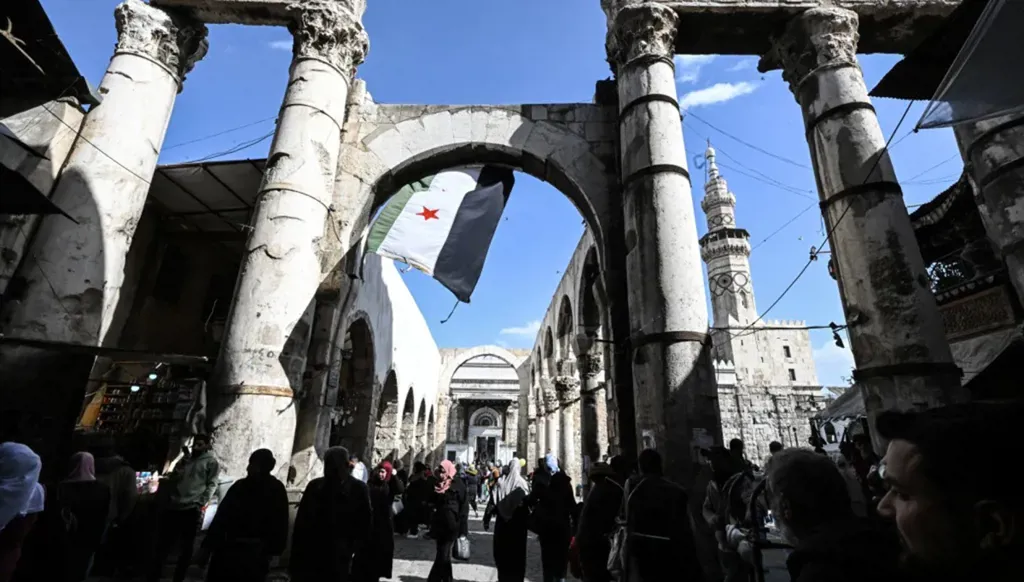


On Saturday, ISIS, through its official media outlet Al-Furqan, released an audio recording of its spokesperson, Abu Hudhaifa al-Ansari, in his first appearance in nearly two years. The speech did more than label the new Syrian authority as infidels and apostates; it explicitly announced the start of a “serious phase of conflict in the region,” emphasizing the continuation of “operations in the Levant.”
Al-Ansari offered a comprehensive analysis of the Syrian developments, arguing that what has happened is merely a shift from “Iranian influence” to “Turkish-American rule,” and that the current regime is “a tool in the hands of the Crusaders,” referring to the international coalition. In doing so, the group reframes the Syrian scene as having undergone no real change, only a replacement of one external sponsor with another, which, according to its reasoning, justifies continued fighting and rejection of the new authority’s legitimacy.
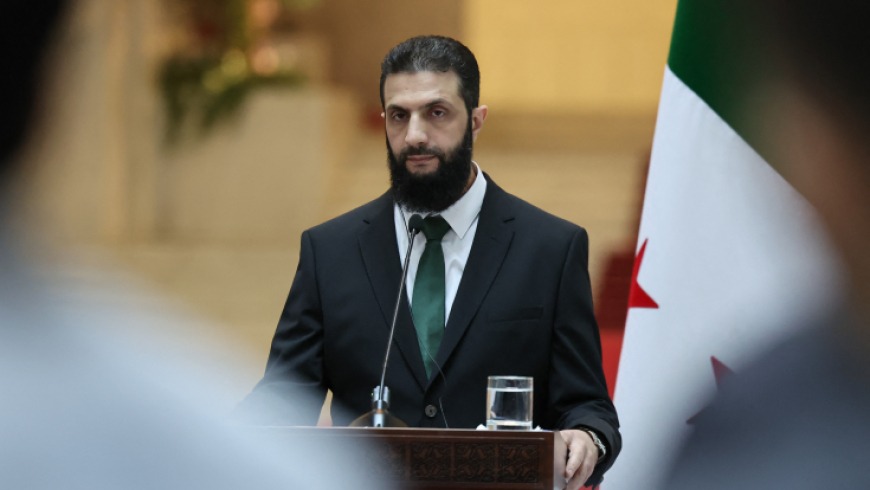
The speech also included a direct personal escalation against President Ahmad al-Sharaa, threatening that “his future will be no better than that of Bashar al-Assad." The choice of the speech’s title, “It Becomes Clear What Is Right and What Is Wrong," framed the current moment as a decisive sorting between two camps, delivering a clear mobilizing message.
From Rhetorical Escalation to Prioritizing Confrontation
Since the formation of the transitional authority under Ahmad al-Sharaa, ISIS has not hidden its hostile stance. Al-Naba newspaper repeatedly described the new government as “apostate” in its editorials and criticized the Syrian president’s regional and international meetings, particularly after his May 2025 meeting with U.S. President Donald Trump. In recent months, the group has claimed operations against Syrian security personnel in Deir ez-Zor, Raqqa, and the Badia, while Damascus carried out security campaigns that reportedly arrested ISIS leaders and members.
What is new in the latest speech goes beyond doctrinal labeling. The recording included a clear call to make fighting the government a “priority” and issued a direct appeal to fighters within the Ministry of Defense to join ISIS and operate under its banner. This call has an organizational dimension, not limited to incitement, reflecting an attempt to recruit members from within the official military structure. The speech also coincided with the group claiming responsibility for the killing of two Syrian security personnel in the village of Al-Wasita in rural Raqqa, allowing it to present the announcement of the “serious phase” as part of an operational trajectory, not merely verbal escalation.
Recruitment Bets and Capacity Limits
Realistically, this call may not find a receptive audience easily, particularly since the rivalry between ISIS and Hay’at Tahrir al-Sham has persisted since 2013. The group has not witnessed any significant defections in its favor since Hay’at Tahrir al-Sham took control of Idlib and established the Salvation Government in 2017. However, ISIS evokes in its rhetoric the experience of 2013–2014, when Jabhat al-Nusra at the time saw widespread defections in eastern Syria to ISIS, which helped the group rapidly expand in Raqqa and Deir ez-Zor, after entire areas shifted allegiance following changes in pledges by local field commanders. From this perspective, the current speech attempts to reopen this possibility, relying on new variables, including Damascus joining the international coalition against ISIS and certain pragmatic approaches of the government domestically and internationally, which the group may hope create discontent within some former jihadist circles. Yet the chances of these efforts succeeding remain slim given the current cohesion of the governing structure and clear U.S. support, as well as the fact that ISIS today is less widespread, weaker in structure, and has a smaller support base than it did during that earlier period.
This personal escalation against al-Sharaa does not come out of nowhere; it rests on a long history of rivalry between him and the group. The enmity between ISIS and Jabhat al-Nusra—which al-Sharaa led under the name Abu Muhammad al-Julani—dates back to 2013, when he refused to merge under ISIS’s banner. Since then, a deep bloody and ideological struggle has solidified, and targeting al-Shara in the latest speech is simply an extension of a conflict more than a decade old.
Prisons and Regional Balances: A New Uncertain Environment
This context is reinforced by UN and security reports indicating that al-Sharaa and several senior officials have faced threats or assassination attempts, some attributed to cells linked to ISIS. Reports from the United Nations and U.S. Central Command have also noted a relative increase in ISIS activity in recent months in Syria and Iraq, placing the latest speech within an ongoing field-level dynamic rather than in a purely propagandistic vacuum.
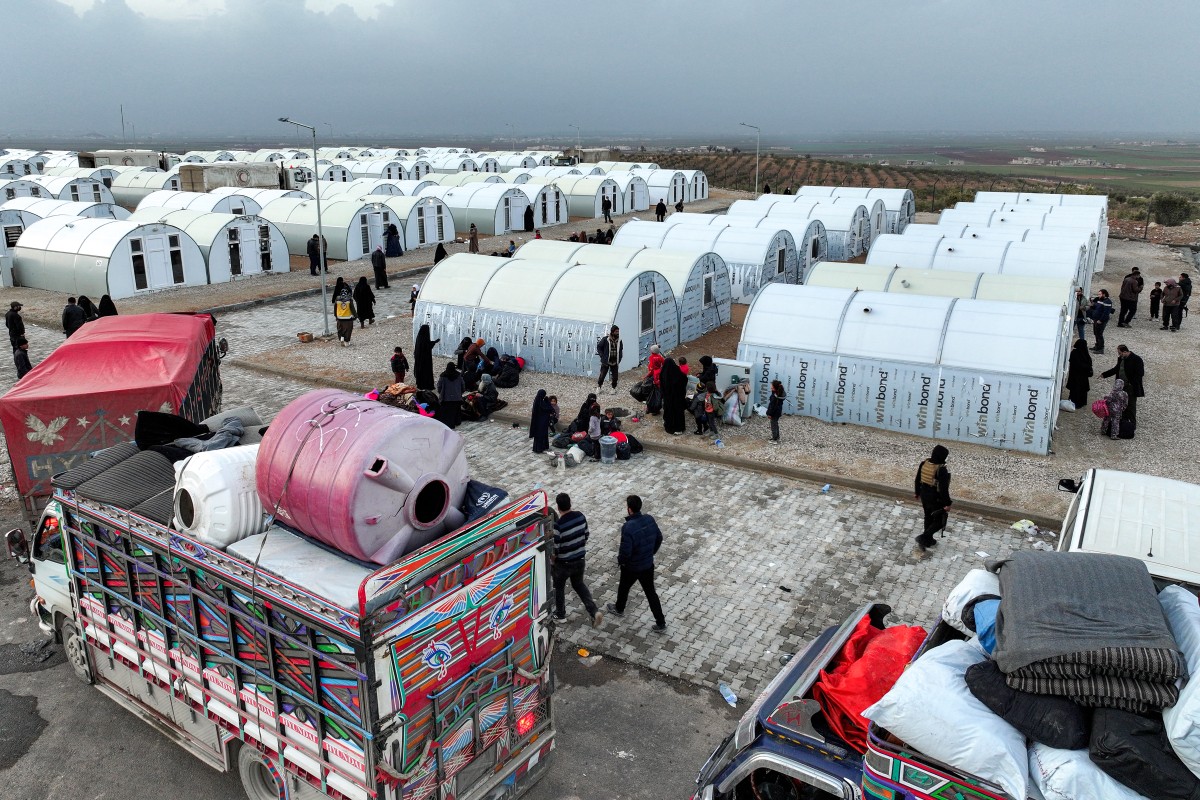
In this context, the issue of prisons and camps emerges as one of the most sensitive elements in the current phase. The recent evacuation of Al-Hol camp and the transfer of its administration from the Syrian Democratic Forces (SDF) to Damascus coincided with the departure of large numbers of residents and detainees, amid wide debate over screening, monitoring, and reintegration mechanisms. The handling of the camp drew international criticism due to the speed of its closure and the complexity of its security and humanitarian challenges, with no clear picture of the fate of some of those who left. Al-Ansari leveraged this issue in his speech by sending direct messages to prisoners, claiming that “the world even fears their own children,” presenting it as evidence of ISIS’s continued influence. This shift in a file that has long symbolized a security threat provides the group with additional propaganda material, addressing its detainees and supporters with the message that “the battle is ongoing” and framing recent events as proof of the disruption of its adversaries and a shift in the balance of control.
Regionally, the recording comes at a moment of reshaping security balances. Successive U.S. withdrawals from bases in Al-Tanf, Al-Shaddadi, and Qasrak during recent months, along with talk of a broader reduction in military presence, have created a different security reality in eastern Syria. In Iraq, the name of Nouri al-Maliki has resurfaced in the political sphere as a candidate for prime minister; he previously held the position during ISIS’s expansion and the fall of Mosul in 2014. His nomination has been accompanied by U.S. reservations and discussions of the possible use of political and economic pressure should his candidacy proceed. This intersection of Iraq’s internal fragility and U.S.–Iraqi tensions recalls the regional climate that preceded ISIS’s rise more than a decade ago, making the current scene more uncertain—a context the group previously exploited for its expansion.
The speech also made a point of highlighting ISIS operations outside Syria, particularly in Africa, describing the continent as “a battlefield that hinders the coalition’s efforts.” This was an attempt to emphasize that the group remains active and transnational, framing the Syrian arena as part of a broader struggle. However, this external focus may implicitly acknowledge the group’s limited capacity to achieve significant breakthroughs within Syria itself.
In sum, Abu Hudhaifa al-Ansari’s speech does not signal a change in ISIS’s overall approach, but it does announce a shift toward an open and declared confrontation with the new Syrian authority, grounded in historical rivalry, field-level developments, and a particular reading of regional transformations. The issue is not the labeling of the authority—that is consistent in the group’s literature—but the timing of declaring “priority” and whether the organization believes the current environment offers an opportunity to reposition itself within the Syrian scene, or if, at its core, the speech remains primarily a tool for internal mobilization during a period of contraction rather than an announcement of an imminent operational shift.