

The Horn of Africa... Tensions larger than the Addis Ababa summit


 Messenger
 Whatsapp
 Threads
 Email
Email
 Print
Print
 X
X
 Facebook
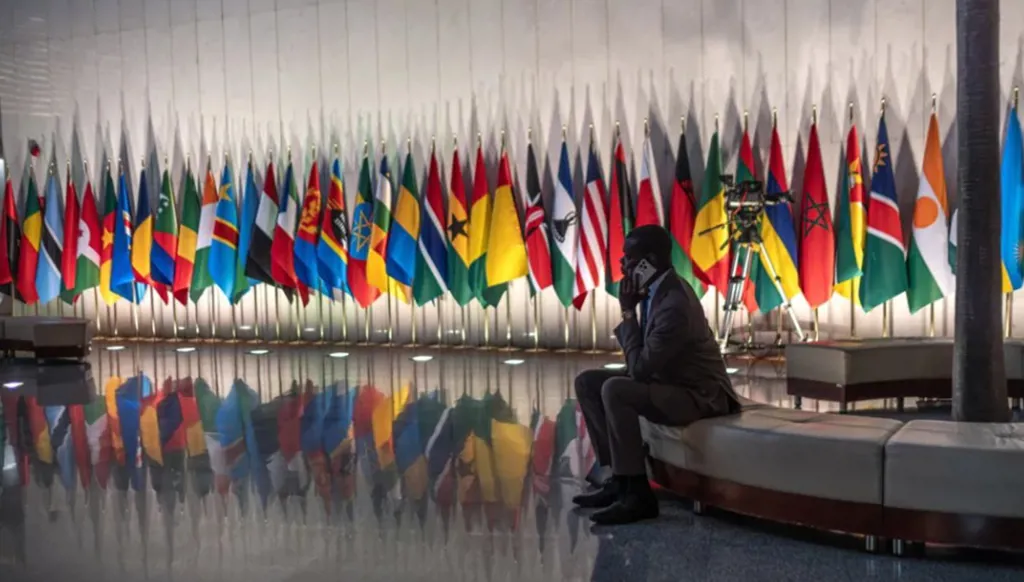


Under the slogan "Ensuring the Provision and Sustainability of Safe Water and Sanitation Services", the 39th African Union Summit was held in the Ethiopian capital, Addis Ababa.
Over two days, leaders discussed the continent's challenges, but these challenges seem to be increasingly difficult each year. Ironically, the host country of the summit itself is experiencing ongoing crises with its regional surroundings. Starting with the summit's water-related theme, its relationship with Egypt was tense due to the construction of the Grand Ethiopian Renaissance Dam. Also, its demand to access the Red Sea to rid itself of the status of a "landlocked country" has trapped it in geopolitical calculations beyond the Horn of Africa.
Focusing on the Horn of Africa, where the summit was held, African leaders renewed their commitment to the sovereignty of Somalia and the integrity of its territory, with a categorical rejection of any external interventions aimed at its division. This means rejecting recognition of "Somaliland", which the summit strongly condemned and considered Israel's unilateral recognition as null and void, violating international law and the African Union Charter.
However, the reality in the Horn of Africa is seen by African affairs researchers as highly complex "due to the competition and repositioning of regional and international powers." In their conversation with "Annahar", they expressed concern about escalating tensions with Ethiopia's insistence on finding an outlet to the Red Sea amidst the Turkish-Egyptian military buildup in Somalia.
Somalia's Militarization
Somalia, striving to rise from decades of besieged crises, found itself facing the burdens of regional and international interest conflicts, in addition to its ongoing confrontation with the "al-Shabaab" group, classified as terrorist.
The struggle for influence over the Horn of Africa has been one of the factors that reinvigorated Egyptian-Turkish relations, activating them on all political, economic, and military levels.
In this regard, Attia El-Issawi, an expert on African affairs at the "Al-Ahram Center," told "Annahar" that "the Turkish-Egyptian military intervention aims to secure a minimum of stability, confront the al-Shabaab organization, and challenge Ethiopia's attempt to obtain a port and a military base in violation of international laws in Somaliland, which remains an integral part of Greater Somalia except for Israeli recognition."
El-Issawi explains that "if terrorism settles, it could lead to terrorism infiltrating the Horn of Africa and Sudan amidst the current chaos and civil war, thus threatening Egyptian national security."
Parallel to this view, Dr. Mohamed Torshen, also an expert in African affairs, says that the attempt to reposition forces in the Horn of Africa in light of regional conflict "directly affects international powers' interests in the Horn of Africa, which will undoubtedly be part of the equation, either to restore balance or act as a fight's mediator, complicating the scene."
A researcher based in Paris told "Annahar": "Ethiopia remains landlocked and can't change this situation. It may obtain a sea view through long-term contracts, as happened in Djibouti, or contracts to use ports in Somaliland. But I don't think it can change the geography through a war with Djibouti or Eritrea or by seizing land from Somalia."
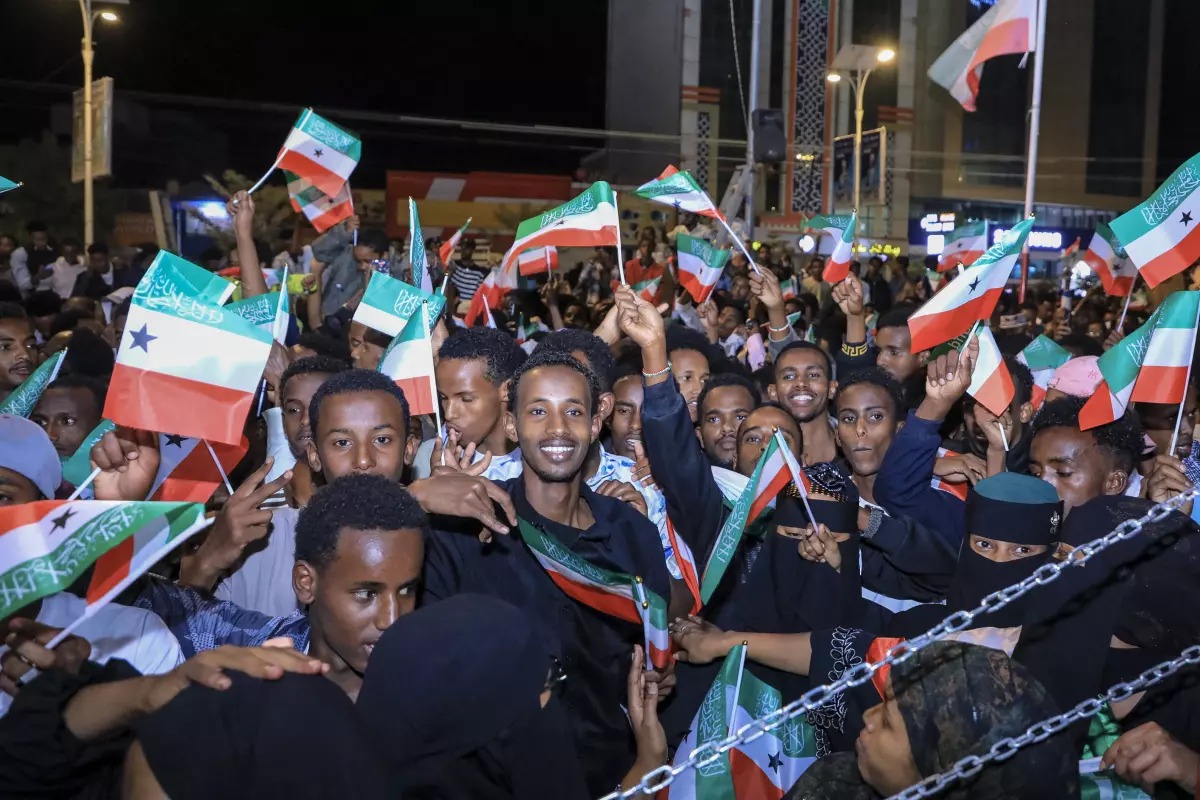
Mogadishu and Somaliland
The military aspect of Egyptian-Turkish cooperation was demonstrated by deploying forces in Somalia, which became more apparent following Israel's recognition of Somaliland, after which Ankara sent F-16 fighter jets, armored vehicles, and naval pieces, coinciding with the arrival of an oil and gas exploration ship. Turkey already operates the "Turksom" base in Mogadishu, one of the largest Turkish military training facilities abroad.
Similarly, from the Egyptian side, Cairo sent military reinforcements including combat helicopters and aircraft to its forces stationed in Somalia since 2024 following the signing of a "Military Cooperation Protocol" between the two countries. In 2025, a "Comprehensive Strategic Partnership" agreement was signed, allowing Egypt to participate in the new African Union mission to support and stabilize Somalia.
Torshen fears that "Ethiopian interests in Mogadishu might be affected and constrained," and sees that at a certain timing, "the Somali government might play a political or military maneuver to reclaim Somaliland in a limited war." However, he clarifies at the same time that African Union charters "impose recognition of international borders," and therefore "Addis Ababa's demands cannot be achieved by force, and contrary actions would open the door to large-scale confrontations in the Horn of Africa, exposing Ethiopia to internal unrest in Tigray and Amhara regions."
This view aligns with El-Issawi's opinion but from another angle, as he says that Ethiopia could "disrupt the relative stability in the region" in an attempt to seize a port or military base either from Eritrea or Somalia's "Somaliland". If it does so, it could ignite the region, leading regional parties to align with one side or the other, "which could cause major issues if it lasts too long, prompting major powers like the United States to intervene to control the situation and impose their strategic agenda."
In a second approach, El-Issawi points out that Ethiopia might exploit the significant tension with Eritrea due to accusations that Eritrea supports separatist movements in Tigray and Amhara regions. This tension could be used by Ethiopia to launch a war against Eritrea, and "if the Eritrean army is defeated, Ethiopia could seize the Assab port area with force and await the international community's response. It would then lead to demands for a middle solution, which could result in retaining the Assab port area with a secure corridor in return for withdrawal from Eritrea."
A Beacon for Coexistence
In his speech during the opening of the African Summit, Ethiopian Prime Minister Abiy Ahmed affirmed that his country seeks development, justice, and regional integration, which do not involve "geographical ambitions or expansionist intentions, nor does it seek to threaten its neighbors' security."
Regarding his country's efforts to reach an outlet through the Red Sea, he stated it is "a peaceful existential necessity and a call for partnership that does not infringe on the sovereignty of neighbors nor harm other interests," pointing out that it is an issue dictated by humanitarian needs and population growth, emphasizing that "Ethiopia's prosperity is the prosperity of the entire region."
Abiy Ahmed emphasized that Ethiopia remains "a beacon for coexistence and a hand extended for peace," adhering to the principle of "African solutions to African problems." He confirmed that dialogue and reconciliation are the only paths to protect the continent's future.