

Iraq’s political deadlock: Coordination framework faces crucial decision on Al-Maliki’s nomination
As Kurdish mediation and U.S. pressure intensify, Iraqi Shiite and Kurdish leaders navigate internal divisions to select the next prime minister and advance presidential elections.


 Messenger
 Whatsapp
 Threads
 Email
Email
 Print
Print
 X
X
 Facebook
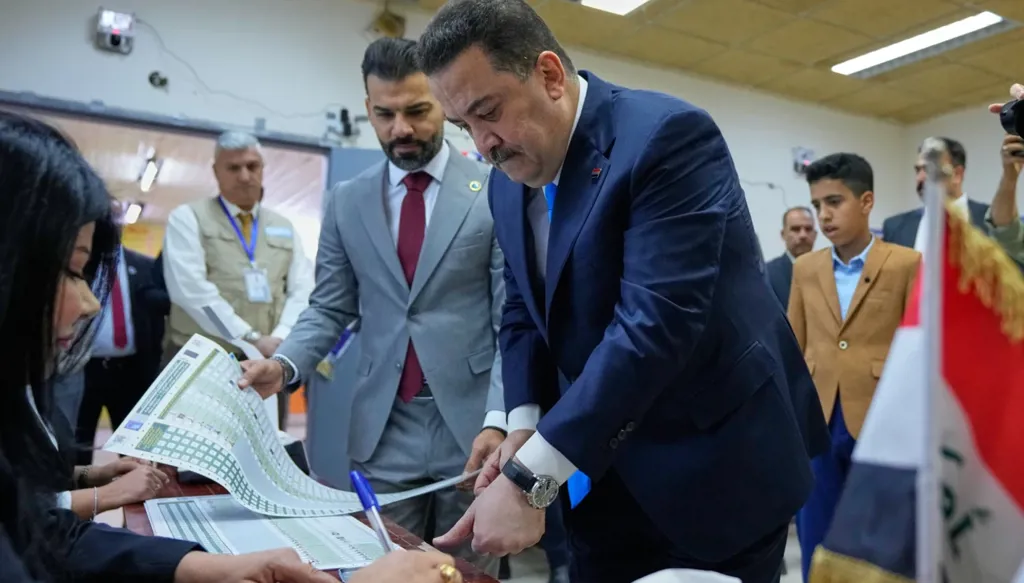


The process of forming the Iraqi government is surrounded by fast moving political activity, amid information about a comprehensive deal aimed at resolving outstanding disputes between Kurdish and Shiite forces and within the Kurdish and Shiite political camps themselves. This comes as the Coordination Framework approaches a meeting to decide on the name of its nominee for prime minister and to complete understandings on the election
of the president. Amid talk of Kurdish mediation and pressing messages from the United States, positions differ regarding the nomination of Nouri al Maliki, with indications that alternative options or a broader consensus formula are being explored.
According to informed sources, there is a political deal to resolve all outstanding problems between the Kurds and the Shiites and within both the Kurdish and Shiite camps, including the dispute over forming the Kurdistan Regional Government, which has been delayed for more than a year and a half.
The sources told Annahar that intra Kurdish meetings have resulted in the establishment of a Kurdish political council, similar to the Shiite and Sunni councils. Its first outcome may be agreement on the nomination of Nizar Amidi of the Patriotic Union of Kurdistan for the presidency, after settling all disputes between Kurdish parties over ministerial portfolios in both the regional and federal governments.
The sources also confirmed that there is Kurdish mediation led by Masoud Barzani to persuade the US administration to support al Maliki’s nomination for prime minister, hinting that the mediator has received positive signals from the White House.
In this context, Wafaa Muhammad Karim, a leader in the Kurdistan Democratic Party, said that engagement with external actors is very important for the Iraqi situation, noting that the Kurdistan Region has played a pivotal role in resolving the dispute in Syria between the administration of President Ahmad al Sharaa and the Syrian Democratic Forces, as well as between Turkey and the Kurdistan Workers’ Party.
Muhammad told Annahar that the issue of Kurdish mediation to resolve the deadlock over the Coordination Framework’s nominee for prime minister is on the table of the region’s leaders.
According to the sources, al Maliki has begun holding individual meetings with Coordination Framework leaders who oppose his nomination in order to settle their final positions, noting that Qais al Khazali, leader of Asaib Ahl al-Haq, an Iraqi Shia paramilitary organization and political party, remains insistent on his rejection.
The sources indicated that the Coordination Framework forces will soon hold a decisive meeting to determine the positions of Shiite political forces regarding al Maliki’s nomination.
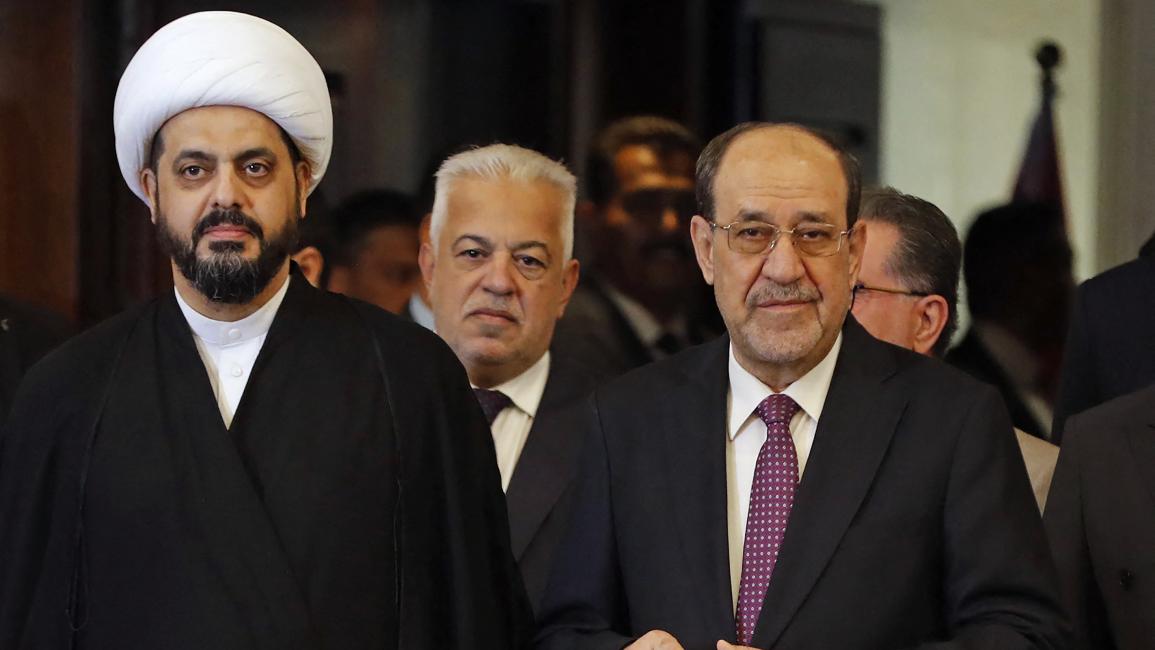
For his part, Fahd al-Jubouri, a leader in the National Wisdom Movement, told annahar that the anticipated Coordination Framework meeting later this week could produce positive outcomes. He noted that the scene within the framework does not yet show clear adherence to a specific candidate, and that no party has officially announced its withdrawal.
Al-Jubouri added that the level of coordination and dialogue among the political forces within the framework is still ongoing, pending the results of the upcoming meeting. He stressed that the position of the National Wisdom Movement remains clear, explicit, and transparent in its reservations regarding al-Maliki’s nomination.
He further said that recent developments, including internal escalation and differing views among forces that had supported Prime Minister Mohammed Shia al-Sudani, indicate that the level of support is no longer what it once was. He explained that some parties may move toward choosing one of the six names currently proposed, or seek a consensus figure who enjoys broader acceptance. Al-Jubouri pointed out that al-Maliki may seek to be part of the process of selecting the next candidate, but that the framework’s adherence to its nominee is no longer as clearly defined as in previous stages.
He concluded by saying that this week will be decisive and may see the completion of understandings with the Kurdish side regarding the election of the president, expecting events to accelerate, especially after the recent clear and explicit messages from the United States concerning the government formation file.
Meanwhile, Ahmed Al-Wandi, a member of the Victory Coalition, an Iraqi political electoral alliance established by former Prime Minister Haider al-Abadi, said that priority in the next phase should focus on building a stable political equation based on understanding and balance among national forces, away from rushing or exerting pressure that could produce temporary or fragile solutions.
Al-Wandi told Annahar that true stability is not created by speed, but by mature agreements that respect the constitution, preserve the balance of powers, and place the interests of the state above immediate considerations. He stressed that any political path not grounded in calm and rationality will remain vulnerable to instability, no matter how quickly it appears to achieve results.
He added that this vision should be present at the discussion table within the Coordination Framework at the upcoming meeting to ensure outcomes that strengthen stability and prevent the recurrence of political crises.