

From Syria to Africa: Riyadh Talks Highlight ISIS’ Evolving Geography and Persistent Threat
Washington seeks to dismantle the most sensitive issues before any significant reduction in its military presence in Syria.


 Messenger
 Whatsapp
 Threads
 Email
Email
 Print
Print
 X
X
 Facebook
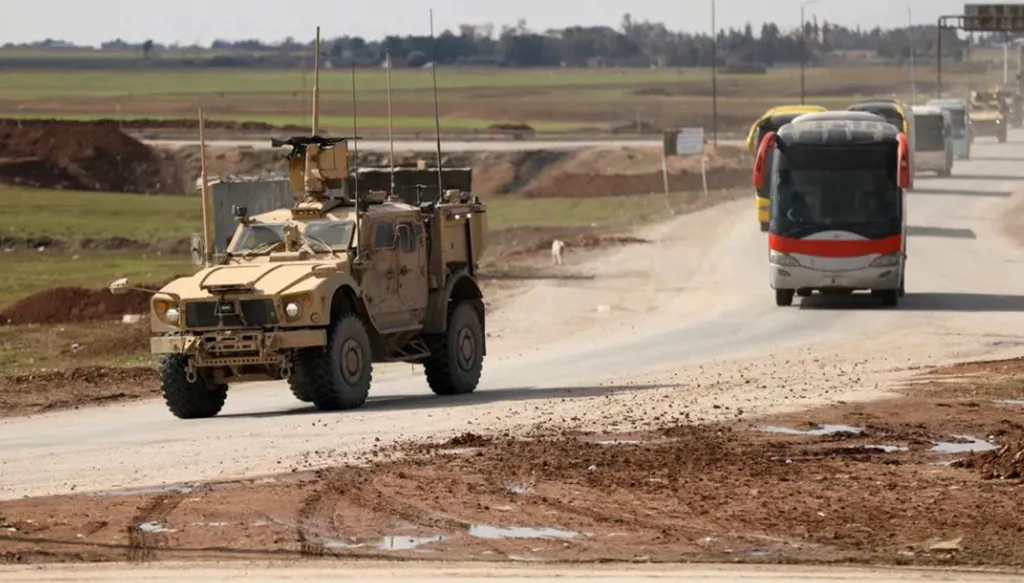


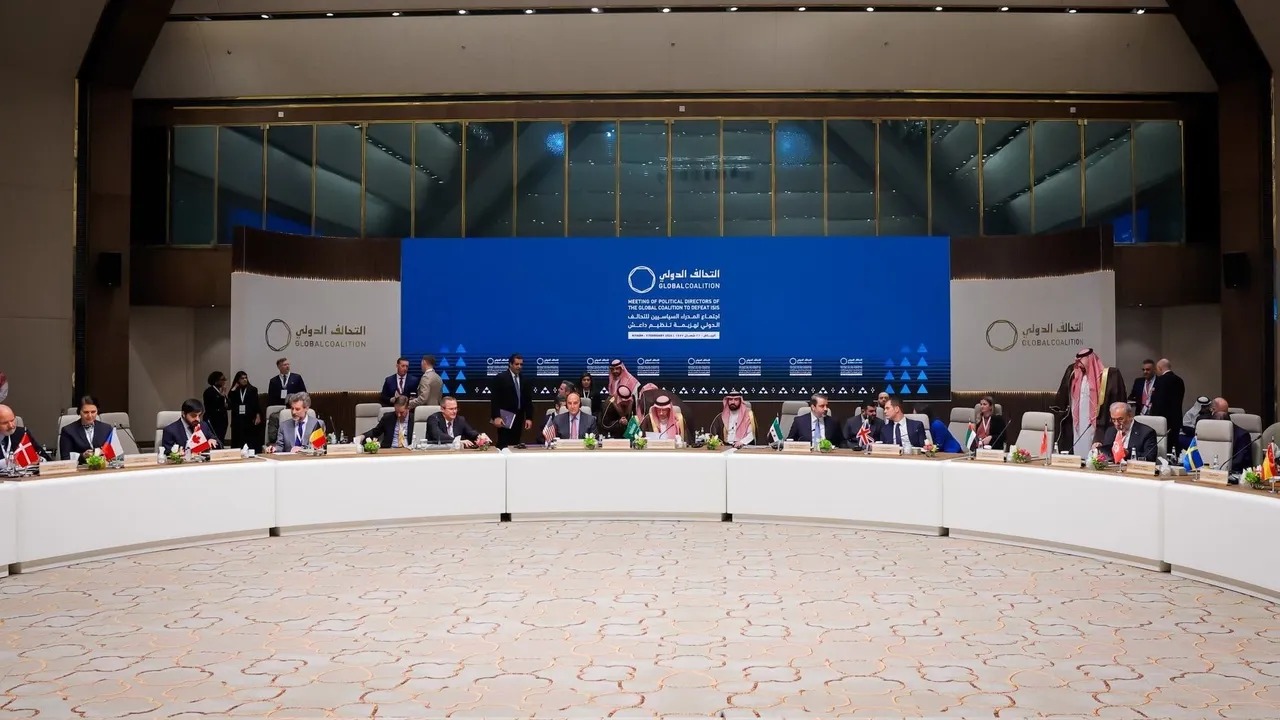
The International Coalition against ISIS held a meeting in Riyadh on Monday, amidst highly sensitive regional dynamics, coinciding with rapid field and political shifts in Syria and Iraq, and a noticeable escalation of ISIS activity outside its traditional sphere. The direct Syrian presence marked a significant development, as it included Damascus in the international discussion on the future of combating the organization, not only as an operational arena but as a present party in approaching the upcoming phase.
The final statement focused on a number of key issues, most notably the affirmation that the threat of ISIS still exists, the necessity for continued international coordination, in addition to issues related to prisons, camps, detainee transfers, and preventing the resurgence of the organization through sleeper cells. The outcomes did not treat ISIS as a completed file but reaffirmed the idea that the threat persists, and that managing the current phase remains open and unresolved, more symptomatic than indicating a shift towards final security stability.
'ISIS' Outside Syria
This assessment aligns with the latest UN report warning that the organization has not entered a phase of collapse but has geographically and operationally adapted its activities. In recent weeks, its branches in Africa and South Asia have seen an increase in operations, including targeted attacks on sensitive facilities, such as airports, as well as sectarian-based operations, as seen in the bombing targeting Shiite worshipers in Pakistan. These facts reinforce the view that the organization still possesses the initiative and benefits from political and security vacuums in conflict areas or environments experiencing shifts in power dynamics.
Prisons and Camps
In Syria, the issue of prisons and camps emerges as one of the most complex issues. The Riyadh meeting coincided with the accelerated transfer of ISIS detainees from Syria to Iraq, with Baghdad announcing the receipt of about 4,583 detainees so far, in a process conducted in coordination with the International Coalition.
Conversely, the situation in camps, especially Al-Hol camp, remains more perplexing. In addition to the departure of hundreds of families in recent months, videos have circulated showing foreign fighters entering the camp to extricate families and move them towards northern Syria, raising serious questions about the level of control and actual limits of authority on the ground.
Notably, the international discourse regarding the camp has changed. Previously considered an incubator for extremism and a 'ticking time bomb,' a different narrative has begun to form following the transfer of file management from the Syrian Democratic Forces (SDF) to Damascus, suggesting that some of the detainees might be victims of mass classifications or included in the ISIS file for political or security reasons not necessarily linked to actual affiliation with the organization. This shift does not allow for a firm coalition stance, but it opens two parallel possibilities: either the camp is still considered a deferred threat or placing the management burden on the Syrian state is now viewed as a practical solution to a politically and humanitarian complex, long-standing issue.
American Presence
This intersects with American field movements suggesting downsizing or repositioning in some bases inside Syria, particularly in Al-Shaddadi and Al-Tanf. Despite the absence of an official declaration of a complete withdrawal, the field realities — vacating bases, relocating equipment, reducing presence — make it difficult to separate these moves from the broader discourse on the future of the U.S. role in Syria. The synchronization of these steps with the accelerated transfer of ISIS detainees to Iraq suggests that Washington is aiming to dismantle the most sensitive issues before any significant reduction in its military presence, without necessarily indicating a political announcement of a full withdrawal.
Iraq as an Additional Regional Factor
In Iraq, the nomination of Nouri al-Maliki for premiership stands out as an additional factor complicating the scene. Along with the recent memory tied to the American withdrawal phase and the rise of ISIS, his potential return raises questions about the direction of relations with Washington, amidst cautious American positions on him, and his name being linked to the increased Iranian influence in Baghdad. These circumstances do not imply an immediate change in Iraqi policies, but they place the counter-ISIS file and coordination with the International Coalition in a more sensitive political environment, especially if it coincides with a reduction in American presence in Syria and the region.
Between Two Tracks
What distinguishes the Riyadh meeting is not only its timing but its position between two tracks yet to be stabilized: an international track seeking to recalibrate the approach to combating ISIS after years of military focus, and a regional track witnessing a rearrangement of roles, presences, and influence. Syria's participation in this context does not signal a complete political or security transition but rather brings Damascus into an open discussion on managing highly sensitive files, from prisons and camps to borders and potential vacuums. With the rise of ISIS activities outside its traditional sphere and the transformation of some previous stability pillars into areas of revision, the question is no longer whether the organization has been defeated but what pattern the post-containment phase will be managed in, and who will have the capacity to prevent new gaps from becoming an opportunity for its return.