

Kurdistan navigates Iraq’s political deadlock as Maliki controversy deepens
With U.S. pressure mounting and rival coalitions clashing over former PM Nouri al-Maliki, Kurdish leaders adopt a cautious, mediating role to protect regional stability and international relations.


 Messenger
 Whatsapp
 Threads
 Email
Email
 Print
Print
 X
X
 Facebook


While the process of forming the new Iraqi government enters a highly polarized phase—between a coalition supporting the continued candidacy of former Prime Minister Nouri al-Maliki and another radically opposed to him—the main political forces in the Kurdistan region have yet to take a decisive stance on the current situation.
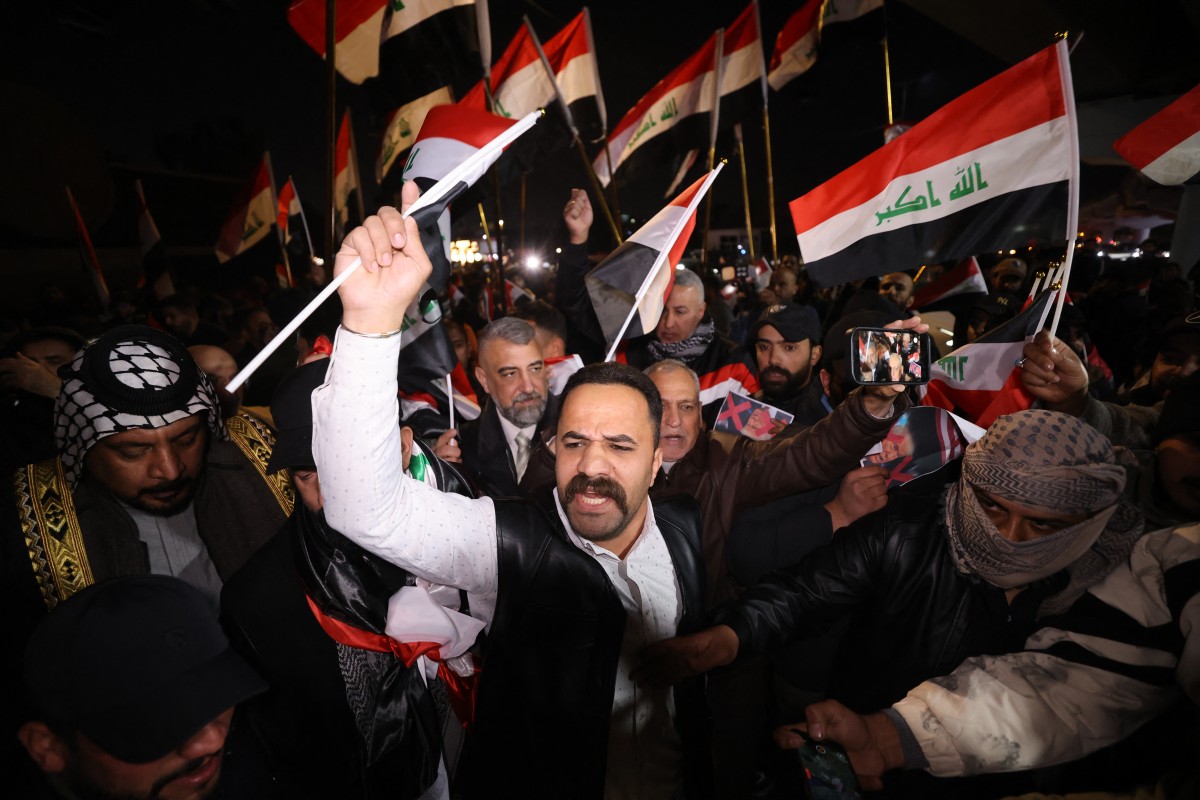
The current positioning emerged after U.S. President Donald Trump commented on the "Coordinating Framework," nominating Maliki again for prime minister, stating that 'the United States will no longer help the great Iraq.' In response, Maliki rejected what he called American interference in Iraqi affairs, describing Trump’s stance as "blatant."
According to Annahar, the leader of the "Progress" party and former Parliament Speaker Mohammed al-Halbousi heads the front opposing Maliki's candidacy within the Sunni political circle, aligning with Shiite forces such as "Asa'ib Ahl al-Haq," led by Qais Khazali, and the "Wisdom Movement," led by Ammar al-Hakim.
Meanwhile, Maliki receives backing from other members of the "Coordinating Framework" as well as the "Resolve" and "Sovereignty" alliances within the Sunni Political Council.
Both parties are calling on the Kurdish forces to take a position, which appears to act as a "swing vote" in this internal equation, while reports suggest that the United States is pressuring the Kurds to adopt a stance against Maliki.
The Kurdish calculations are spread across two levels of options. On one hand, they are confident that the United States provides a strategic protective cover for the federal status of the Kurdistan Region. Yet, they are reluctant to fully align with Trump’s position, viewing it as harsh, insensitive to Iraq’s delicate balances, and potentially subject to sudden change, as has occurred in other cases. At the same time, the region seeks to avoid direct confrontation with Iran and its allied Iraqi forces.
Added to this are the full constitutional, financial, and political commitments agreed upon between the region and the "Coordinating Framework," covering issues such as the implementation of Article 140 of the constitution, salaries for regional employees, and the passage of the oil and gas law—matters that the "Coordinating Framework" alone can resolve through consensus with the region.
Kurdistan Democratic Party leader Masoud Barzani, during his meeting with British Ambassador to Iraq Irfan Sadiq, affirmed that Kurdish forces have distanced themselves from Iraq’s political polarization, which intersects with regional and international conflicts. In an official statement after the meeting, he said, "The position of prime minister in Iraq belongs to the Shiite house, and they must resolve it among themselves."
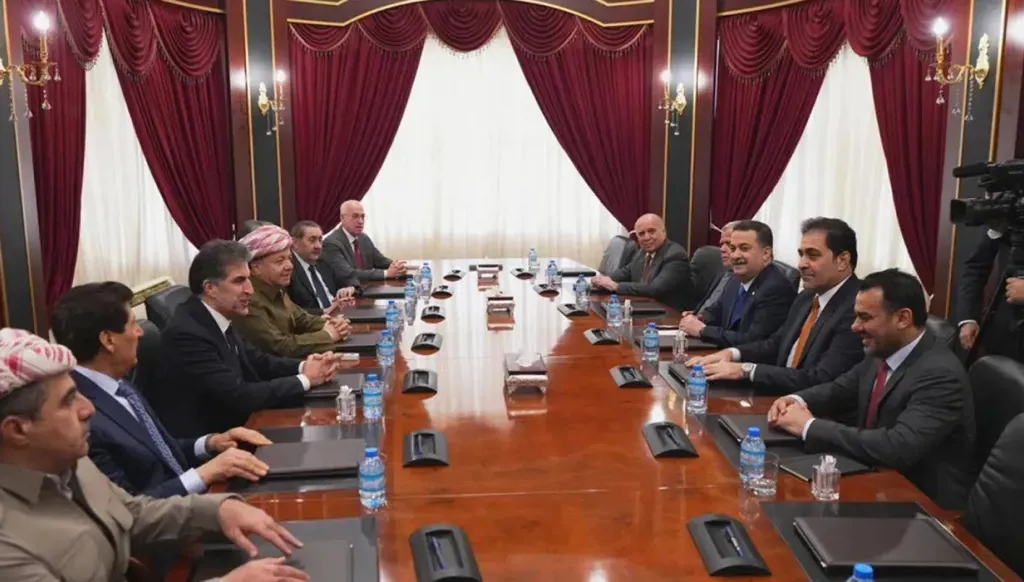
Barzani reiterated the same position during his reception of a political delegation from the 'Coordinating Framework,' headed by Prime Minister Mohammed Shia’ al-Sudani and Badr Organization leader Hadi al-Amiri, affirming his commitment to the agreements within the framework.
A similar stance was expressed when the delegation visited Sulaymaniyah and met with Patriotic Union of Kurdistan leader Bafel Talabani.
Political writer and researcher Aziz Samakoli told Annahar in an interview: "Whenever there is a political—or even security or military—clash between the Iraqi state and regional powers, the region becomes uncertain. It derives its legitimacy and mechanisms of survival from the central authority, while also being safeguarded by its international protection network."
He added, "In such situations, the region usually either takes a neutral stance or acts as a mediator between the parties. In the current case, it is likely to step in to build a consensus that preserves Iraq’s reputation and enables the selection of a prime minister who has international approval while remaining consistent with the Coordinating Framework’s overall approach."