

Trump consolidates Middle East diplomatic files, placing Barrack in charge of Iraq


 Messenger
 Whatsapp
 Threads
 Email
Email
 Print
Print
 X
X
 Facebook
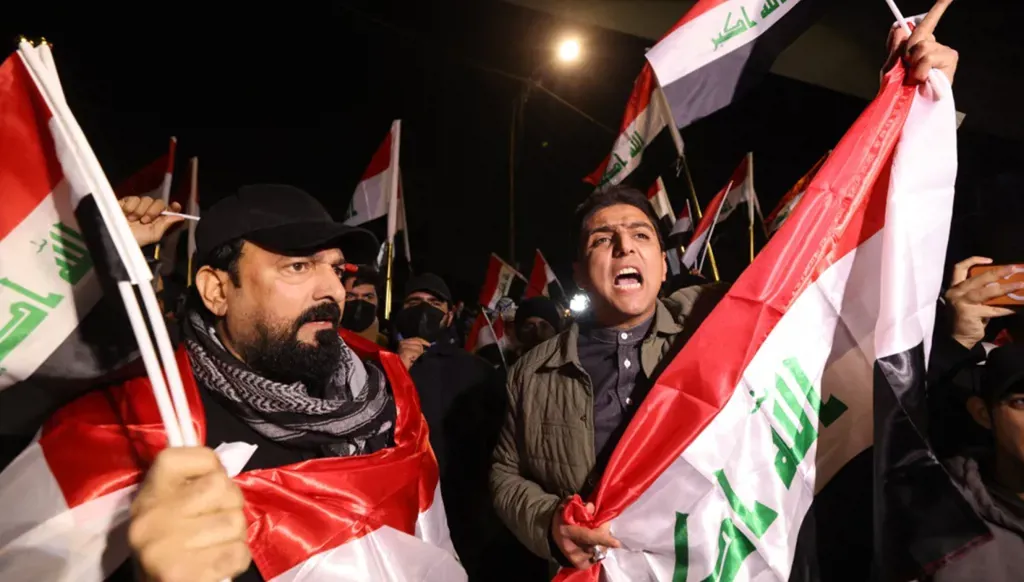


The Iraqi political scene is witnessing rapid internal transformation and the United States is taking note, tailoring its approach to limit Iranian influence amid growing debate over the nomination of former Prime Minister Nouri al-Maliki.
The Iraqi government has officially announced, via Foreign Minister Fuad Hussein, that Mark Savaya is no longer the U.S. special envoy to Iraq, and that veteran diplomat Tom Barrack is now responsible for the Iraqi file.
Managing the Iraq File
Nizar Haidar, head of the Iraqi Media Center in Washington, believes that U.S. envoy Tom Barrack "practically manages the Iraqi file," noting his frequent movements and visits to both Baghdad and Erbil and his network of contacts with political leaders.
Haidar told Annahar that "Barrack is an experienced diplomat who has proven his ability to handle complex files in the region, particularly in Syria and Lebanon, which suggests he may bring this expertise to the Iraqi arena while considering its specific characteristics."
He points out that combining the Iraq, Syria, and Lebanon files under a single office reflects a U.S. tendency to treat these issues as interconnected, which may indicate a more comprehensive vision for managing regional crises.
Haidar adds that "Barrack’s closeness to the directions of U.S. President Donald Trump may give him a wider scope to take initiatives, which could push toward clearer and firmer policies," urging political forces in Baghdad to assess these developments early.
Regarding Nouri al-Maliki’s nomination for the Iraqi premiership, Haidar expresses his belief that "forces within the Coordination Framework realize that insisting on him could lead the country into a period of uncertainty, so a consensus candidate with broader acceptance is being sought, especially given reservations from political parties and regional and international factors that make passing his nomination extremely complicated."
Reservations about al-Maliki
In this context, Al-Nasr Coalition spokesperson Salam al-Zubaidi told Annahar that "our reservations are not about al-Maliki personally, but about standards related to international and national acceptability." He added that the U.S. chargé d’affaires conveyed the same message to al-Maliki that had reached Coordination Framework leaders through several political channels, noting that the statement insisting on al-Maliki "was hastily written and then modified due to disagreements over some of its wording."
Al-Zubaidi emphasized that the lack of consensus could obstruct the work of the next government, stressing "Al-Nasr Coalition’s commitment to unified political decision-making to avoid new crises."
No Trust
Meanwhile, Ali al-Fatlawi, a leader in the Reconstruction and Development Coalition, believes that U.S. policy "cannot be fully trusted," describing it as "leaning toward dominance."
Al-Fatlawi told Annahar that "Iraq is a sovereign state capable of making its internal decisions without tutelage, whether from Barrack or anyone else."
He added that "a partnership between Baghdad and Washington does not give any external party the right to intervene in choosing the prime minister or influence political outcomes."
He noted that regional challenges—whether related to Iran, Turkey, or some armed groups—require careful assessment to safeguard Iraq’s interests.
Commitment to Sovereignty
Ibrahim al-Sukkini, a leader in the State of Law Coalition, considers that changes in the way U.S. envoys to the region are appointed "could be a worrying indicator if understood as interference in the internal affairs of states," emphasizing the need to adhere to the principle of sovereignty as outlined in the United Nations Charter.
Al-Sukkini told Annahar that "the current phase requires a unified Iraqi stance that places the country’s interest above all else and protects national decision-making from external influences."
Savaya’s Failure
Meanwhile, journalist Ahmed al-Moussawi believes that the transfer of the Iraqi file from Mark Savaya to Barrack "represents a shift from relying on a figure with a business background to a phase led by a diplomat more experienced in handling complex files," especially as it coincides with rising tensions between Washington and Baghdad over government formation consultations.
Al-Moussawi told Annahar that "one of the main indications of this shift is reports of Savaya’s failure to handle sensitive files and his inability to influence the course of al-Maliki’s nomination." He noted that Savaya, an Iraqi-American businessman appointed special envoy in October 2025, was not institutionally part of the State Department and did not make an official visit to Iraq, raising questions about the effectiveness of his role.
Al-Moussawi also observed that these developments were accompanied by notable signs, including the deletion of Savaya’s account on the X platform following his increasingly public comments on domestic issues.