

Southern Libyan border crossing erupts in violence


 Messenger
 Whatsapp
 Threads
 Email
Email
 Print
Print
 X
X
 Facebook
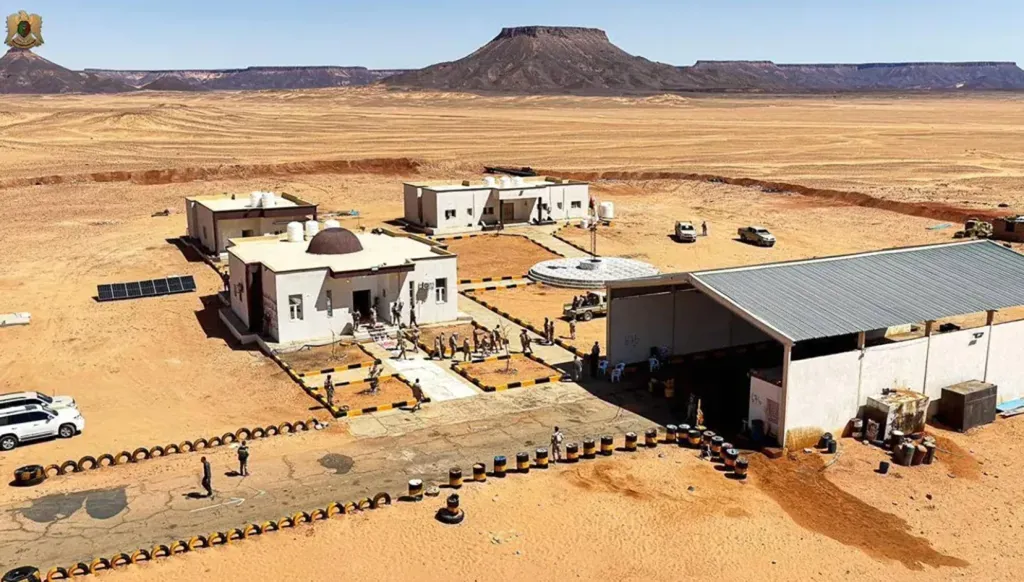


Armed clashes between rebels and forces affiliated with the Libyan National Army at the border strip between Libya, Niger, and Chad have reopened the issue of southern Libya and the ongoing marginalization and lack of services for its residents.
The Libyan public woke up on Saturday to news of an attack carried out by armed men on the Al-Toum crossing at the border triangle with Niger and Chad in Libya’s far southwest, a development that raises alarms about tensions between southern Libyan tribes—particularly the Tubu, a nomadic tribe, who have support extending into neighboring countries—and the divided authorities in a country trying to stabilize its fragile situation. The attackers, calling themselves the "Southern Rebels," announced their control of the crossing.
The group described their action as a protest against the poor living conditions in the south, while sharply criticizing the National Army and its leaders. A Libyan military official, however, denied any link between southern tribes and the attack, calling such claims "an attempt to sow discord."
The same official told Annahar that groups of mercenaries and rebels came from across the border with Chad and Niger, attacking the crossing and those managing and securing it with light weapons. Their control of the crossing was short-lived after the National Army sent reinforcements, engaged the attackers, forced them to flee across the border, and regained control of the area.
The Libyan National Army (LNA) shared videos on social media showing heavily armed armored convoys moving through desert areas, saying they were “sweeping the area and chasing the attackers,” before Major Mohamed al-Jareh, commander of Battalion 676, announced in a recorded video from in front of the Al-Toum crossing that control had been restored.
Libyan political analyst Idris Abdel Salam Ahmid explained that what happened was “a surprise attack carried out by Chadian mercenary gangs, aiming to undermine stability in southern Libya and regain their role in smuggling activities.” He added that Libyan forces quickly regained control, noting that in recent years the Libyan army has expelled Chadian and Nigerien opposition fighters in coordination with the neighboring countries’ authorities.
Ahmid emphasized that the Libyan army asserts control over the vast southern borders after the chaos following the 2011 events, highlighting the need for cooperation with neighboring countries “to fight gangs and prevent breaches of border areas.”
He rejected linking the clashes to rebellion, believing that “southern residents support the army, which has secured areas representing about 30% of Libya’s territory,” and pointed out that service demands unite Libyans amid the country’s political crisis, “and the south is no exception.”
Another political analyst, Ahmed Al-Tuhami, downplayed the incident as “recurrent,” noting that the Al-Toum crossing is in a desert area within a sparsely governed border triangle, “which makes movement easy without obstacles.” He added that controlling the borders takes time, “as this is a complex operation requiring technical equipment and drones.” He did not rule out Libyan participation in the attack, saying: “Today in Libya there is an intense conflict, during which extremist groups wage war against the National Army.”
Al-Tuhami called linking the incident to southern marginalization “a lie,” emphasizing that the relationship between southern tribes and the army leadership is “very close.” He also noted that reconstruction projects in southern cities, especially Sabha and Murzuq, were ongoing just a few kilometers from the borders. Without border stability, there is no room for reconstruction or resolving residents’ problems, meaning such attacks hinder development by making security the top priority.