

How the SDF’s retreat is redrawing Israel’s Syrian strategy


 Messenger
 Whatsapp
 Threads
 Email
Email
 Print
Print
 X
X
 Facebook
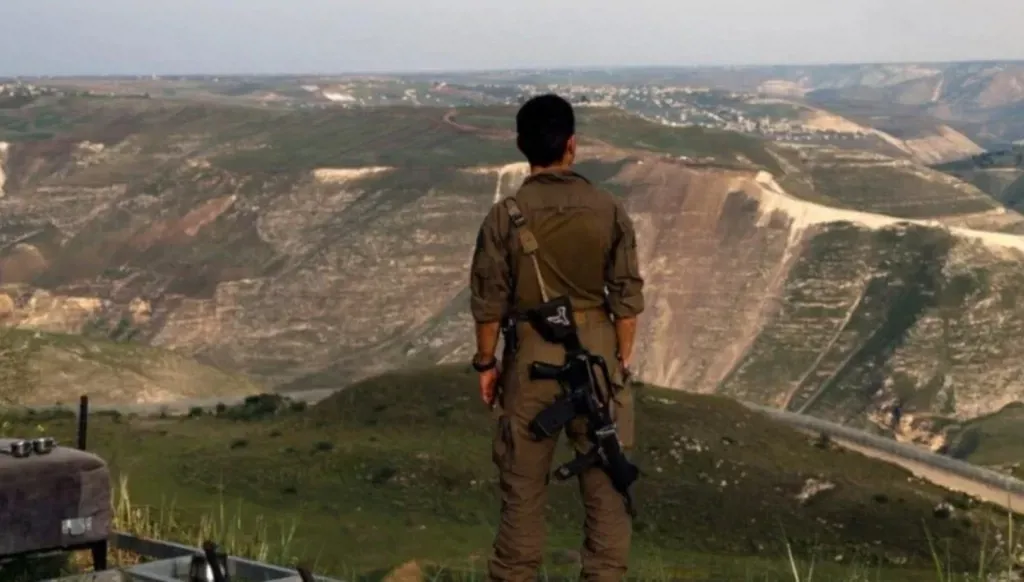


The defense and intelligence establishments in Tel Aviv do not view the rapid retreat of the "Syrian Democratic Forces" (SDF) in the face of the Syrian government advance as a failure of the Kurdish self-governance model that acted as a secular "buffer" against Syria's slide into "complete political Islamization." Instead, it's seen as the beginning of an Islamic threat emerging on their borders, potentially ending the policy of "fragmenting Syria" that serves Israeli interests. The swift collapse in northern Syria poses a major security dilemma for Israel: should it accept the new reality and negotiate with an Islamic regime under American auspices, or continue its plan to undermine Syrian centrality by supporting the Druze minority enclave in the south?
Analysts in Israeli papers "Yedioth Ahronoth" and "Maariv" attribute the rapid collapse of the SDF to what they term "American retreat from supporting the Kurds, restricting its involvement to a military partnership against ISIS." This retreat left the SDF in a "political limbo": neither an independent state nor a part of the center. This limbo, which is another term for a vacuum, was exploited by the Damascus government with a Turkish green light to impose on the Kurds conditions of "individual integration" instead of "integration as one bloc," which Israel views as a "fatal blow to the idea of a northern auxiliary army."
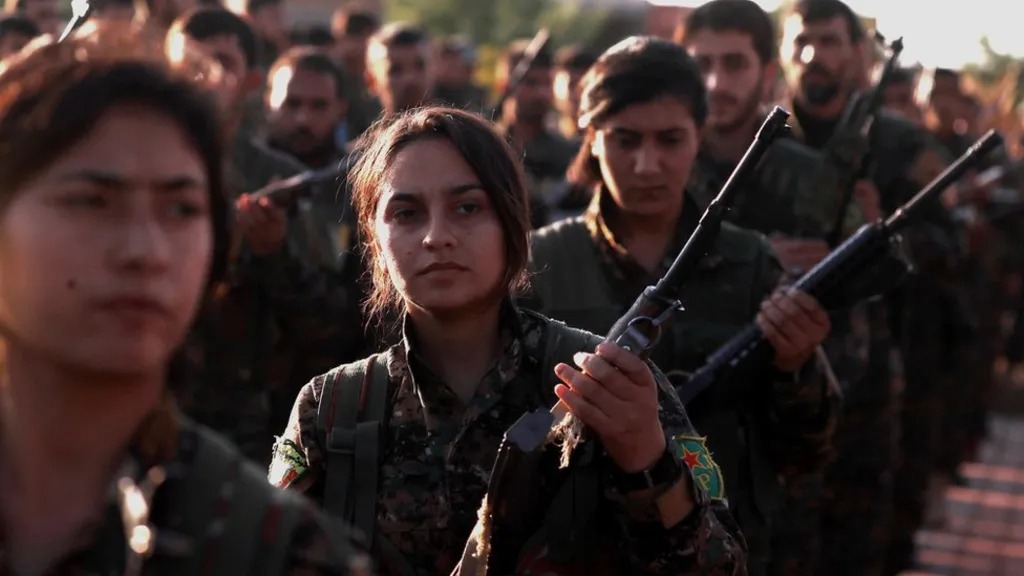
The Israeli military intelligence (AMAN) and the "Alma" security research center hold a grim view regarding Damascus's control over SDF areas. According to Lieutenant Colonel Reserve Sarit Zahavi, Syrian President Ahmed Sharaa is not building a 'new democratic Syria' but rather an "Islamic state" adopting al-Qaeda ideology. Intelligence reports indicate that the network of Hay'at Tahrir al-Sham schools doubled in one year, where students are indoctrinated with jihad principles and the rejection of coexistence with the "Zionist entity." This implies that the next Syrian generation 'will be more hostile' to Israel than the Baath generation.
What exacerbates Israeli concerns is the behavior of Syrian government forces entering Kurdish areas. Israeli reports documented the raising of the chant "Khaybar, Khaybar, O Jews... Muhammad's army will return." These scenes reinforce a conviction in Jerusalem that: "The fall of the SDF is a secular loss, and the threat to Israel heightens with the loss of the Kurdish barrier."
Such conviction arises from four factors:
- The economic stability of the new regime: With the fall of Deir ez-Zor and Hasakah to Damascus forces, the Sharaa government gained control of oil and gas resources, providing necessary funding to build a strong central army and to develop local military industries.
- Regional and international legitimacy: Israel sees that Damascus's control over the entire Syrian geography, with Turkish and American approval, will lead to the lifting of international sanctions, stripping Israel of economic pressure tools it used to weaken the Syrian state.
- The fading of the fragmentation strategy: Israel's gamble was on an ethnically and sectarian fragmented Syria (Kurds in the north, Druze in the south, Alawites on the coast), as dealing with each enclave separately is easier, and the return of central authority means the return of a 'unified enemy' holding the sovereignty card.
- The emergence of an extremist Sunni front: Replacing the 'exhausted Shiite resistance axis,' this front enjoys greater 'popular' legitimacy within Syria.
Turkey and Israel: A struggle for influence over Kurdish blood
The Israeli research circles see Turkey and its President Recep Tayyip Erdogan as the 'biggest winners' from the collapse of the SDF. While Israel was pushing for international recognition of the 'Rojava' entity to obstruct Turkish ambitions in Syria, Ankara convinced the U.S. administration that Syria's stability requires dismantling the 'Kurdish terrorist corridor.' This Turkish influence in Washington poses a threat to Israel, as Ankara seeks to impose political and security tutelage over Damascus, turning Syria into a hub for Turkish policies hostile to Israel. Reports by the "Steimanson Institute" confirm that Israel tried to hinder international recognition of Sharaa and prevent the lifting of sanctions, "but the Turkish-Saudi alliance was more influential in Washington, says the institute."
One of the most sensitive aspects of Israeli policy towards Syria is the relationship with the Druze in Suweida, which a report by "The Washington Post" uncovered to have deep and secretive dimensions. Israel views the fall of the northern Kurds as a bad omen for the southern Druze, as Sharaa's forces will now focus on ending the "Druze impasse" status. According to the American newspaper, Israel secretly supplies weapons and equipment to Suweida, since the fall of Bashar al-Assad, including combat gear (500 assault rifles, ammunition, and protective vests distributed to the "Druze Military Council," along with anti-tank missiles sent through the SDF), provides the Druze with funding (monthly salaries for about 3000 Druze fighters ranging between $100 and $200 each), and offers intelligence support (providing their leaders with Israeli satellite images of government troop movements).
In response to the SDF's retreat, Israel updated its security doctrine, shifting from a policy of "managing the conflict" with Syria to one of "imposing field realities." No longer satisfied with airstrikes, it established a so-called "Buffer Architecture" comprising 10 advanced military points inside Syrian territory outside the occupied Golan area.
The new Israeli strategy is distributed into four specified areas of influence:
- Active Deployment Area: Spanning from the Lebanese border to the Yarmouk Basin, where Israeli forces conduct sweeps and disarmament patrols to ensure the area is free of any land threats.
- Incursion Zone: Covering 600 square kilometers, including southwestern rural Damascus, where Israel enforces fire control and prohibits any Syrian military movement without prior permission.
- Aerial Control Zone: Aims to prevent the rebuilding of Syrian air defense networks or the arrival of advanced Iranian weapons to the remaining sleeper cells.
- Soft Power Area: Includes distribution of humanitarian aid and food baskets in rural Quneitra, fostering relationships with local residents and recruiting them as an early warning network against any jihadi infiltration.
Reports from the "Etana" Hebrew Institute confirm that Israel uses "fiery red lines" to control the behavior of the Syrian government, having bombed units of the Syrian Ministry of Defense to prevent them from deploying in the south, and conducted intensive raids in July 2025, killing 300 government fighters attempting to advance towards Suweida. Conveying a message that "protecting the Druze" is an Israeli red line.
And one of the most worrying scenarios for analysts in "Yedioth Ahronoth" is the fate of ISIS detainees following the withdrawal of the SDF, which managed 25 detention sites housing the world's most dangerous terrorists. Israel monitored the escape of leadership figures from the Al-Shaddadi prison, threatening a resurgence of ISIS aimed at facing Israel to gain "jihadist" legitimacy against Sharaa. The Al-Hol camp has become a "bargaining chip" in the hands of the Damascus regime, and Israel fears Damascus might use Al-Hol extremists as an "unofficial arm" to carry out operations against Israel, denying official responsibility, as the Assad regime had done before.
Compelled Coordination with the Enemy
In a remarkable pragmatic shift on January 6, 2026, the United States announced an Israeli-Syrian agreement to establish a "Joint Integration Mechanism." This mechanism is not a peace agreement but a "hotline cell" under American supervision aimed at (1) limited intelligence exchange regarding ISIS cell movements and uncontrolled forces; (2) collision prevention to avoid confrontations between Israeli aviation and Syrian forces expanding into former SDF areas; and (3) managing the humanitarian crisis in the south, where Israel "begrudgingly" agreed to allow limited Syrian internal security forces into Suweida to control security chaos in exchange for guarantees not to harm its loyal Druze leaders.
According to "BICOM," this mechanism is the 'minimum' accepted by Israeli Prime Minister Benjamin Netanyahu to ensure Israel's security amid the SDF retreat, yet he still insists on "complete disarmament" in southern Syria up to the outskirts of Damascus as a condition for any withdrawal from the points occupied by his army in the Syrian field.
In the end, Israel considers the SDF retreat a "harsh lesson" in the fluctuations of American policy, prompting Israel to establish a security belt not reliant on precarious political understandings but on "Merkava tanks and advanced observation points, legitimizing their presence as a practical matter in Syria." The next conflict will not be between a "regime and opposition" but between an "Islamic Damascus central authority" and ‘Israeli security cantons’ in the south, in a struggle that will define the face of the Middle East.