The northern–southern equation in Syria: What lies ahead for Sweida?


 Messenger
 Whatsapp
 Threads
 Email
Email
 Print
Print
 X
X
 Facebook
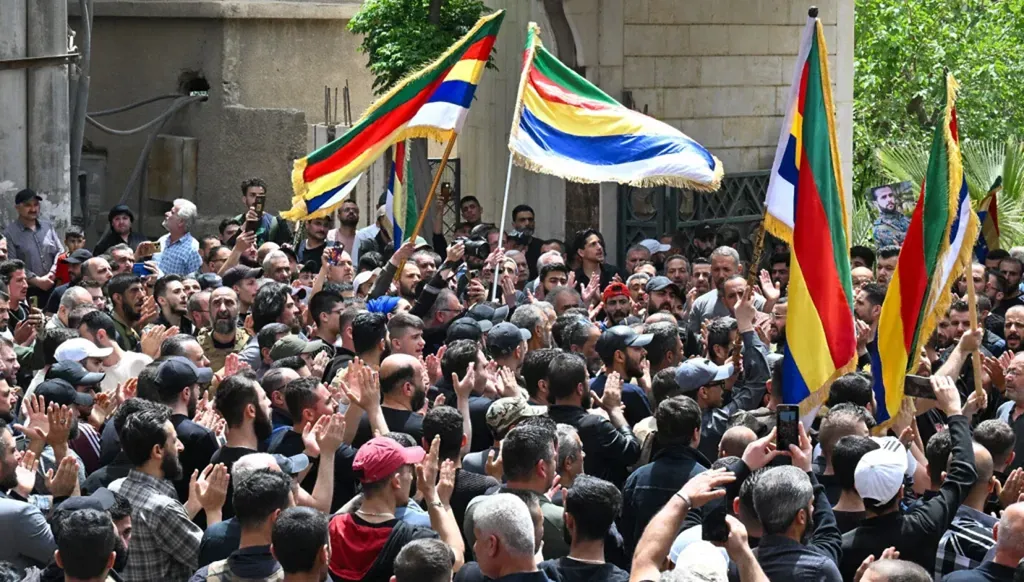


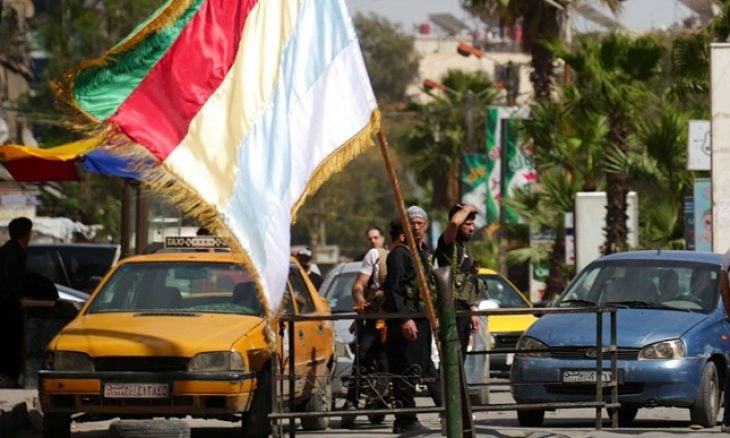
After northeastern Syria, attention is set to shift south, raising one central question from which others follow: will the scene be repeated as a prelude to establishing a new political reality and ending the separatist situation in Sweida? And what about the US and Israeli positions on developments in the southern front?
The Syrian government’s move to close the file of Kurdish self-administration in northern and eastern Syria through military action, after all efforts to reach political solutions failed, and amid the absence of an international stance supportive of the Kurds despite their strong ties with the anti-terrorism coalition and the United States in particular, amounted to strong messages directed at Sweida and Sheikh Hikmat al-Hijri, who remains committed to his separatist project.
There is still no information on whether the Syrian authorities will resort to military action in Sweida as they did in the northeast, or whether they will leave the door open to a potential political agreement. However, notable political activity has been observed in recent hours and warrants attention. Information has emerged about a visit to the United States by a delegation from Sweida that included social figures, among them the head of internal security in Sweida, Sheikh Suleiman Abdel Baqi.
According to the information, the delegation held meetings with members of the US Congress and officials at the Pentagon, the US Department of Defense, to discuss developments in Sweida. In this context, Abdel Baqi said the meetings focused on conveying a direct picture of the on-the-ground and political realities in Sweida and delivering a message that the people of Sweida are part of Syria and are not calling for any project outside the framework of a single Syrian state.
What stood out was what Abdel Baqi inferred about the US position through the delegation’s meetings. He noted that the stance of the US administration is based on supporting Syria’s unity and stability, rejecting any separatist projects, and limiting support to humanitarian assistance and efforts to enhance security and stability. This position on southern Syria is consistent with Washington’s stance on northeastern Syria, where the United States supported Syria and its unity.
The experience in northeastern Syria clarified the reality of the US position, which is centered on backing the Syrian government and Syria’s unity, amid reports speaking of an American desire for the Syrian authorities to serve as a key pillar in a broader regional stability project. It also highlighted the fragility of minority alliances with foreign powers compared with the solidity of the evolving US–Syrian relationship.
Ibrahim Al Jabin, a Syrian writer, says that states strike agreements with strong governments, not weak groups. This principle applied in northeastern Syria, where the United States chose to reach an understanding with the Syrian government rather than maintain its alliance with the Kurds. Attention is now focused on whether the same principle will apply to Israel as well. In Al Jabin’s assessment, Tel Aviv would prefer an agreement with Damascus over an alliance with the Druze, because only the government is capable of guaranteeing security, as seen in the northern model.
The Northern–Southern Equation?
Following developments in northeastern Syria, talk has emerged of an equation: northern Syria for Turkey and southern Syria for Israel. In other words, the north would be a natural extension of Turkish influence, an area where the Syrian authorities can move, decide matters militarily, and regain control, while the south would be an Israeli national security zone, with the existing status quo remaining in place until a security or political agreement between Israel and Syria is reached.
A source closely following the issue effectively rules out the existence of such formal agreements, a view also shared by Al Jabin. However, speaking to Annahar, Al Jabin says the equation exists de facto and in practice. Israel considers the south, meaning the entire southern region including the Damascus countryside, Quneitra, Daraa, and Sweida, part of its security perimeter and threatens to strike Syria if any developments there endanger its security. At the same time, Al Jabin links this reality to the way states use groups as leverage to strike agreements with governments capable of guaranteeing security.
In Sweida, there is a segment that views the experience of northern Syria as a lesson for the south. Proponents of this view point to recent history, recalling the near-unconditional US support for the Kurdish self-administration, including funding, advanced weapons, and an alliance within the international coalition against terrorism, followed by Washington’s abandonment of the Syrian Democratic Forces once they were no longer needed. They believe Israel will follow the same American approach.
Also notable was the stance of former Israeli communications minister Ayoob Kara, who spoke of Sweida from a federal perspective, after previously referring to the idea of a “State of Jabal al-Bashan”.
In sum, recent weeks have demonstrated a clear US position based on supporting Syria’s central government and the country’s unity. Experience so far has undermined the idea of dividing Syria and establishing separatist entities. Accordingly, attention will turn to Sweida in the coming phase and to the actions of both Syria and Israel, in light of renewed negotiations between the two sides under US sponsorship aimed at lowering tensions and reaching a security agreement. Attention will also focus on Jordan’s role in resolving the crisis. Here, a source following the issue asks whether Jordan’s role in Sweida will resemble that of Kurdistan Region President Masoud Barzani in northeastern Syria, and whether the proposed roadmap, currently the only available political solution, could mirror the March 10 agreement between the Syrian government and the Syrian Democratic Forces.