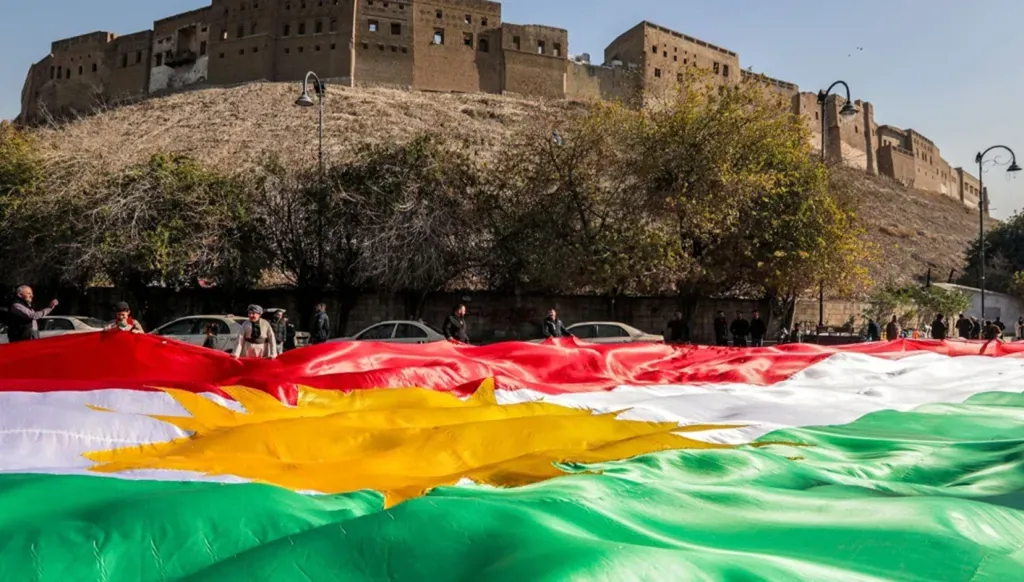
Recent developments in northern and eastern Syria have revived debate over the future of the self-administration known as “Rojava,” which has endured for many years in northern Syria and has played a role in shaping the peace process between the Turkish government and the Kurdistan Workers’ Party (PKK).
The recent military developments between Damascus and the Syrian Democratic Forces (SDF), which resulted in a ceasefire agreement and the integration of SDF elements into the Syrian army, have reshaped not only the balance of power on the ground but also the political dynamics of the settlement track in Ankara. These shifts come as the Syrian situation has evolved into a direct source of pressure on Turkey’s internal balances, with escalating confrontational rhetoric in Ankara occurring alongside opposition warnings about the consequences that any miscalculation in the Syrian file could have for Turkey’s domestic political process.
Changing Political Landscape
Since the outset of the Syrian crisis, the presence of the Syrian Democratic Forces (SDF) and the self-administration in northern and eastern Syria has been a decisive factor in Turkey’s policy toward the Kurds. Recent developments have shifted the equation in Ankara’s favor, prompting Turkish authorities to reaffirm what they describe as their “correct reading” of the domestic peace process.
Turkish President Recep Tayyip Erdoğan emphasized Turkey’s firm commitment to supporting Syria’s territorial integrity, while his ruling coalition partner, Nationalist Movement Party leader Devlet Bahçeli, adopted a more confrontational tone toward the Syrian Democratic Forces (SDF). Bahçeli accused the SDF of disregarding Abdullah Öcalan’s call to avoid military escalation, warning that any provocation in Syria could jeopardize the domestic peace process.
Conversely, pro-Kurdish opposition parties, led by the Peoples’ Democratic Party (HDP), adopted a cautious approach, calling for dialogue and viewing any departure from this path as a direct threat to peace prospects in Turkey.
Recent developments indicate that Turkey’s political trajectory is no longer contingent on uncertainties in Syria. These events have weakened the arguments long used to delay progress toward peace and have underscored that shifting military and political balances in Syria are beginning to produce tangible outcomes on the ground that can be leveraged domestically.
Thus, it can be argued that the “Syrian obstacle” to peace in Turkey is no longer a sufficient justification for delaying dialogue. There is now space to pursue political solutions that move beyond military and security considerations, encompassing democracy, Kurdish rights, and broader political participation.
Former diplomat and international conflict expert Aydın Sezer believes that the peace process will gain momentum once the “SDF obstacle” is overcome. He noted, “From the beginning, the process was tied to Syria, and now that issue has been resolved.”
In his conversation with Annahar, Sezer dismissed the possibility of the Kurdistan Workers’ Party returning to violence, stating, “The party understands that there is no advantage in resuming violence. Given the current regional balances, they no longer have the capacity to sustain relationships that would fuel such conflict.”
Possible Peace Process Scenarios
The potential scenarios for the peace process in Turkey can be analyzed through two main axes:
-The agreement between Damascus and the SDF regarding the future of SDF-controlled regions—and the integration of local forces into the Syrian army—reduces the security risks that had been cited as a pretext for delaying internal dialogue in Turkey.
-Ankara’s capacity to balance internal security objectives with the new realities in Syria—by adapting its strategies to shifting geopolitical dynamics—opens the way to transform the peace process from a purely security-focused initiative into a comprehensive political project centered on democratic dialogue and the expansion of political rights for Kurds within the Turkish state.
If the Turkish government succeeds in managing this balance, it could create an unprecedented opportunity to turn the peace issue from a postponed matter into a comprehensive national project. Achieving this, however, would require careful coordination among the executive branch, parliament, opposition parties, and civil society to ensure the durability of any agreement.
Risks and Challenges
Despite the improved conditions for advancing peace, significant challenges remain that could impede progress. The disagreement between Erdoğan and his ally Bahçeli over how to approach the peace process has exposed a strategic divide in addressing the Kurdish issue, potentially undermining the cohesion of political decision-making and delaying the adoption of bold measures.
Meanwhile, Turkish political analyst Erkan Onduman cautioned in his conversation with Annahar that “Bahçeli, who has grounded his peace doctrine in preventing ‘external forces lurking around Turkey,’ particularly Israel, from exploiting the political and social realities of the Kurds to harm the Turkish state, may now see that these risks have largely vanished, removing what he considered the urgent basis for pursuing peace.”
While the PKK aims to safeguard its achievements, any move toward peace will require robust guarantees to protect Kurdish interests within Turkey; without such assurances, any agreement is likely to encounter both popular and political resistance.
The United States and regional actors play a direct role in determining the future of the SDF and Kurdish-held areas in Syria, and any shift in their positions could once again impose new constraints on Turkey’s domestic politics.
Recent developments in Syria have altered the political landscape for Turkey’s peace process, creating an opportunity to reinforce it—and, in turn, strengthen Turkey’s regional position on a more balanced diplomatic and strategic footing.
Conversely, failing to seize this opportunity—or continuing to rely on security justifications to postpone peace—would raise the future costs of the process, make it harder to build trust between the parties, and expose the country to a new wave of political and social tensions that could persist for decades.



 Messenger
 Whatsapp
 Threads
 Email
Email
 Print
Print
 X
X
 Facebook