International force in Gaza: Why is it rejected by some and seen as an opportunity by others?


شارك على
 مسنجر
مسنجر
 واتساب
 ثريدز
ثريدز
 بريد إلكتروني
 الطباعة
شارك على





Shafiq Taher*
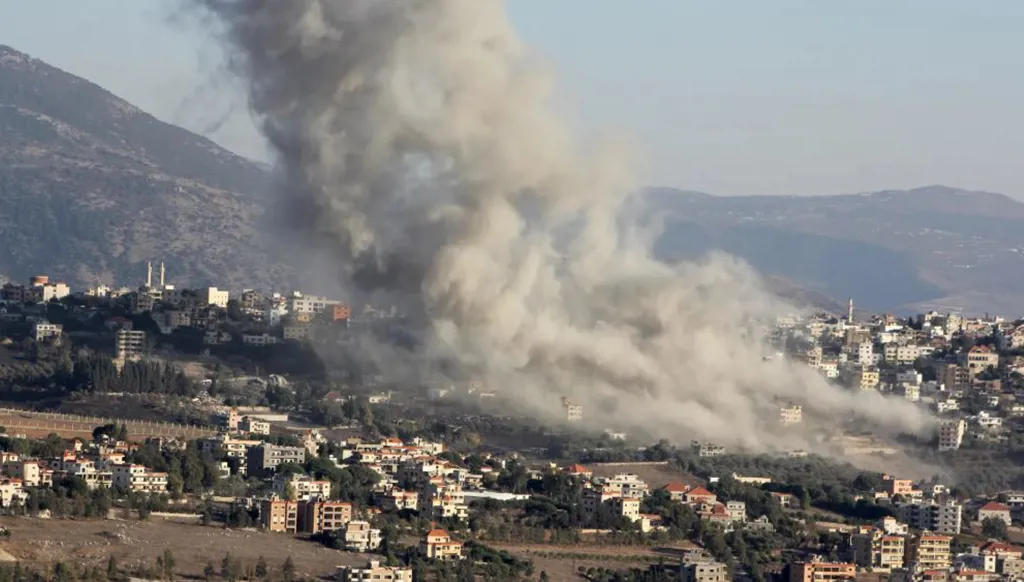
The discussion about deploying an international security force or a multinational force in Gaza has gained momentum. The idea emerged during discussions of the 'day after' the Gaza war between Hamas and the Palestinian factions on one side and Israel on the other, following Hamas's attack on Israel on October 7. These discussions, led by Washington and exchanged with regional and international parties, highlighted Israeli sensitivity regarding the identity of participating countries. Netanyahu stated that Israel would decide which foreign forces would be acceptable within a proposed force, in the context of a ceasefire plan and post-war arrangements in Gaza under American sponsorship.
In this context, the idea of an international security force emerged as a transitional solution adopted by international parties, primarily the United States, and was discussed in the United Nations corridors as part of the post-war scenario. On paper, the idea seems attractive—a multinational force deployed with international authorization to maintain security, protect civilians, and prevent the collapse of humanitarian conditions. But practically, the idea reveals a sharp political division that is not about ethics but rather interests.
Countries opposing participation fear the force might turn into a party in the conflict or a cover for security arrangements serving one side at the expense of another, while other countries see participation as an opportunity to influence Gaza's future and its administrative arrangements. Thus, the debate over the international force reflects not a disagreement over civilian protection but a conflict over who will manage Gaza after the war, under what conditions, and for whose benefit.
Gaza is not a typical peacekeeping arena
The first reason for rejection is the nature of Gaza itself. It is not a frozen conflict zone with a clear ceasefire but an open arena for potential explosions at any moment. Any international force may find itself in direct confrontation with armed factions or defending security arrangements without Palestinian consensus. This reality makes the peacekeeping mission akin to managing an active conflict, which many countries avoid for fear of sinking into a long-term security quagmire.
Lack of local acceptance... a fundamental obstacle
The success of any international force requires political acceptance from concerned parties. In Gaza's case, this condition is almost absent. Israel wants a force that ensures its security and restricts Hamas and armed factions' movements, while Hamas fears this force could become a tool to impose new political realities. Without clear consensus, the international force might be viewed as a masked occupation force rather than a neutral party.
Azerbaijan, an example of rejection as a cautious policy
Countries considering sending their troops to Gaza take into account internal public opinion. Casualties in a controversial external mission may ignite internal political crises, especially in countries that see no direct benefit from participation. Hence, many governments prefer providing humanitarian or financial support, as it is politically less costly and militarily less risky.
Azerbaijan's stance clearly reflects the logic of rejection. Baku announced it has no intention of sending troops to Gaza or participating in any military mission outside its borders. This decision reflects not a position on the Palestinian cause but a cautious political doctrine, seeing involvement in a highly complex conflict as potentially triggering repercussions beyond Azerbaijan's control, whether in terms of security or regional relations.
Turkey, ambition for role and limits of reality
In contrast, other countries see participation as a political opportunity. Being part of an international force means having a seat at the table in shaping Gaza's future—who manages the security, supervises the crossings, and has a significant say in reconstruction? For these countries, absence means leaving these decisions to competing forces or major powers controlling the political course alone.
Turkey is a clear example of this approach. Ankara seeks to play an active role in post-war arrangements, driven by its desire to enhance its regional status and image in the Islamic world. However, this ambition collides with clear Israeli rejection of any Turkish military presence in Gaza. Therefore, Turkey tends to look for alternative forms of participation, focusing on political, logistical, or humanitarian roles without direct military involvement.
A force without a political solution?
In conclusion, the debate about the international force in Gaza is not a technical discussion about security but a conflict of wills and interests. The rejecting countries see Gaza as a political and security trap, while the willing countries see it as an opportunity to bolster their influence. But the most critical question remains unanswered: Can any international force succeed in the absence of a comprehensive political solution addressing the conflict's roots? Without such a solution, the international force may transform from a stabilization tool into a new element in the equation of failure.
العلامات الدالة
الأكثر قراءة