

Historic Syrian-Israeli talks in Paris yield first trilateral security understanding


 Messenger
 Whatsapp
 Threads
 Email
Email
 Print
Print
 X
X
 Facebook
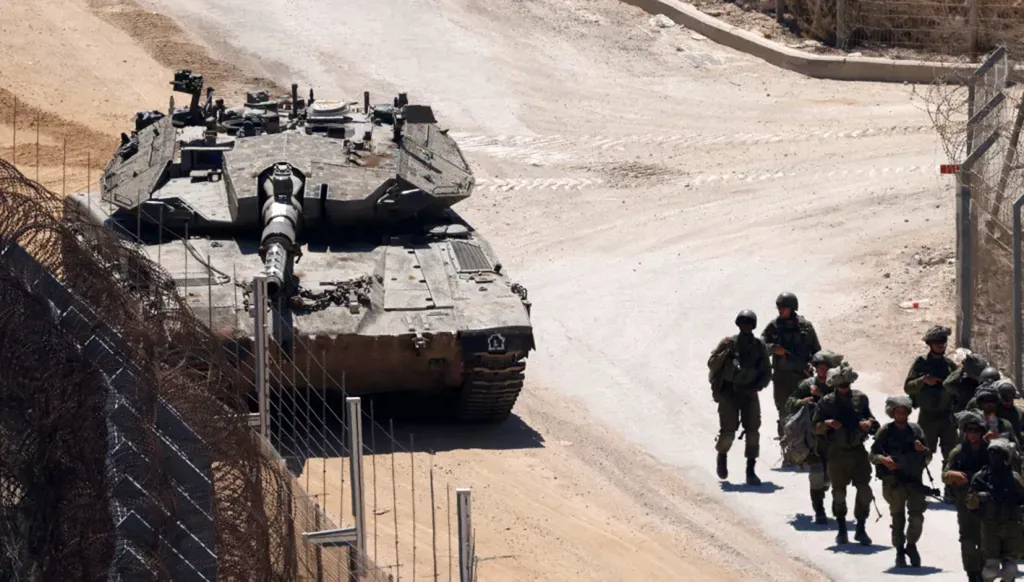


After two days of intense talks in Paris under U.S. sponsorship, the Syrian and Israeli delegations reached agreements that signal a notable shift in their bilateral relations. The understandings include a suspension of Israeli military operations in Syria and the creation of a hotline for direct coordination, marking an unprecedented level of security engagement between the two sides.
The resumption of talks followed a direct request from U.S. President Donald Trump to Israeli Prime Minister Benjamin Netanyahu during their meeting late last year at Mar-a-Lago. Reports indicate that Netanyahu agreed to continue negotiations while reaffirming Israel’s commitment to respect certain “red lines” it considers non-negotiable.
In this context, Washington is exerting considerable pressure to push the talks forward, with the Trump administration viewing the agreements as a way to stabilize the Syrian-Israeli border and potentially lay the groundwork for broader diplomatic arrangements in the future.
Israeli media reported that both parties have agreed to intensify talks, strengthen confidence-building measures, and pursue a security agreement. Citing informed sources, the newspaper Yedioth Ahronoth described the negotiations as productive, noting that both sides expressed a desire to move toward a security arrangement aligned with President Trump’s vision for the Middle East.
Israel was represented in the talks by the Prime Minister’s military secretary, Roman Gofman (the candidate for Mossad chief), Ambassador to Washington Yehiel Leiter, and Acting National Security Advisor Gil Reich. The Syrian delegation included Foreign Minister Assad Al-Shaibani, Intelligence Chief Hussein Al-Salama, and their respective teams. Also participating in the meetings were Trump's representatives, Jared Kushner and Steve Witkoff, as well as the U.S. Ambassador to Turkey and special envoy to Syria, Tom Barrack.
These negotiations come roughly a year after the establishment of the new regime in Damascus. According to the Alama Center for Studies, which specializes in the Syria and Lebanon fronts, the country continues to grapple with deep internal unrest, highlighting the authorities’ struggle to establish stability and build trust between the state and its various components. The center emphasized that tensions along the coast and clashes with Kurdish forces in the north are not isolated incidents but reflect the fragility of Syria’s political and security structures.
The assessment also notes that the Syrian regime continues to struggle with the transition from a phase of mere survival to effective governance, while internal security remains fragile, leaving the country vulnerable to escalation and instability.
Intelligence cooperation mechanism
Yedioth Ahronoth reported that the joint Israeli-Syrian-American statement - a rare diplomatic document - includes the establishment of an immediate intelligence cooperation mechanism, similar to a “hotline.” The system is designed to prevent clashes and misunderstandings and enable rapid responses to any potential incidents. Representatives from all three countries will oversee and manage the mechanism.
It was also agreed to launch parallel discussions on a security agreement, alongside talks addressing civilian issues in sectors such as energy, health, and agriculture. Washington has promoted the idea of Israel selling gas to Syria. Under U.S. pressure, Israeli military operations in Syria will cease - a move described by Yedioth Ahronoth as a historic opportunity to advance negotiations in a constructive direction.
However, progress on “strategic issues,” according to Yedioth Ahronoth, hinges on establishing a clear timetable for the withdrawal of Israeli forces. In return, Israel is seeking a secure corridor from the border to the Druze areas - a move that would entail deep penetration into Syrian territory and has prompted widespread skepticism about Damascus’s willingness to agree.
The discussions are focused not on forming an alliance, but on establishing a “security coordination agreement.” Some experts suggest such an arrangement is theoretically possible, provided there is genuine political will. However, Israel is seeking more than a simple disengagement agreement, including the disarmament of heavy weapons in southern Syria, while questions remain about the parties’ willingness to accept intermediaries and phased settlements.
Israel has also insisted on rejecting any Turkish military presence in Syria, viewing Ankara’s deployment of aircraft or radar systems as a potential forward base that could threaten its security. Despite the relative progress in the talks, major security questions remain unresolved.
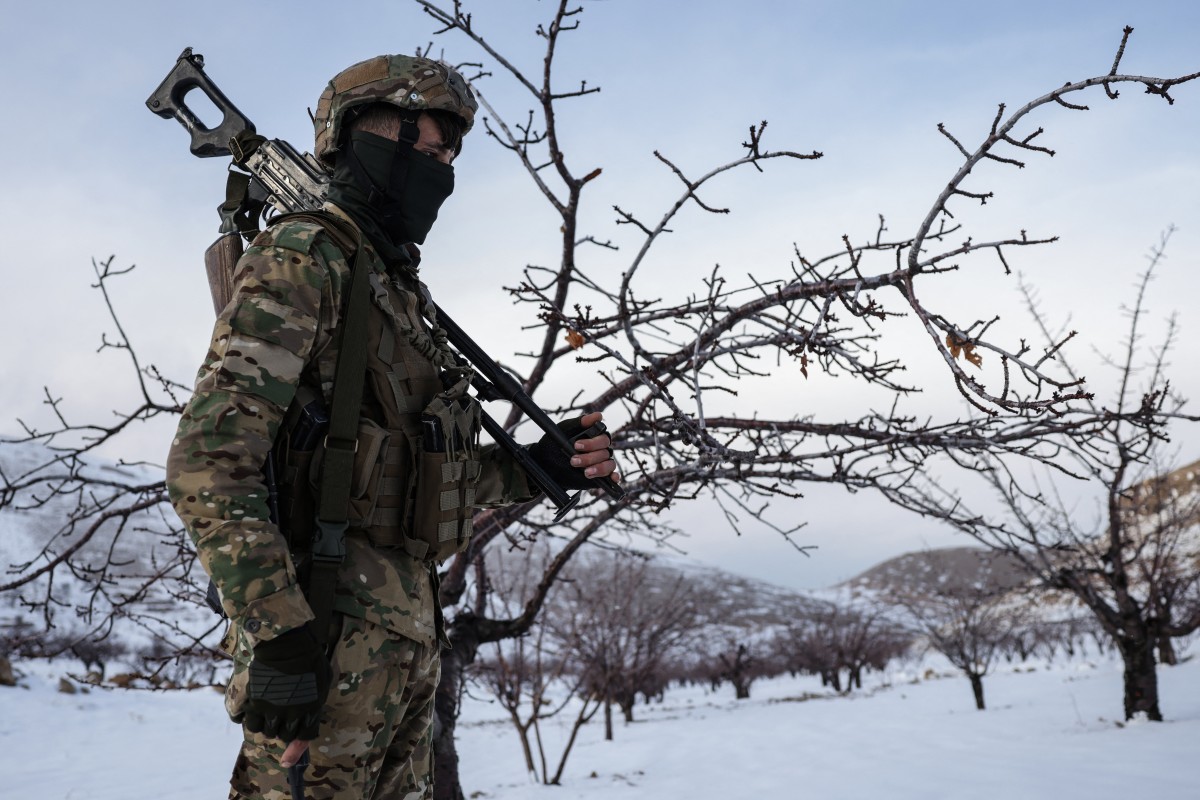
Fundamental gaps
In this context, Herb Keinon wrote in The Jerusalem Post that Israel had long been able to predict the behavior of the Assad regime, which for decades adhered to the 1974 Disengagement Agreement, making the Syrian front the calmest compared to Lebanon. However, the regime’s collapse has created uncertainty in a country fragmented by armed groups hostile to Israel.
He noted that Israel had taken military action to neutralize Syria’s heavy weapon capabilities, preventing them from falling into hostile hands, and maintained control over large areas in southern Syria - including the Syrian side of Mount Hermon - out of concern over who might govern the country in the future.
Keinon concluded that this context underscores the importance of the ongoing talks. While the joint statement does not constitute a comprehensive security agreement, it represents the first official trilateral acknowledgment of negotiations that have produced tangible, if temporary, understandings. He added that Washington now views continued Israeli strikes as an obstacle to the new Syrian leadership’s ability to assert authority and rebuild the state.
Damascus is demanding a full withdrawal of Israeli forces from areas entered after Assad’s fall, the restoration of the 1974 Disengagement Agreement, a cessation of strikes, and full respect for Syrian sovereignty. In contrast, Israel is prioritizing the disarmament of southern Syria, the protection of minority communities - particularly the Druze - and the preservation of freedom for its military and intelligence operations.
Similarly, Maariv political analyst Anna Barsky cited an Israeli official who noted that, despite progress on procedural mechanisms, “the fundamental gaps between Israel and Syria remain deep,” especially concerning disarmament. While Washington envisions a demilitarized zone with clear restrictions and international monitoring, Tel Aviv is seeking a buffer zone under effective Israeli control. Although the talks have been described as fruitful, there are still no indications of decisive agreements or a clear timetable, suggesting that negotiations will continue cautiously, without expectations of a rapid breakthrough.