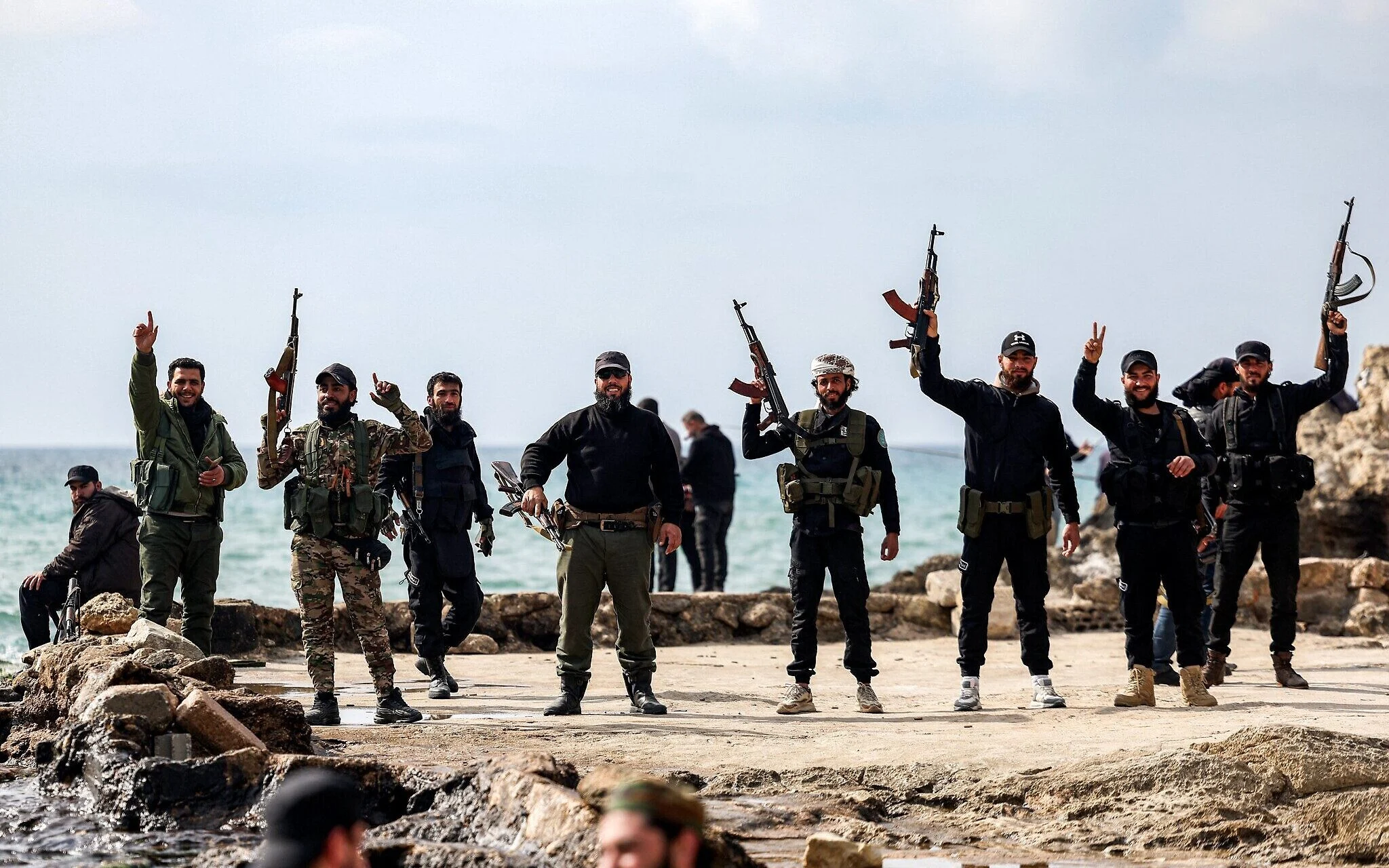
Why Israeli - Syrian normalization remains out of reach in 2026


 Messenger
 Whatsapp
 Threads
 Email
Email
 Print
Print
 X
X
 Facebook



The year 2025 was complex in terms of Syrian–Israeli relations, and the landscape is unlikely to be any less complicated in 2026. The two sides failed to reach security understandings or a normalization agreement, and the same status quo remained in place : Israeli incursions into southern Syria reaching the outskirts of the Damascus countryside, airstrikes hitting strategic Syrian sites including the General Staff Headquarters (the army’s top command body), and the arming of groups in Sweida (a southern Syrian governorate with a Druze majority), alongside attempts to de-escalate the conflict.
Negotiations mediated by the U.S. failed multiple times, for a clear reason: Israel succeeded over the past year in imposing security along its border with Syria by force. It pushed deeper into Syrian territory in Quneitra, reached the Damascus countryside, and took control of Jabal al-Sheikh, a mountain on the Syrian-Lebanese-Israeli border. Syrian airspace also remained open to Israeli fighter jets striking targets in Syria and Iran. In contrast, Syrian authorities were hamstrung by widespread chaos that requires time to bring under control.
No concessions
The principle of negotiations is based on concessions made by the parties to reach a meeting point at which agreements are concluded. No agreement can be reached without concessions from all sides, unless it is an agreement of total surrender. However, Israel was not prepared to make concessions in favor of an agreement with the Syrian authorities, who themselves were unwilling to surrender, especially as Israel is capable of imposing the reality it wants along its borders through firepower.
For this reason, the negotiations failed.
The Syrian authorities wanted Israel to withdraw from areas of southern Syria up to the Golan Heights (a strategic plateau occupied by Israel since 1967) and to halt the strikes. Israel, however, did not offer these concessions. Instead, it sought to establish a demilitarized security zone in the south and succeeded in doing so through military force. It also viewed the new Syrian authorities as fragile and unable to impose their conditions or threaten Israel’s presence.
This review of events was necessary in an attempt to anticipate the state of Israeli-Syrian relations in 2026. There is broad consensus that normalization faces difficult conditions and may not be feasible, but attention is focused on security arrangements to regulate the relationship. In this context, Nanar Hawach, senior analyst on Syrian affairs at the International Crisis Group, rules out a comprehensive agreement and expects limited, technical security arrangements instead.
Security arrangements
In remarks to Annahar, Hawach speaks of possible limited technical arrangements and lists them: mechanisms to avoid escalation, perhaps a partial withdrawal from certain points, and U.S. guarantees to reduce airstrikes. In his view, however, this would amount to “managing the conflict,” not ending it. Assessments link any sustainable solution between Syria and Israel to the final outcomes of Israel’s wars across the region, stretching from Gaza to Iran, Lebanon and Syria.
“The gap is wide” between the two sides, according to Hawach, but Israel is not compelled to make the concessions Syria seeks in any formal agreement, particularly as it is achieving “significant strategic gains” without paying a price: It controls areas in the south, carries out airstrikes, and maintains its air corridor toward Iran. So why conclude an agreement as long as it can obtain what it wants without one?
Ruling out normalization
Despite all that has been said about the possibility of normalization between Syria and Israel following the fall of Bashar al-Assad’s regime, the reality on the ground is different.
Hawach considers normalization to be “very costly” domestically for the Syrian authorities, given security fragility, sectarian tensions, and armed factions that have not been fully integrated. Any move that appears as “normalization” with Israel amid what is happening in Gaza and Syria would undermine the government’s internal legitimacy and provide its opponents, whether remnants of the former regime, ISIS (Islamic State in Iraq and Syria), or rejectionist factions, with ready-made political ammunition.
In conclusion, Israel has no interest in concluding an agreement with Syria given the imbalance of power in its favor, and sees no need to make concessions, as it can achieve what it wants through military force.
However, security understandings may be formulated under U.S. pressure to ensure a minimum level of stability and to consolidate the foundations of the new Syrian system, which the United States appears to place at the core of its economic plans for the Middle East.