

Climate change in Egypt: Mounting threats and conditional investment opportunities


 Messenger
 Whatsapp
 Threads
 Email
Email
 Print
Print
 X
X
 Facebook
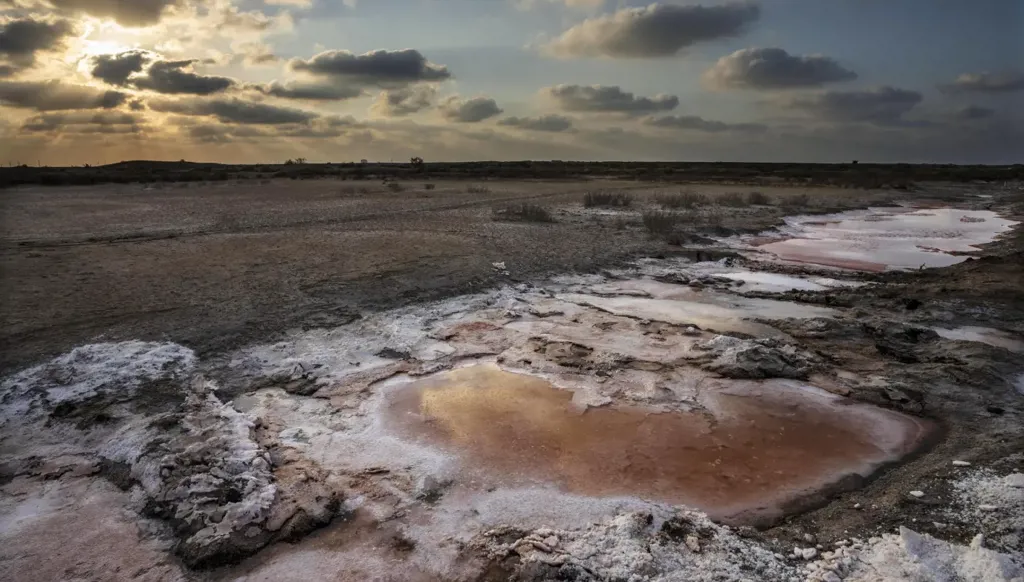


Climate change remains one of the biggest strategic challenges facing Egypt in both the medium and long term, given its compounding impacts on vital sectors such as agriculture, water resources, coastal areas, public health, energy, and food security.
Average temperatures in Egypt have risen by about 1.6 degrees Celsius over the past three decades. With warming expected to reach 3 degrees Celsius in the coming years, the unprecedented acceleration in the pace of climate change calls for faster and more effective responses than currently exist.
International institutions estimate that failure to take urgent adaptation and mitigation measures could lead to severe economic and social losses, with direct threats to vital sectors. The World Bank expects that continued rising temperatures and a lack of adaptation measures will lead to a loss of between 2 and 6% of GDP by 2060. It has also been estimated that the cost of air pollution to health alone amounted to 1.4% of GDP in 2017.
The most affected sectors
According to Dr. Alaa Sarhan, professor of environmental economics at Ain Shams University, the sectors most vulnerable to short- and medium-term impacts include agriculture, water resources, coastal areas and tourism, energy, health, and food security. He adds: “For example, the agricultural sector is suffering from declining crop productivity and increased soil salinity, while the coastline faces the risk of erosion and threats to tourist facilities in cities such as Alexandria, Marsa Matrouh, Hurghada, and Sharm El Sheikh.”
According to Sarhan, the energy sector is seeing an increase in demand for electricity, coupled with a decline in the efficiency of power plants due to heat waves. On the health front, heat and water-related diseases are on the rise, while shortages of staple crops threaten food security and increase dependence on imports.
In this context, the UNDP report noted a potential reduction in production of between 8 and 47 percent, which could reduce agricultural employment by up to 39 percent and lead to food price increases of between 16 and 68 percent.
The effects extend to property and infrastructure. The same report estimated that the value of real estate threatened by flooding in the Nile Delta due to sea level rise could reach 7–16 billion pounds by mid-century. Furthermore, worsening heat waves and air pollution could lead to an additional 2,000 to 5,000 deaths per year, causing financial burdens ranging from 20 to 48 billion pounds annually.
National strategy and government efforts
Despite the challenges, Egypt is seeking to turn the climate crisis into an opportunity to restructure its development model. In 2022, the government launched the National Climate Change Strategy 2050, which includes targets such as increasing the share of renewable energy to 42% by 2030, instead of 2035.
It also launched the Water-Food-Energy (WFE) Nexus Platform, which includes nine priority projects in the areas of water, food security, and sustainable transport.
In terms of financing, the 2024 financial statement indicated that green investments rose to 40% of total public investments, with a plan to reach 50% in 2025, compared to only 15% in 2021. In a qualitative step, the government approved the Green Hydrogen Strategy in 2023, followed by a law on investment incentives in this sector and the establishment of a National Green Hydrogen Council.