

A ball in the orchard could mean death: Syria’s other silent war
Landmines do more than kill; they fundamentally reshape the way people live their daily lives.


 Messenger
 Whatsapp
 Threads
 Email
Email
 Print
Print
 X
X
 Facebook
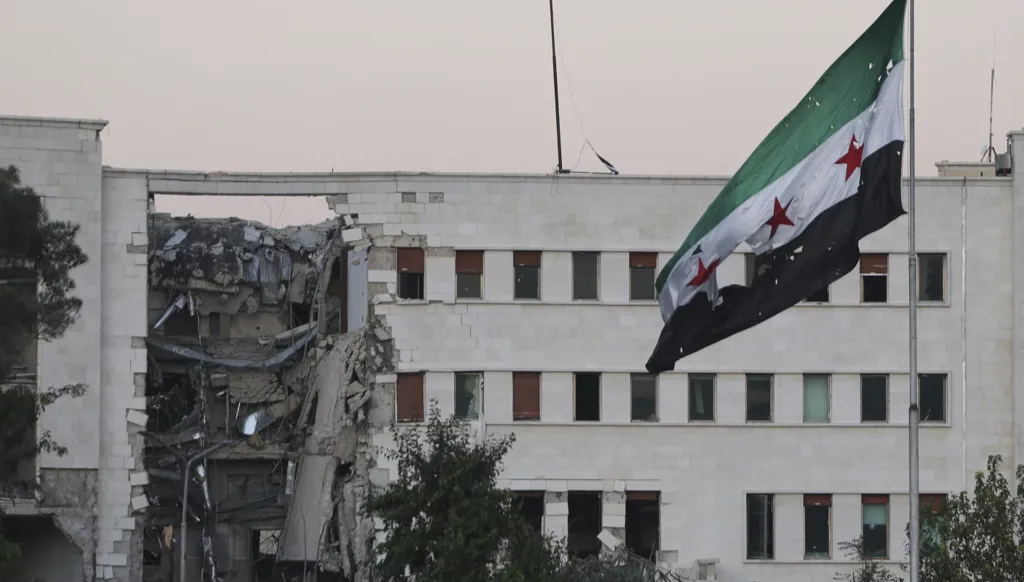


The war in Syria did not end when the guns fell silent and the regime collapsed in December 2024. What had seemed like a moment of relief soon proved to be merely a shift from one loud catastrophe to another—quieter, but no less lethal.
Death no longer descended from the sky in the form of airstrikes; it emerged from beneath the ground. Sudden, unannounced explosions have been claiming lives on roads, in orchards, and even inside homes.
In the first nine months of 2025 alone, local and international organizations recorded more than 650 incidents involving remnants of war (such as landmines and unexploded ordnance), leaving over 570 people dead and nearly 850 injured. Almost half of the victims were children.
The numbers paint a stark reality: the mortality rate in post-Assad Syria has tripled compared with the years of open conflict. It is as if the war never departed—only its methods and its weapons have changed.
Responsibility for this crisis is widely shared. The former regime saturated vast tracts of land with mines to fortify its defensive positions, often deploying cluster munitions that scattered thousands of unexploded bomblets across neighborhoods and farmland. ISIS, in turn, left behind an even more chaotic legacy of improvised explosive devices and booby-trapped homes, particularly in the Badia and Deir el-Zor. Other armed factions also relied on mines as a frontline deterrent, while foreign forces added their own layers of unexploded ordnance.
After the regime’s collapse, military archives containing mine-placement maps were never disclosed, and no accurate data was released. The land remained uncharted territory—its dangers unknown—and civilians have borne the cost.
Yet mines do more than kill; they reshape daily life. Farmers who once walked to their fields at dawn now pause at the edge of their land, unsure whether their next step will lead them back home or to an emergency ward. Children who once ran freely through alleyways are now taught to keep their eyes on the ground rather than the sky. Even play has become perilous: a ball rolling into an orchard can become a death sentence.
Doctors in field hospitals report that more than two-thirds of the wounded require complex surgery or prosthetic limbs, while roughly a quarter of cases end in amputation. The majority of victims are children and women. These shattered limbs and traumatized young lives capture the war’s most silent devastation: fear embedded so deeply that it outlives the gunfire.
The economic toll is equally severe. Thousands of hectares of once-productive farmland in Raqqa, Homs, and Hama have been rendered unusable, transforming fertile fields into barren zones. Basic services such as water, electricity, schooling are repeatedly disrupted, as technicians hesitate to enter contaminated areas. Many families who hoped to return home after the regime’s fall halted at the village edge when confronted with the reality that the soil they longed for had become a threat.
Perhaps most tragic is that rescue efforts themselves have become casualties. Within nine months, military engineering units lost more than 30 soldiers and 16 vehicles during demining operations. Civil defense teams also mourned volunteers killed while attempting to save others. The cruelty of the situation is compounded by the fact that these teams work with rudimentary tools: advanced detection equipment and armored vehicles are classified as “dual-use” items, subject to restrictions and delays under international regulations.
And so the people tasked with clearing death walk toward it virtually unprotected, while the land beneath them remains alive with hidden explosives.
Despite all these losses, government policies seem closer to ambitious rhetoric than concrete action. In June 2025, the transitional government announced the establishment of a “National Mine Action Center,” promising a comprehensive national plan and coordination with international partners.
However, on the ground, no public database has been created to show which areas have been cleared, nor have national standards been issued to unify survey and clearance procedures. The result is a population that keeps hearing about a “center” that has yet to materialize, while graves continue to multiply across the villages.
This vacuum has turned the mine issue into a market unto itself. Humanitarian organizations compete for funding contracts, foreign companies offer their services at exorbitant prices, and donor governments tie funding to political conditions.
Amid these conflicting interests, victims become mere numbers in reports submitted to donors.
During a UN assessment meeting, the situation in Syria was described as “the world’s largest humanitarian mine burden,” but the actual response has not exceeded 13% of the funding required in 2024.
The irony becomes clear when compared to other crises. In Ukraine, for example, hundreds of millions of dollars poured into the mine clearance sector within a few months, while Syria, despite recording the highest civilian mine casualties globally in 2022 and 2023, continues to wait for slow and fragmented promises.
This disparity is not related to the number of victims or the extent of contamination, but rather to the political status of each conflict: Ukraine is in the heart of Europe, in the spotlight, while Syria is treated as a chronic humanitarian issue as opposed to an urgent crisis.
At the international level, Syria is not a party to the Ottawa Mine Ban Treaty and the Convention on Cluster Munitions. This absence weakens its chances of obtaining long-term technical and financial support and deprives it of accountability tools.
Some officials justify this by citing the need for “bargaining chips,” but the result is that millions of Syrians remain at the mercy of landmines.
If we consider the experiences of other countries, the picture is even bleaker. Cambodia required more than 20 years to clear some of its mines despite extensive support, and some areas remain uncleared to this day.
Three decades after the war, Bosnia and Herzegovina still have not succeeded in fully clearing their land. And in Iraq, years after the battles against ISIS, vast areas of Mosul and Anbar remain only partially cleared, with a long and difficult path still ahead.
If those countries, which boasted greater resources and broader political backing, required decades, Syria is facing an even longer and far more arduous path.
Amid these challenges, communities are improvising with whatever means they have. In Idlib, young men mark suspected fields with strips of red plastic tape, a fragile warning line drawn against an invisible threat.
In Hama, muezzins issue warnings over loudspeakers at the start of the olive season.
In Deir el-Zor, residents gather in small groups to warn children not to approach the remnants of war.
These are all simple attempts, but they reflect a deep sense of abandonment: when the state is absent and the world remains silent, society alone becomes the last line of defense.
Much more than these initiatives is needed. Mine clearance experts emphasize that any serious plan must begin with a transparent national survey, the launch of a unified reporting hotline, the integration of awareness lessons in schools, and urgent support for victims by connecting them to treatment centers and prosthetic limbs.
At the international level, multi-year funding is needed, as well as the opening of corridors to bring in modern equipment and train local teams to use it.
Ultimately, the issue of landmines reveals that Syria has not yet emerged from war, but has moved on to another, silent war that sows death beneath the soil.
The victims here are not carried on collective shoulders as in mass killings; they fall one by one, a farmer behind his plow, a child chasing a toy. Yet their cumulative toll is no less devastating than the massacres that once dominated screens and filled UN reports.
The only difference is that this war has no shocking images, no collective cries, but rather death that creeps into daily life slowly and persistently.
Today, much of Syria remains a battlefield in waiting: fields lie fallow, homes stand in ruins, and deadly mines still lurk beneath the soil. Without concrete action and genuine international commitment, Syrians will continue to navigate land laced with explosives, living each day as if walking along the edge of perpetual danger.