Amidst ongoing warfare on multiple fronts, Lebanese Minister of Culture Ghassan Salamé offers a comprehensive analysis of the war's trajectory in Lebanon and the region, situating its conclusion within a dual equation that combines the field and politics.
Regarding Lebanon, Salamé rules out imminent negotiations between Lebanon and Israel, emphasizing that the fundamental elements remain unsettled: "No clear framework for talks, no defined level of representation, no final agenda, no ceiling for results, not even a venue." He observes that "the Israelis try to show indifference to the negotiation process, but the appointment of Ron Dermer reflects genuine, albeit not urgent, interest, awaiting an improvement in their field position before serious engagement."
Simultaneously, he highlights the ambiguity surrounding the mediator's identity, noting that "the French offer some acceptable ideas, while others exceed what was proposed by the President, whereas American interest seems limited, though this doesn’t mean they can ignore the Lebanese initiative."
Salamé emphasizes that the Lebanese stance remains anchored in the President’s initiative, which centers on a ceasefire, strengthening the army's capabilities, addressing the issue of illegal arms, and initiating a negotiation process to implement these provisions. He stresses that topics of recognition or normalization, according to him, fall under "external interpretations that do not reflect the content of the Lebanese paper, which does not predetermine the final outcome of negotiations, nor does it negate it."
Salamé asserts that "all wars end in negotiations," but emphasizes that these negotiations are shaped by the balance of power at their outset, noting that "the situation on the field at the time of negotiation will influence its nature and results." He highlights that the decisive factor is not solely Lebanese but also tied to the outcome of the great war unfolding in the Gulf, where the same parties are involved in both conflicts, making its repercussions on Lebanon "very strong."
Minister of Culture Ghassan Salamé.
The constitutional negotiation path
Regarding the formation of a Lebanese negotiation delegation, Salamé underscores that the constitutional path is clear and not open to interpretation: The President is responsible for negotiations under Article 52 of the constitution, in agreement with the Prime Minister, before any agreement is presented to the Council of Ministers for approval, and subsequently referred to Parliament for ratification. He confirms that this process has "not yet been completed," and that the negotiation file has not genuinely reached the Council of Ministers’ table.
Salamé differentiates between his personal stance and the government’s position. While he criticizes the "deep slide into sectarianism that now strangles competencies and obstructs state operations," he acknowledges that political realism, from the government’s perspective, necessitates Shiite representation in any negotiation process.
He notes that the President’s initiative remains in its early stages, given the brief time elapsed, adding: "Wars require discussions about discussions, and we are still in this exploratory phase."
Internationally, he highlights the swift French efforts to support the Lebanese initiative, introducing new ideas that have yet to gain internal consensus, in contrast to American interest, which he says "has not yet taken an official form." He confirms that the current American role is limited to specific areas concerning direct stability, such as airport security, while "there is no daily direct intervention in the ongoing war path." He notes that America has issued a "yellow light" to Israel with certain restrictions, without involvement comparable to what is occurring in the Gulf.
Nibble operations, not a wide invasion
On the ground, Salamé does not regard the current Israeli operations as a full-scale land invasion, describing them instead as "limited and slow advancements," often spanning only a few meters or kilometers along the Blue Line.
He describes the current actions as "nibbling operations" supported by military reinforcements, but without signs of a plan for a large-scale invasion, even north of the Litani. He adds: "There might be a desire to expand operations eastward and deepen them northward, but within limited operations for now." While he does not rule out the possibility that these operations could later escalate into an invasion, he notes the presence of reservist mobilization, "but we have not yet seen the beginning of this path."
On the other hand, he warns of a more dangerous strategic shift, reflected in Israel's renewed focus on a "buffer zone," albeit in a new form involving the systematic destruction of villages and the prevention of any civilian presence, unlike previous approaches. He recalls that this idea was once dismissed but has resurfaced following the events of October 7, drawing parallels with the experiences in Gaza and Syria.
No guarantees, and risk to infrastructure
Concerning international guarantees against Israeli attacks on Lebanese infrastructure, Salamé clarifies that diplomacy does not provide absolute assurances, but rather "attempts and promises," noting that he has heard repeated Israeli threats to target vital facilities, "which must be taken seriously."
He assures that Lebanon is applying pressure through friendly nations to prevent attacks on infrastructure, particularly the airport, "but there are no firm guarantees."
National peace
Despite the heightened political and media rhetoric, Salamé is not seriously concerned about national peace, highlighting the presence of "great solidarity and brotherhood not reflected in the media," despite localized tensions in certain areas.
In response to a question about Hezbollah’s rhetoric against the government, he notes that the latter requested the army to address only part of Hezbollah's weaponry, without involving its members or leaders, while the official response to rocket fire is guided by the principle that "dragging the country into war without the state's decision is illegal."
He emphasizes that freedom of opinion is "sacred," yet expresses regret that some rhetoric has escalated into threats, urging a return to moderation.
Iran betting on time
Salamé contends that Iran is waging this war by "betting on time," drawing on its experience in prolonged conflicts, recalling the Iran-Iraq war, while the West struggles to sustain long-term engagements. He observes that the initial strike was severe on Iran, but over time, weaknesses in the American-Israeli strategy may surface, particularly due to the absence of a clear, defined objective for the war. He adds that the Iranians believe time is on their side and have prepared for this confrontation for months, questioning whether the United States has sufficiently informed and mobilized its allies, or if it and Israel assumed the war could be concluded quickly. In this context, he notes that the American administration now appears to be engaging European support to help reopen the Strait of Hormuz, which has effectively closed due to high insurance costs.
In this regard, he observes that Tehran aims to escalate the confrontation to the global economic level, describing the situation as "Iran’s war on the global economy," by exerting pressure on the Strait of Hormuz, influencing oil prices, and targeting interests tied to the international economy, placing Gulf countries at the center of the equation. He notes that Gulf countries "will not forget what happened," but adds that they may later reconsider their relations with Iran based on the post-war balance of power.
He emphasizes that attacks on the Gulf states are part of a broader strategy to impact the global economy, particularly through oil, air transport, and international trade, noting that it is inaccurate to claim that Iran is targeting only American military bases, as the objective extends to weakening the Gulf states' economies themselves. He adds that the Gulf states, having made efforts to avoid war, "will not forget what they suffered," yet as "rational states," they will later respond to the geographic power balance as it stands, according to Salamé.



 Messenger
 Whatsapp
 Threads
 Email
Email
 Print
Print
 X
X
 Facebook
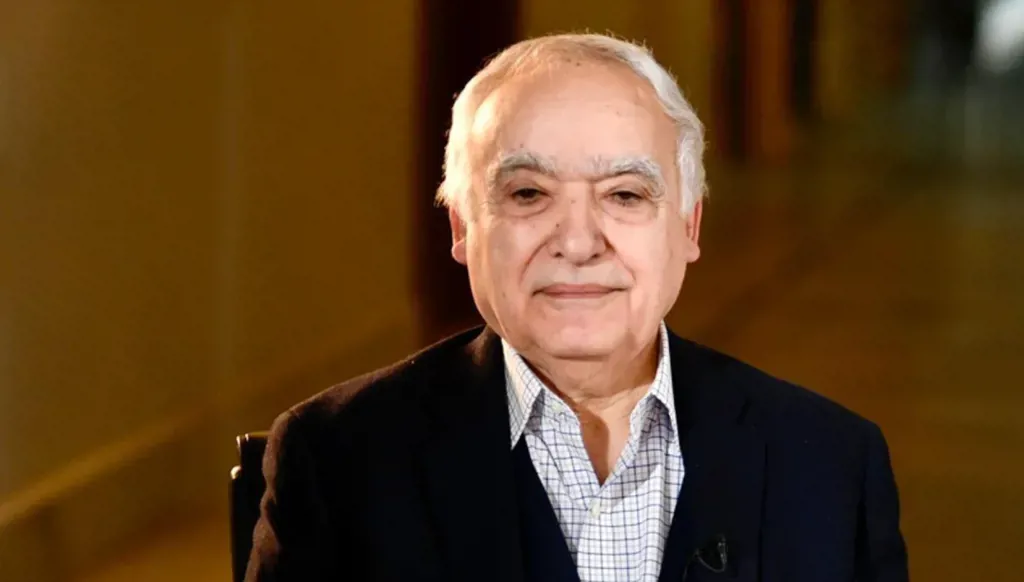


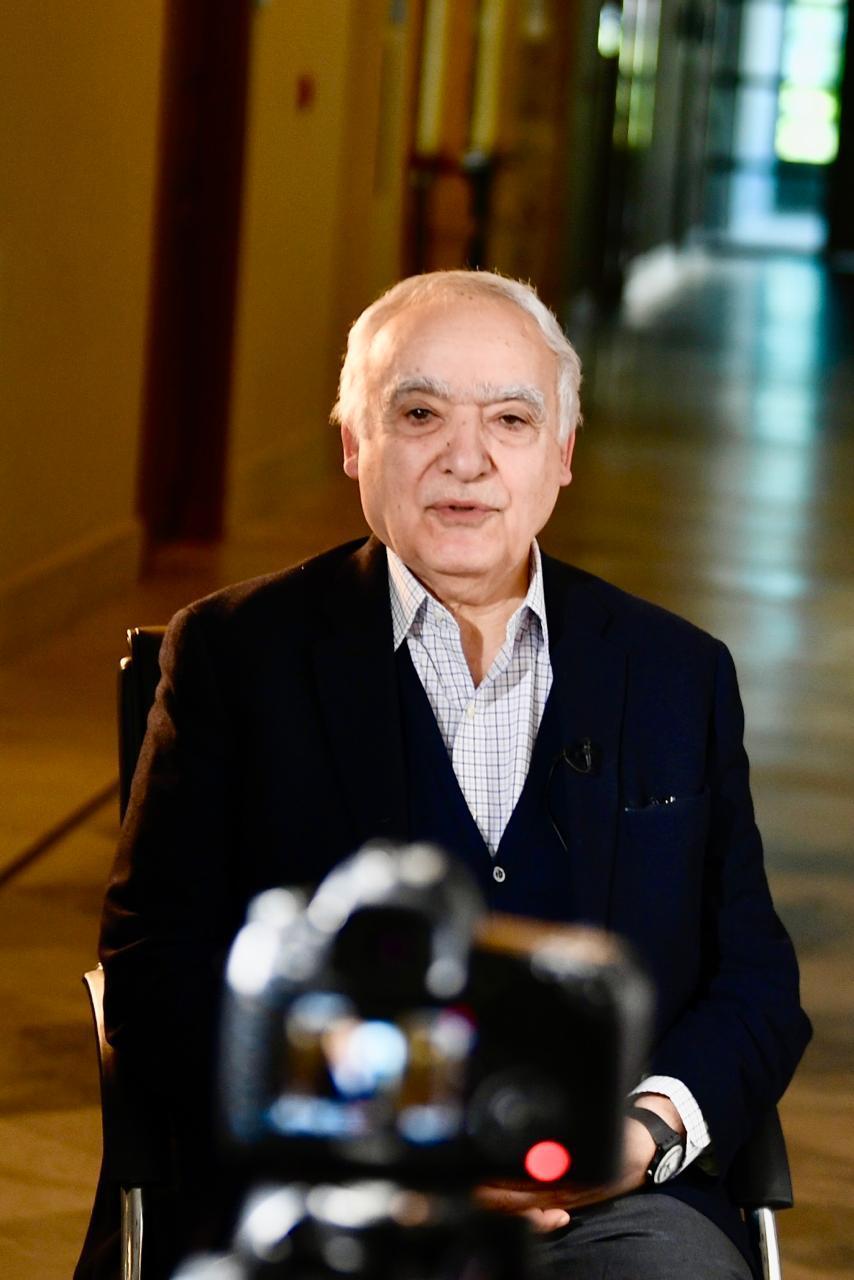 Minister of Culture Ghassan Salamé.