

From paper to phone: How digital leaflets are changing psychological warfare in Beirut


 Messenger
 Whatsapp
 Threads
 Email
Email
 Print
Print
 X
X
 Facebook
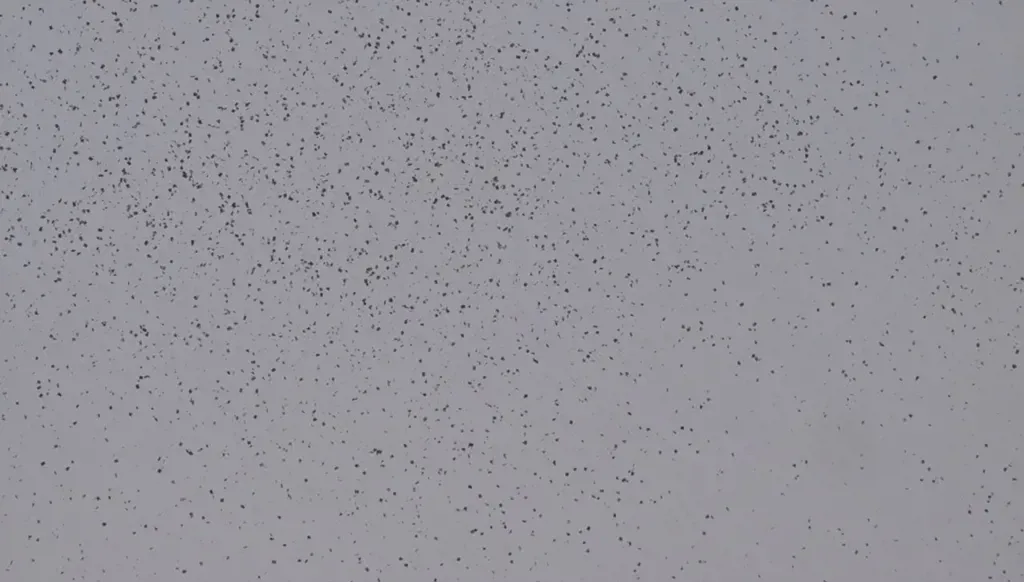


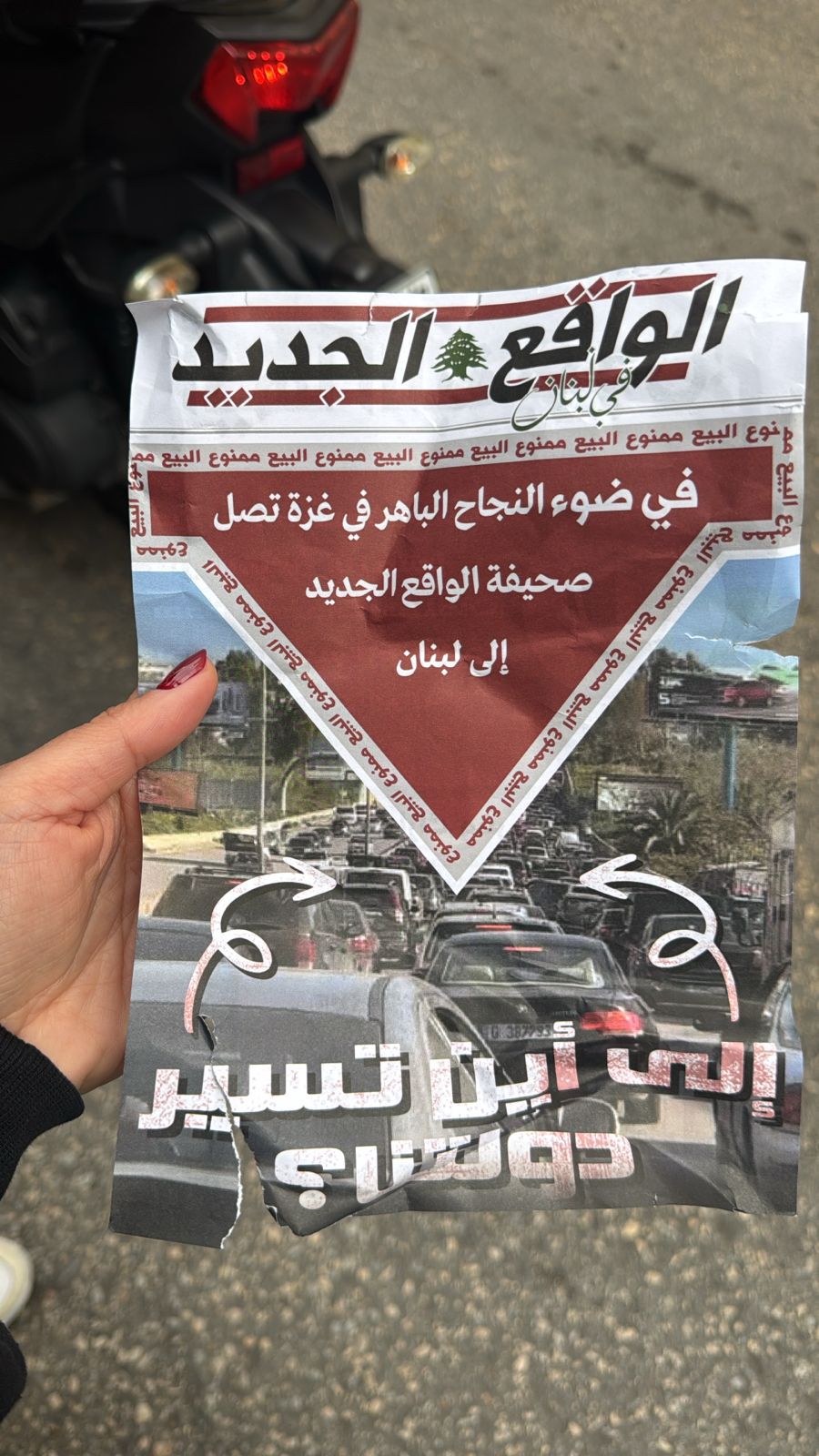
Today, Friday, the Israeli army dropped leaflets over several areas in the Lebanese capital, Beirut.
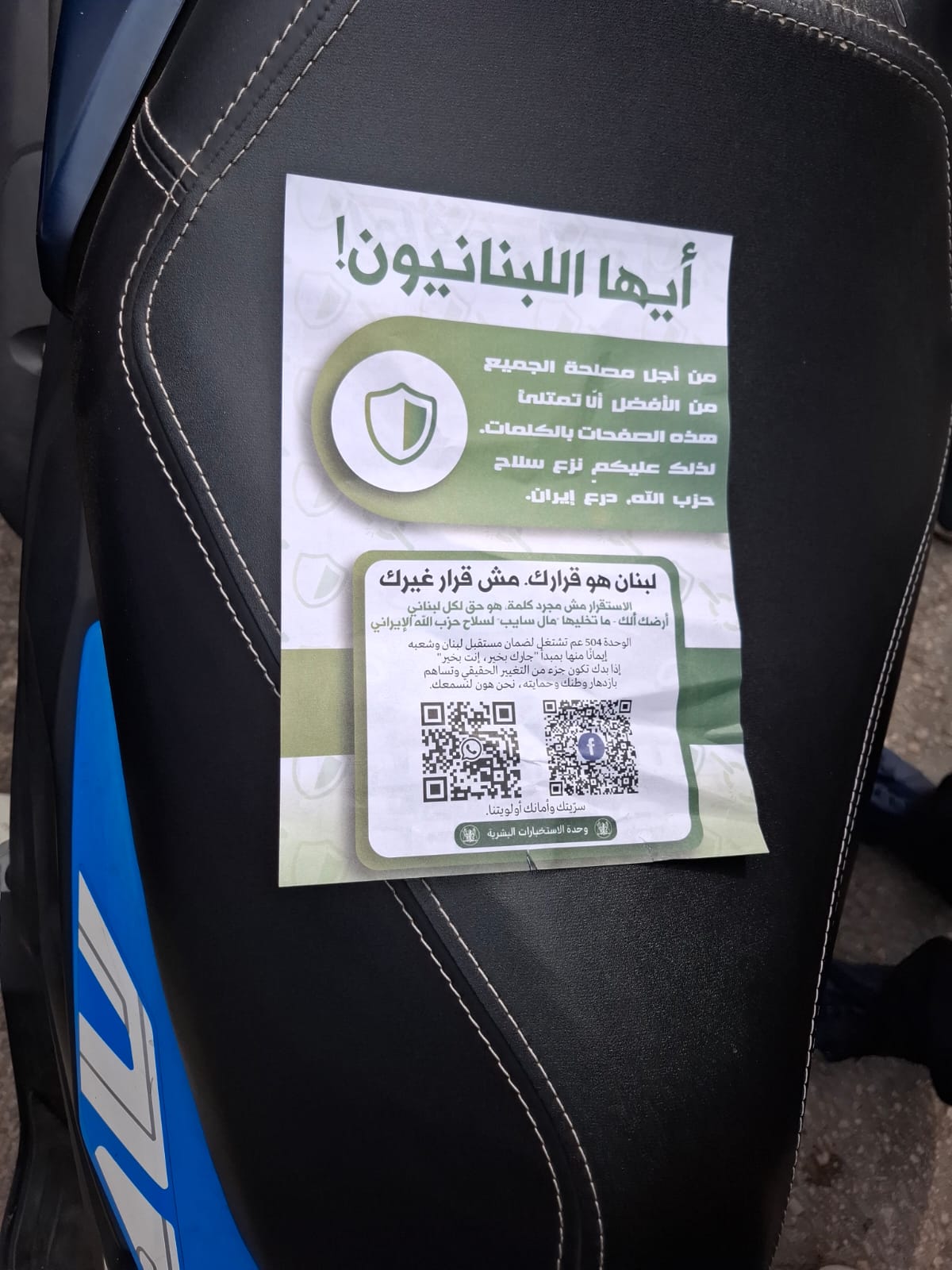
These aerial leaflets are no longer just pieces of paper carrying warnings or threats. In modern warfare, this old tactic is making a comeback in a new form. A printed leaflet can now serve as a digital gateway, with a QR code that links directly to social media pages or contact numbers.
In this way, leaflets are no longer just traditional propaganda tools; they have evolved into instruments of digital psychological warfare, blending printed messages with the reach of cyberspace.
From the Sky to the Phone
In traditional aerial leaflets, the message was limited to what was printed on the paper—warnings of military strikes, calls to evacuate, or speeches aimed at civilians or combatants.
Today, by simply scanning a QR code with a phone, recipients can access the full range of content—videos, audio messages, or pages dedicated to media warfare.
The QR code can sometimes lead to a Facebook page or a WhatsApp contact number, turning the leaflet into a direct link between its issuer and those who receive it—a tactic seen today in the leaflets dropped by Israel over Beirut.
Adding digital links is not just a way to spread messages; it can also serve as a means of gathering information.
Some leaflets invite recipients to communicate, submit information, or fill out an electronic form.
In this way, the leaflet shifts from being merely a psychological message to a tool for communication—and potentially recruitment—within conflict zones, a risk highlighted by multiple security experts.
Psychological warfare in the era of phones
Aerial leaflets are not a new invention; they were used extensively during World War II to undermine the morale of soldiers and civilians.
However, the introduction of QR codes and digital links has taken this method to a whole new level: the war is no longer only in the air or on the ground but also on phone screens.
These digital leaflets also raise several concerns, including:
The potential for links to collect personal data
The risk of exposing civilians to security threats
The possibility of turning civilians into information sources in conflict zones
For this reason, experts generally advise against scanning any codes or contacting unknown links in such areas. A leaflet may be just a small piece of paper falling over a city or village—but the real message often begins only after scanning the code.
Furthermore, the army command has warned of the dangers of scanning these codes and accessing the links, citing legal liabilities, security risks, and the possibility of cell phones being hacked and personal data compromised.