

Lebanese army looks to international partners for support


 Messenger
 Whatsapp
 Threads
 Email
Email
 Print
Print
 X
X
 Facebook
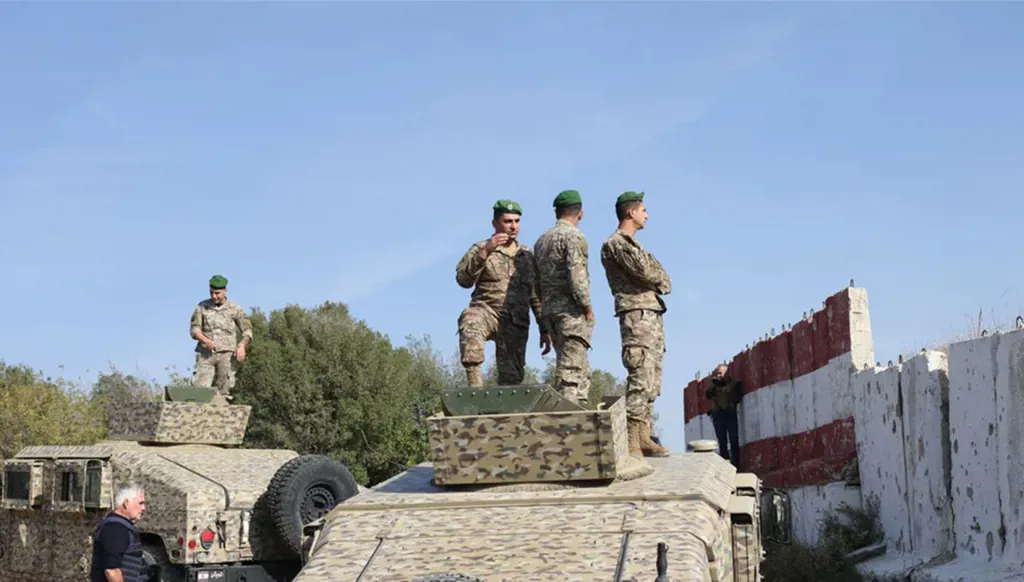


The conference to support the Lebanese army, hosted by Paris on March 5, represents far more than its technical and financial dimensions, bearing profound political significance for the future of the Lebanese state. The meeting will bring together over fifty countries and organization, building on an international recognition that the military institution remains the backbone of the Lebanese state amidst financial collapse, institutional paralysis, and escalating security challenges.
In this context, the army's demands are not limited to advanced weaponry, new recruitment, or salary increases in isolation but are distributed across a comprehensive package aimed at stabilizing the institution and preventing its destabilization.
The military leadership focuses its approach on three interconnected levels: first, ensuring operational continuity; second, improving logistical and technical capabilities; third, stabilizing the living conditions of soldiers. Since the financial crisis erupted in 2019, the actual value of officers' and soldiers' salaries has declined due to the collapse of the lira, leading to unprecedented erosion of purchasing power. A soldier's salary before the crisis ranged between $800 and $1200 depending on the rank, but effectively dropped to below $100 at the peak of the collapse, before the government adopted temporary increases, allowances, transport subsidies, and social grants to improve income.
Today, the actual income for a soldier ranges between approximately $250 and $400 depending on rank and allowances, which is below the adequate level considering rising prices and living costs, making salaries a central vulnerability.
However, the salary issue is not separate from operations. The army needs sustainable funding to cover fuel, maintenance of vehicles, spare parts procurement, food supply, medical care, and essential ammunition. The resource scarcity in recent years has led to increased reliance on in-kind donations from donor countries to provide fuel, food, and medical assistance. Therefore, the conference aims to establish a mechanism for direct or indirect financial support to secure a minimum level of financial stability for the institution, as any internal shake-up would have severe security implications.
As for armament, the international approach does not focus on equipping the army with added armaments but rather on enhancing its defensive and technical capabilities, particularly in border monitoring, communication, reconnaissance, and transportation. Donors recognize the sensitivity of internal balances, hence the focus on modern equipment, specialized training, and raising preparedness, enabling the army to perform its missions in maintaining internal security, controlling land and maritime borders, and accompanying any additional deployments in the south or sensitive front lines. In this context, the ongoing American and European support holds significant importance, whether through training programs or supplying the institution with specialized vehicles and equipment.
Recruitment is not a priority on the agenda, even though the army needs to increase its personnel. However, the current priority remains to stabilize existing personnel and prevent further human depletion before launching any significant expansion plans. The ability to absorb new recruits is inherently linked to the state's capability to finance them and ensure the continuity of their salaries and equipment.
Politically, the conference sends a clear message beyond direct financial support, providing international backing to enhance the army's position as a legitimate unifying institution against the reality of unauthorized arms. The international community links its support to strengthening the state's role and empowering the army to undertake broader missions within a plan to restrict arms to state control. In this sense, international support becomes an investment in Lebanon's stability, not just technical assistance.
In sum, the Paris conference focuses on financially and logistically stabilizing the military institution more than on qualitative arms deals or extensive recruitment campaigns. The international bet is on preventing the collapse of the last pillars of the state, while the internal bet is that stabilizing the army will enhance stability and open a window for some economic and political respite. Amidst salary needs, operational pressures, and sovereignty messages, the Lebanese army stands today at the heart of a delicate equation titled remaining cohesive in a country testing its limits.