

Speaker Berri breaks with Quintet, pushes for elections to proceed on schedule


 Messenger
 Whatsapp
 Threads
 Email
Email
 Print
Print
 X
X
 Facebook
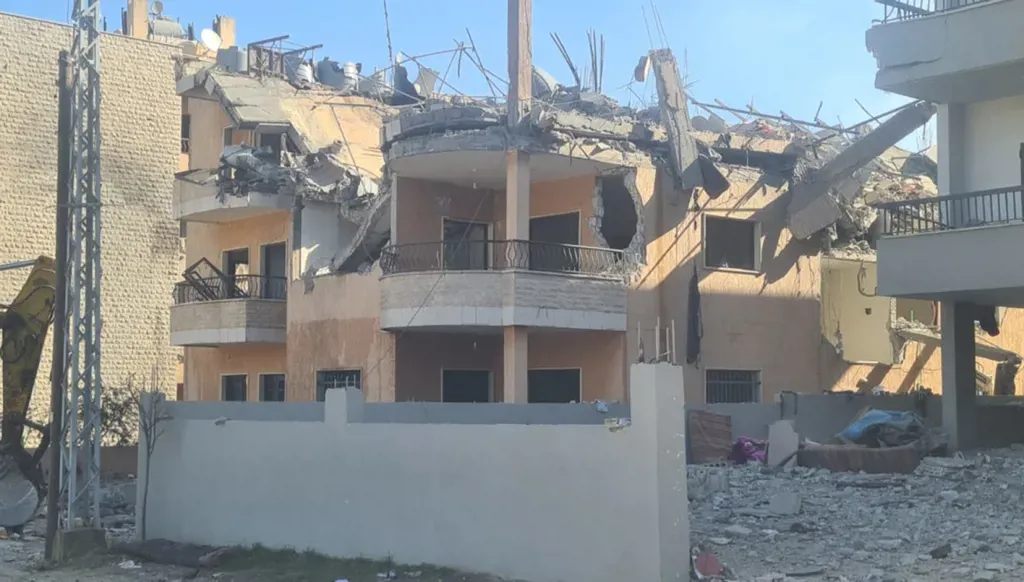


Israel's resumption of airstrikes and Hezbollah assassinations escalated with deadly raids on central and northern Bekaa on Friday evening, causing widespread confusion within Lebanon’s political circles. There is now a perceived link between the renewed Israeli assaults and the potential outbreak of a war between the United States and Iran in the coming days. This confusion appears to be a natural result of the near-consensus reached by military and diplomatic assessments that Israel sent a preemptive, bloody, and destructive message to Hezbollah at the site of its heavy missile stockpiles in the Bekaa, warning it of the consequences of intervening to support Iran if the United States and Israel were to carry out any strike against Iran.
It became clear that the scale and nature of these strikes signaled a potential slide toward far more dangerous developments on the ground. While Lebanon’s domestic political landscape has increasingly focused on the priority of the upcoming elections, amid conflicting assessments over whether the parliamentary vote will take place on schedule or be postponed, the consequences of the Israeli strikes in the Bekaa have, at least for the moment, overshadowed all other issues. The extent of the damage revealed that these strikes broke from their usual pattern, raising the prospect of developments connected to the high-stakes negotiations between the United States and Iran. Under these circumstances, it is unlikely that the direction of any domestic issue will be settled before the outcome of the U.S.–Iran confrontation becomes clear, given that the consequences of war or a settlement will directly impact Lebanon.
Meanwhile, Lebanon will participate with a high-level military delegation in the preparatory meeting for the conference supporting the army and internal security forces in Paris, which will be held tomorrow, February 24, in Cairo. The delegation will be headed by Army Commander General Rodolphe Haykal and the Director General of the Internal Security Forces, Major General Raed Abdullah.
The preparatory meeting will include representatives of the Quintet, namely French presidential envoy Jean-Yves Le Drian, a representative from the U.S. Embassy after Ambassador Michel Issa declined to attend due to being unable to leave the embassy at this time, Qatari Minister of State Mohammed Al-Khulaifi, Saudi Prince Yazid bin Farhan, and a representative from Egypt, the host of the meeting. United Nations Special Coordinator for Lebanon Jeanine Hennis-Plasschaert will also participate.
In a related development, the “Mechanism” committee will hold a meeting on 25 February, after a relatively long hiatus. The upcoming session will be at the military level only, with no civilian participation.
In its latest statement following the Israeli airstrikes on the Bekaa, which killed eight of its members, Hezbollah MP Ali Fayyad described the current negotiation process being conducted by the Lebanese government as “effectively an Israeli process under U.S. cover—empty and meaningless from a Lebanese perspective, reflecting only submission to open and dangerous conditions that yield no Lebanese gains and, on the contrary, pose a serious threat to Lebanese interests.”
He added, “The Bekaa massacre, as the culmination of open Israeli escalation, confronts all of us as Lebanese, and particularly the government, with a reality that must be acknowledged, confronted, and responsibly addressed. This reality cannot continue, and it is not acceptable to treat these attacks as a normal situation to live with. The entire Lebanese stance must be reassessed.”
Fayyad also described the Mechanism meetings as “empty and suspicious” and said that a policy of concessions “encourages Israel rather than deterring it.” He noted that “Israel’s declaration of its intention to remain on our land and its continued targeting of our youth and destruction of our livelihoods provides the Lebanese people with an inherent right to resist in order to defend themselves and their land, especially given the failure of alternative options and strategies.”
What further clouded the internal outlook is that the complexities surrounding the upcoming elections appear to be intensifying, after Speaker of Parliament Nabih Berri publicly revealed that the ambassadors of the Quintet directly told him they preferred postponing the parliamentary elections. Berri’s announcement was understood as a way to demonstrate the “credibility” of his position on holding the elections on schedule, even amid an alleged international desire to delay them.
While awaiting confirmation or denial of the Quintet’s positions, whose representatives will meet tomorrow in Cairo, Berri stated in a press interview yesterday that U.S. Ambassador Michel Issa asked him to postpone the elections. “I told him no, and I also informed the other ambassadors (of the Quintet) that I do not support a technical postponement of the elections or an extension of the parliament,” he said.
He added, “I was the first to register as a candidate to prevent anyone from holding me personally responsible for a technical delay or a parliamentary extension. I wanted to send a message to concerned parties inside and outside Lebanon that I am committed to holding the elections until the very last minute. I instructed several candidates affiliated with the Amal Movement to run, which they did, and I also asked Abbas Fawaz to run for the Shiite seat in District 16, which is allocated for Lebanese expatriates with six seats evenly distributed between Christians and Muslims.”
Berri emphasized, “There is no justification for postponing constitutional mandates or failing to hold them on time, starting today with the election of a new parliament.”
In a parallel move, interpreted as “protecting the right of expatriates to vote and run for office abroad,” Free Patriotic Movement leader MP Gebran Bassil, along with six potential candidates in District 16, signed a “dispute linkage memorandum” with the Ministry of Foreign Affairs and Emigrants. The memorandum urges the ministry to fulfill its duties in protecting the representation rights guaranteed to expatriates under the election law. It holds the ministry responsible for any failure to implement the law, and establishes a legal and judicial mechanism to be used in case the ministry insists on not enforcing the law and ensuring expatriates’ rights to vote, be represented, and run for office abroad.
For his part, Lebanese Forces Party leader Samir Geagea affirmed that the parliamentary elections “will happen no matter what,” adding that “the scenario in which the elections do not take place is only linked to major, long-term regional events directly affecting Lebanon, which I consider unlikely.” He also emphasized that “expatriates will vote from abroad according to the existing law,” noting that “the Interior Minister has been 100% fair and legal in this regard.”
Geagea pointed out that the Ministry of Foreign Affairs has already begun logistical preparations in embassies and consulates to facilitate expatriate voting. He also called for efforts to focus on the electoral process by raising public awareness that “their fate is in their own hands, and they must vote for those who can make a real difference in the country’s public policy.”