

A difficult visit to Washington awaits Lebanese Army Commander


 Messenger
 Whatsapp
 Threads
 Email
Email
 Print
Print
 X
X
 Facebook
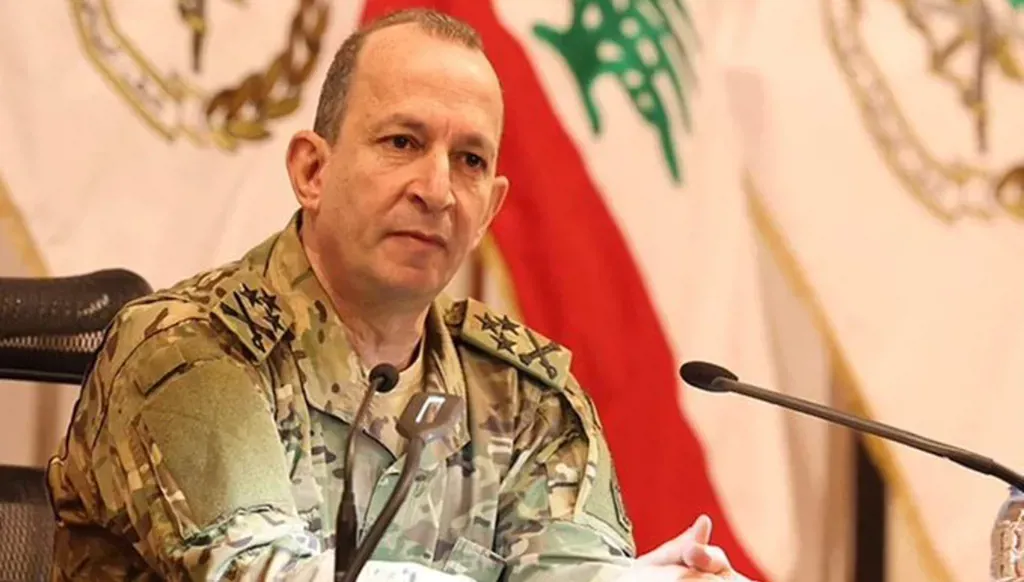


Western diplomatic sources reveal that Lebanese Army Commander Rudolf Haykal's visit to Washington, after being previously postponed under well-known circumstances, might face tough attitudes from his hosts during the meetings he will hold there. This raises significant questions about the American approach to continued support for the Lebanese Army and under what conditions.
Lebanon faces difficulties on several levels, encountering challenges that it shows an inability to overcome or seems to lack the necessary determination to address. These sources noted the absence of notable American evaluative statements regarding the Lebanese Army's control over the region south of the Litani River or its preparation to launch the second phase of the army plan, which its leadership did not present to the Cabinet before Haykal's visit to Washington. This was expected as a strong paper with an announced plan to avoid later criticisms that might frame the plan as executing 'American orders,' as Hezbollah often accuses Lebanese state figures and institutions during significant milestones.
However, the visit will provide another opportunity for the army commander to explain his vision and plan and convince Washington officials at various levels, especially since objections to his previous positions, which delayed his previous visit, originated from the U.S. Congress, which typically controls the nature of support and assistance to the Lebanese Army.
This step is essential and comparable to the opportunity France offered the army commander to present his approach and vision at a meeting held in Paris last December attended by representatives from Saudi Arabia and the United States and France. This allowed for adjusting some approaches, providing the necessary factors to agree on scheduling a conference to support the Lebanese Army set for March 5, pending the results of this conference.
Constructive ambiguity at one stage as an attempt to overcome obstacles and prevent situations from worsening may not remain so but could become negative ambiguity that does not serve Lebanon, as is the case with officials who raise critical points that are unclear and subject to interpretation and discretion, not to mention differences in approaches among officials that diplomatic missions in Lebanon cannot help but notice.
In any case, this priority for Lebanon concerning the army and all that surrounds it must transcend, according to these sources, the great bets that many parties place on regional developments, whether those based on the outcomes of the standoff between the United States and Iran. Hezbollah has emerged as one of the principal speculators in this context based on a scenario where Iran emerges with a deal that allows it to maintain the influence represented by Hezbollah in Lebanon with all its capabilities, or to obtain a price for any proposed concession if that is forthcoming.
Other stakes are built on the completion of Israel's war against the party and its ability to end its military capabilities as Israeli officials suggest, noting that Israel's calculations, or those of its Prime Minister, are largely determined by internal considerations. It might be in Benjamin Netanyahu's interest to prolong the war on Lebanon. His choice will likely depend on political calculations ahead of October elections next year. Israeli inaction may intentionally empower a bogeyman in Hezbollah, enabling its continued military threat and weakening Lebanese state's authority in the process.
Diplomats involved have reviewed this possibility from internal sources, expressing increasing concern about Israel's posture toward Lebanese disarmament. All the while, political divisions among Lebanese MPs threaten to jeopardize an effective response, prioritizing electoral fortunes at a time when the army seeks to advance to the second phase of its operation north of the Litani.
Banking on Lebanon benefiting from positive developments in its surroundings at some point in time is neither healthy nor positive, for time costs Lebanon greatly and has significant negative impacts that will increase these costs on political and economic levels and remain so.