

One year after the war, southern Lebanon faces fragile reconstruction



 Messenger
 Whatsapp
 Threads
 Email
Email
 Print
Print
 X
X
 Facebook
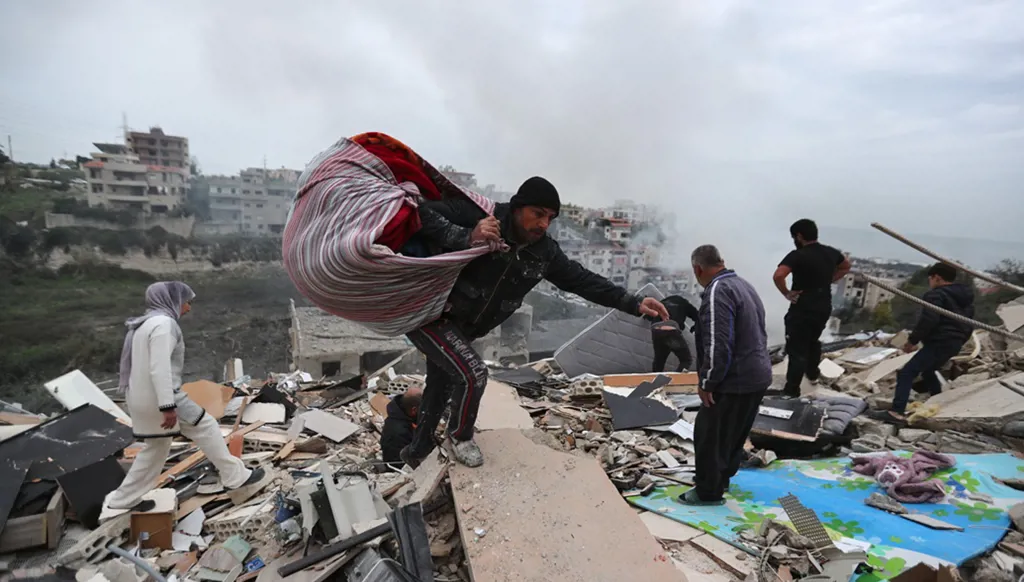


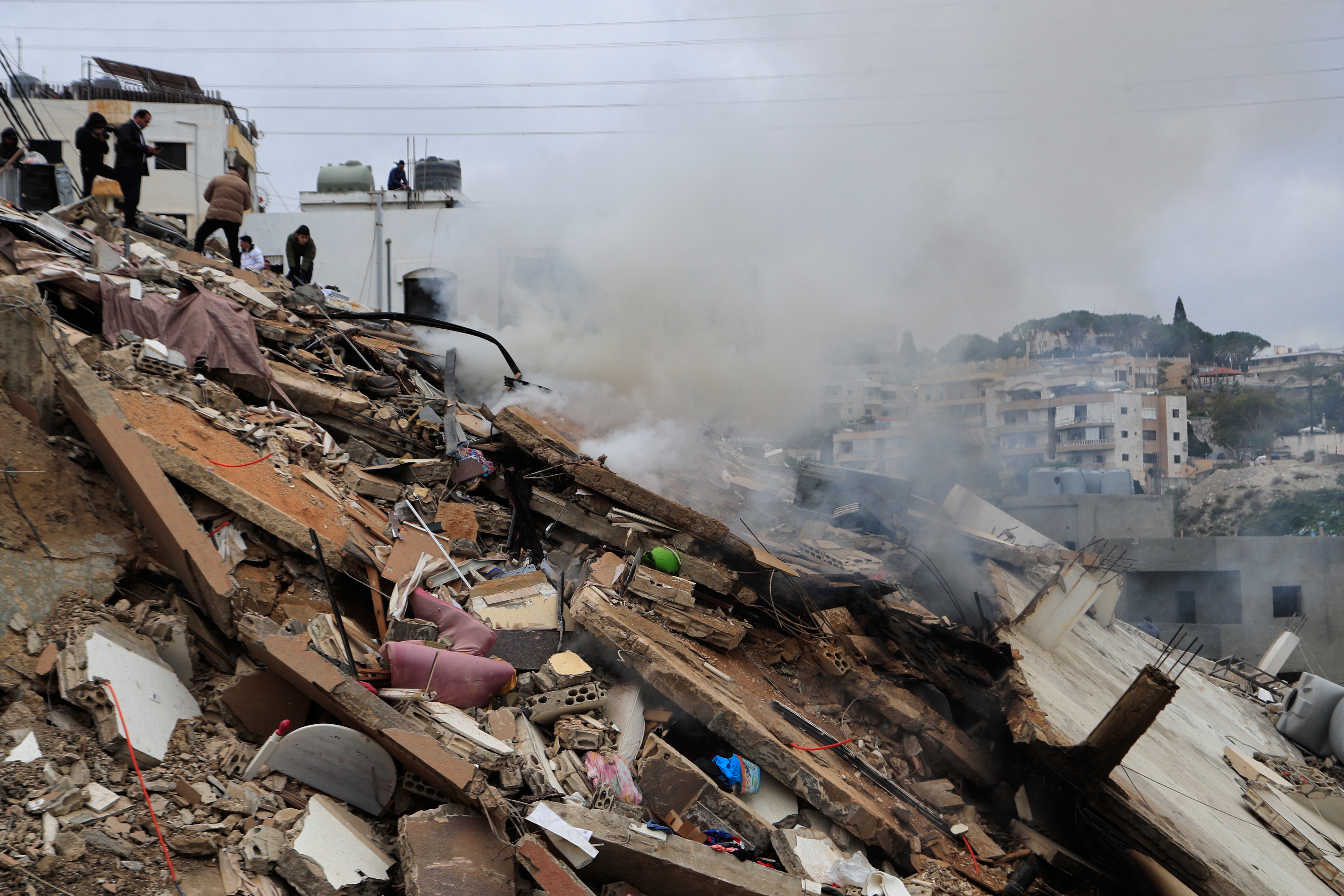
One year after the war on Lebanon, border villages remain leveled, witnessing homes built stone by stone and erased in days, where the narratives of residents intersect with the promises of the state.
Personal testimonies capture the extent of the loss, contrasting with a government plan that claims to aim for recovery and reconstruction amid ongoing security and financial challenges. From the border village of Kfarkela, Miss Sukainah Al-Samra tells Annahar about her experience with the destruction that devastated her family’s homes and lands. She sums up the magnitude of the loss:
"All the houses in the south, not a single house came easily… Even my father and uncle worked with their hands to build the house. The house was bombed days before the ceasefire. It was our destination during holidays, and we rented another place in the mountains as a relief, but not as a replacement… There is no substitute for our land."
She adds that the scene in Kfarkela left no room to recognize the place:
"Nothing remains in Kfarkela… No familiar landmarks. The alleys and stairs we used to know are no longer there. Israel sought to erase collective memory, and even the remaining homes were burned."
Al-Samra poses an open question shared by many from the border villages: "The world is left to its questions and fate. Will there be real reconstruction, especially since one of the five occupied points is located in Kfarkela?"
"In a Moment, I Lost All My Capital": Another Testimony from the Border Villages
Al-Samra’s story mirrors those of other residents. Forty-year-old Hussein F. recounts to Annahar that he owned a house, several shops, and a private business - a gas station -before everything was destroyed.
"I lost everything… In a moment, I lost all my capital," he says. Being a resident of the south in both summer and winter, he had to move and rent elsewhere, incurring additional expenses, concluding harshly: "The state is completely absent."
He expresses doubts about the reconstruction plan, saying that while rebuilding affected towns is expected, border areas may be left behind due to limited funding and uncertainty over whether these regions could become buffer zones.
A Year After the War: A Government Plan Facing Many Challenges
About a year after the Israeli war, the government announced a reconstruction plan for southern Lebanon. Prime Minister Nawaf Salam confirmed in early January that the government would accelerate reconstruction following Parliament’s approval of a $250 million World Bank loan, with an initial $52 million allocated for immediate funding.
The plan, part of a broader 3Rs strategy - Recovery, Reconstruction, Reintegration - targets populations affected by extensive destruction since October 8, 2023. Government sources told Annahar that the plan rests on three principles: preserving the dignity of internally displaced persons, respecting the rights of returnees, and achieving economic and social prosperity for all.
The strategy prioritizes interventions based on a chronological sequence, with cost estimates, funding mechanisms, and implementation frameworks. It emerged from consultations with Lebanese institutions and international partners, using assessments by the National Council for Scientific Research, the World Bank, and the United Nations as of November 1, 2025.
Unlike post-2006 reconstruction, the plan does not rely on immediate large-scale funding but on measured interventions dictated by security concerns and funding availability.
Main challenges include:
- Humanitarian: Managing displaced persons and strengthening vulnerable returnees through targeted financial aid, temporary shelter, and income-generating support.
- Reconstruction: Rebuilding public and private assets, restoring essential services, and repairing infrastructure in health, education, water, and electricity sectors.
- Development: Long-term recovery through integrated development programs aimed at border and marginalized areas.
- Security: Ensuring safe access for reconstruction projects amid ongoing Israeli attacks, requiring coordination with the Lebanese army.
Reconstruction Priorities
The Council for Development and Reconstruction estimates damages to infrastructure at roughly $1 billion. With only $250 million from the World Bank, priorities are set using three indicators: population size, economic activity, and level of destruction.
The approach is both geographic—targeting areas with the highest priority first—and economic—focusing on areas where reconstruction can stimulate growth.
Funding and Implementation
Government sources told Annahar that the governance structure aims to unify decision-making and planning within the government, shifting from a passive recipient role to one of enabler and field supervisor of projects. A joint ministerial committee has been formed, chaired by the Prime Minister, and includes the ministers of finance, economy, public works and transport, communications, energy and water, environment, and social affairs. A technical secretariat has been established within the Prime Minister’s Office to collaborate with relevant ministries and administrations, as well as governors and municipalities in the affected areas of the South, Nabatieh, Bekaa, and the southern suburbs.
Sources indicate that the Council for Development and Reconstruction and the relevant ministries will implement projects for public assets and infrastructure, while the Prime Minister’s Office, through the High Relief Commission and the Council of the South—and under independent supervision—will provide financial assistance for the repair and reconstruction of private residential and commercial assets.
The strategy relies on three sources of funding: external grants, concessional loans, and allocations from the general budget. Sources said the main objective is to maximize the benefit of external grants while limiting burdens on public finances, with long-term loans reserved exclusively for rehabilitating public assets and infrastructure.
The council emphasized that the project will adhere to the highest transparency standards, with information published on the websites of the Council for Development and Reconstruction, the Public Procurement Authority, and the World Bank. A dedicated team will follow up on any potential complaints, and the public will be kept informed of all project-related data and developments. In addition, an international firm will be contracted to audit all aspects of the project.
Reconstruction as a National Test
Pierre Khoury, Dean of the Faculty of Business Administration at the American University of Technology, tells Annahar that ensuring integrity requires modern oversight tools like blockchain for financial tracking and satellite monitoring for field achievements, alongside civil society participation under Lebanon’s Transparency and Information Availability Law.
He stresses that integrating digital and popular oversight with the Negotiated Selection System (NSS) is essential to ensure accountability and sustainable development.
He added: “The final step to ensure the success of these plans is to establish a binding ‘Integrity Charter,’ including deterrent penalties ranging from disqualification from contracts to criminal prosecution for any manipulation of negotiation or implementation processes, with the government required to publish quarterly reports detailing project selection criteria and actual completion rates.
This combination of technical expertise in the NSS system, digital transparency, and community participation is the only way to turn reconstruction efforts from an economic challenge into a national success story that transcends divisions.”
Regarding the credibility of reconstruction plans, Khoury said: “The credibility of government reconstruction plans is the cornerstone of building trust between authorities, citizens, and donors. Integrity requires turning political promises into a clear, time-bound technical framework. As national projects grow more complex, the NSS system becomes a strategic necessity that overcomes the shortcomings of traditional tenders. This system allows the government to conduct technical and financial negotiations with a shortlisted group of the most competent companies, ensuring a balance between cost efficiency and innovative engineering quality suited to local conditions.”
Analyzing international comparative experiences, Khoury observed: “Success in reconstruction has always been linked to the independence of oversight mechanisms, as in the Marshall Plan, which tied funding to structural reforms.
Conversely, lack of transparency in cases like Iraq and Afghanistan led to massive waste through corrupt contracts and a lack of accountability. Here, the NSS system is crucial in reducing the risks of change orders that drain public funds, as pre-negotiating technical details closes legal loopholes and holds companies directly responsible before execution begins.”
He added, "These mechanisms gain even greater importance in political systems based on sectarian pluralism, where projects can become tools for patronage or factional gain. In this context, competitive negotiation shifts selection criteria from “political loyalties” to “technical merit,” ensuring that resources are allocated based on the actual needs of affected areas rather than the influence of local leaders. This neutral, technocratic approach helps defuse conflicts over resources and turns reconstruction into an inclusive national project that reinforces civil peace."
Amid all these plans and mechanisms, the fundamental challenge remains how to assess the full extent of the destruction and launch reconstruction, while human and material losses continue to mount day by day.