

Lebanon’s "mechanism" committee: Restricted access, uncertain future after UNIFIL


 Messenger
 Whatsapp
 Threads
 Email
Email
 Print
Print
 X
X
 Facebook
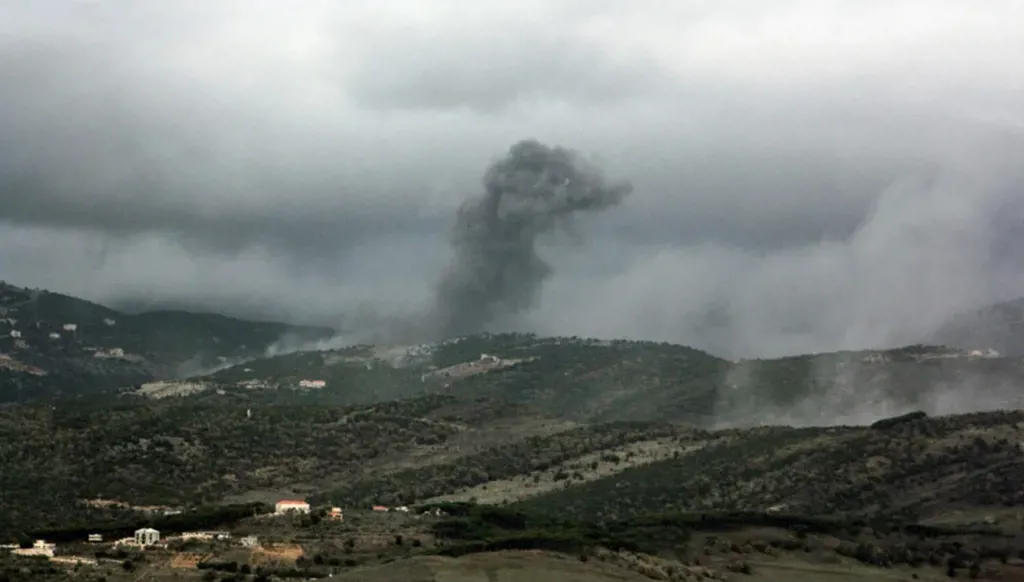


It was no secret that Washington recently took steps to distance the French from the 'Mechanism' Committee, with the possibility that membership will be limited to military personnel to assess the situation in the south amidst escalating Israeli strikes, and civilians will only be used when necessary.
It has become clear that Israel is the first to work on restricting the French presence in the committee, while envoy Jean-Yves Le Drian was preparing to participate in its last meeting, which was limited to 'spotted' attendees. If civilians do not participate in the upcoming meeting on the 17th of this month, this would confirm the exclusion of the French.
Israel accuses Paris of adopting the Lebanese viewpoint and praises the army's role in gathering weapons south of the Litani, while Tel Aviv rejects this conclusion and refuses to verify everything Lebanon has done and committed to before Washington and the international community.
Diplomatic sources indicate that communications are ongoing for the participation of Le Drian and the American envoy, Morgan Ortagus, to launch the committee's work at a faster pace.
The restriction on the French goes beyond the committee in an unofficial confrontation with the Americans. During the preparation of ceasefire terms at the end of the Democrats’ term, Speaker of the House Nabih Berri insisted before former envoy Amos Hochstein on including Paris in the committee, which was not welcomed by the Republican administration. Observers of this process assert that 'it is illogical to exclude France from the committee, as it targets the entire European Union whose countries form the backbone of UNIFIL's strength since its presence in the south in 1978.
In reality, Lebanon's interest necessitates maintaining the French and their role in the committee, even though the final say belongs to the Americans.
It is no secret that the French understand the Lebanese government's position and the pressures it faces, without overlooking Hezbollah's original discontent with the Mechanism, which it opposed even more after it was supplemented with civilians.
What after UNIFIL?
If Israel does not adhere to all the terms of the cessation of hostilities, the search for a substitute for UNIFIL has begun today, accompanied by a wave of concern.
Diplomatic information indicates that Lebanese officials, especially President Joseph Aoun, have been approached by several European countries regarding the possibility of a force replacing UNIFIL, with France, Italy, and Spain showing readiness for this approach, though nothing has been crystallized yet.
While these countries are concerned about the outcomes on the Lebanese-Israeli border, they have also started to inquire about the future of Lebanon's territorial waters, especially fearing the influx of smuggling boats to European countries in the Mediterranean, as they suffer economic pressures due to the war between Russia and Ukraine.
The Under-Secretary-General for Peacekeeping Operations, Jean-Pierre Lacroix, has been approached about what will happen on the Lebanese-Israeli border, as there are no signs confirming the withdrawal from the five points and other occupied areas, as if wanting to keep them a buffer zone, paving the way to impose greater conditions on Lebanon.