

Iran foreign minister’s visit to Beirut raises strategic questions amid regional tensions and domestic protests
Iran’s top diplomat Abbas Araghchi visits Lebanon with an economic delegation as protests shake Iran at home and shifting regional dynamics test Tehran-Beirut ties and influence over Hezbollah.


 Messenger
 Whatsapp
 Threads
 Email
Email
 Print
Print
 X
X
 Facebook
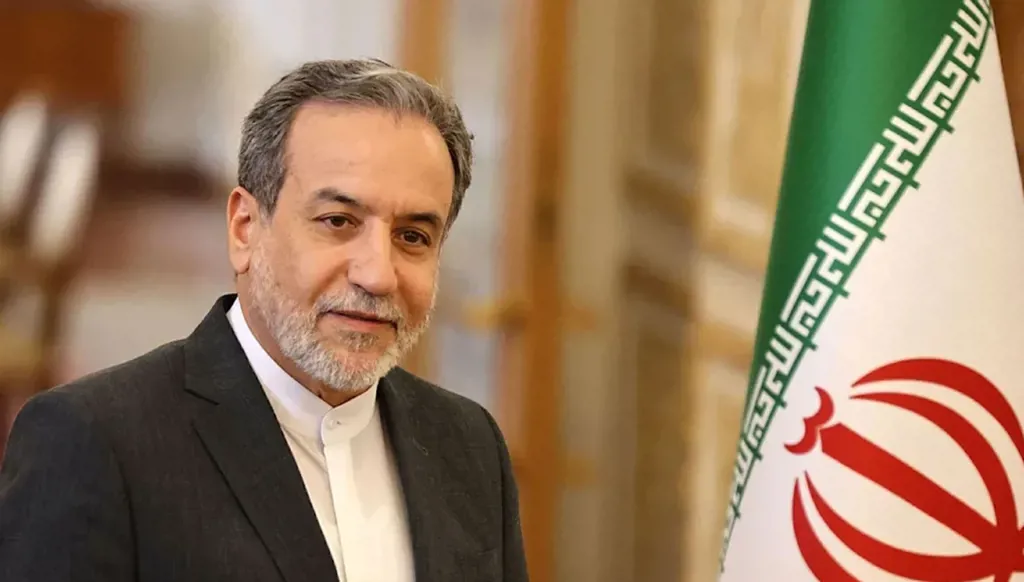


Many questions surround the new visit of Iranian Foreign Minister Abbas Araghchi to Lebanon, which comes under very different circumstances than previous visits - notably amid nationwide protests that have reached their peak in Iranian cities, as well as American and Israeli threats to launch a major military operation against Iran. This coincides with the arrest of Venezuelan President Nicolás Maduro and his wife, a prominent ally aligned with Tehran, as well as the fall of Syria’s former regime under President Bashar al-Assad, along with the weakening of Iran’s regional allies, particularly Hezbollah and Hamas.
From this perspective, multiple questions arise about the objectives of the visit and what it may produce in light of these developments. According to information about communications that took place in Doha between Saudi and Qatari envoys to Lebanon - Prince Yazid bin Farhan and Mohammad Al-Khulaifi - who are expected to arrive in Beirut in the coming days according to Annahar sources, Qatar has conducted high-level diplomatic contacts with Iran, as has Saudi Arabia, which has maintained open channels with Tehran.
Is a major settlement being prepared for Lebanon, given that Iran is a regional power and the primary sponsor of Hezbollah through arms and financial support, in addition to ideological and doctrinal ties? More clearly, who holds influence over whom? And will Iran play a role in pushing Hezbollah toward an Iranian-American understanding on weapons?
At the same time, Araghchi’s visit precedes potential visits by international envoys, including delegations from Saudi Arabia and Qatar, the French envoy Jean-Yves Le Drian, and possibly the return of U.S. envoy Morgan Ortagus.
After the holiday season, more Western and Gulf envoys are expected to arrive in Lebanon to follow up on communications related to UN Resolution 1701 and various negotiation tracks, most notably those linked to financial gaps and the exclusivity of weapons. Will Araghchi deliver a message from the Iranian leadership to Hezbollah on how to deal with these shifts?
Araghchi has stated that he will arrive in Beirut at the head of an economic delegation, suggesting that the visit carries an economic dimension. Is this an attempt to re-enter the Lebanese arena after Iranian planes were barred from landing at Rafik Hariri International Airport? The visit has received approval from Foreign Minister Youssef Raji. It is worth recalling that although Iran previously sought to support Lebanon with oil, electricity, and economic assistance, it is aware that such offers are unlikely to be accepted due to international sanctions imposed on Tehran, particularly during President Donald Trump’s administration.
Former Lebanese ambassador to Washington Antoine Chdid told Annahar that Araghchi’s visit comes amid strong Western momentum - led by the United States - to assert that Washington is both part of the problem and the solution. Iran, he said, is seeking to preserve its interests, but its ability to act is limited due to sanctions and the erosion of its regional influence.
Chdid added that the visit reflects Iran’s attempt to search for a role within the shifting regional equations. However, he stressed that Tehran’s impact remains constrained, as the primary and decisive role belongs to the United States. Against this backdrop, Araghchi’s visit is unlikely to advance or obstruct current diplomatic efforts led by Washington and supported by Western and Gulf states. While Iran is pursuing its interests, it is fully aware -even with an accompanying economic delegation - that international sanctions, especially those imposed by the U.S., severely limit its room for maneuver. The visit, therefore, must be understood within this context.