

Palestinian factions split over weapons handover in Lebanon’s refugee camps
As Lebanon moves to assert state control over weapons inside Palestinian refugee camps, divisions between Palestinian factions - particularly between Fatah and Hamas - are complicating efforts to enforce a unified disarmament process.


 Messenger
 Whatsapp
 Threads
 Email
Email
 Print
Print
 X
X
 Facebook
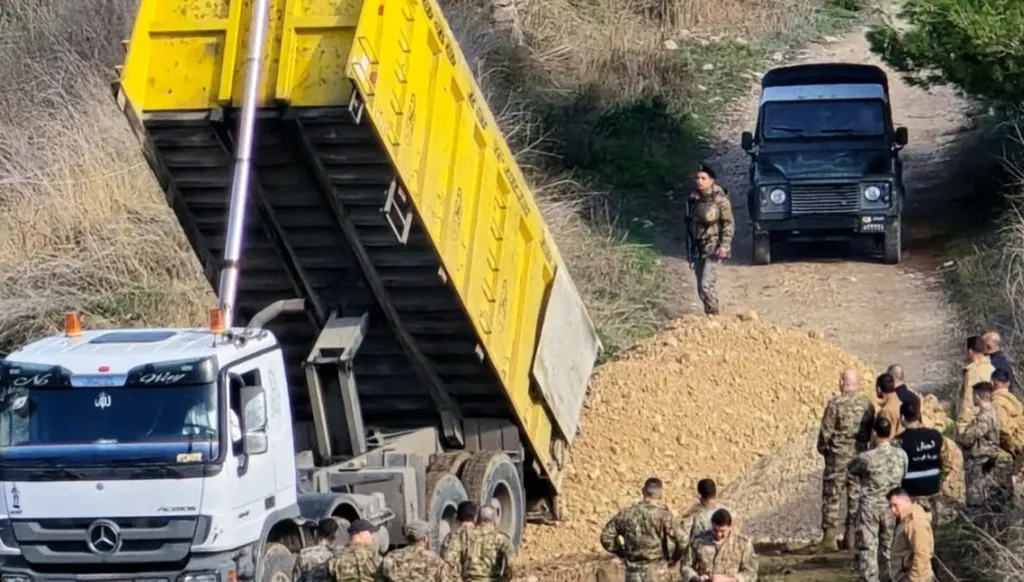


Amid efforts by the Lebanese state to assert its sovereignty over all its territory and reorganize the internal security situation, Lebanon has in recent months launched a gradual process to collect Palestinian weapons inside refugee camps and hand them over to state institutions, particularly the Lebanese Army.
This process became more visible after factions of the Palestine Liberation Organization, led by Fatah, began handing over batches of heavy and medium weapons to the Lebanese Army in camps such as Burj al-Barajneh and Ain al-Hilweh. Some observers have described this step as an initial move toward restricting weapons to state authority and removing the issue from decades of armed fragmentation and disorder.
However, the process has faced internal Palestinian complications. Hamas and allied Islamist factions, including Palestinian Islamic Jihad, have taken a clear stance rejecting the handover of their weapons inside refugee camps in Lebanon, particularly in the Rashidieh area and other locations south of the Litani River.
Lebanon's frustration with this refusal has reached unprecedented levels, as these factions have not complied with the Lebanese government's decision and the Lebanese-Palestinian agreement calling for the handover of weapons. Hamas and its allies have linked disarmament to broader Palestinian rights and demands, rather than treating it as a purely security matter.
From Hamas’s perspective and that of similar armed alliances, limiting the discussion of weapons to state authority or a unilateral timetable ignores Palestinian political and civil rights in Lebanon. These factions insist that any discussion of weapons must be part of a broader dialogue addressing civil, humanitarian, and political rights, either before or in parallel with disarmament.
They reject what they view as an attempt to separate the weapons issue from the rights file, preferring to wait for a comprehensive dialogue involving all factions to agree on a unified roadmap. Palestinian officials have said they are still awaiting an official invitation from the Lebanese-Palestinian Dialogue Committee to convene such talks, which would link disarmament with broader Palestinian concerns in Lebanon.
These positions make clear that the political struggle inside the camps goes beyond weapons alone. It reflects deeper disagreements over what submission to Lebanese sovereignty should entail, and whether it must be accompanied by progress on civil, social, educational, labor, and integration rights for Palestinians.
Hamas and allied factions appear convinced that handing over weapons to Lebanese authorities without guarantees addressing the broader Palestinian situation is unacceptable, leading them to condition disarmament on wider political terms.
For its part, the Lebanese state insists that restricting weapons exclusively to state control is essential for stability and preventing serious security repercussions. It has repeatedly urged Hamas, Islamic Jihad, and other factions to coordinate with the Lebanese Army to set dates for handing over weapons, as Fatah has done.
Official sources say international efforts are underway to pressure Hamas to engage in the process, but so far without results, further complicating the landscape and leaving the disarmament phase incomplete.
The divide between the Lebanese state’s position and the fragmented Palestinian stances - between Fatah on one side and Hamas and Islamist factions on the other - reflects the complex relationship between security and sovereignty on the one hand, and political and social rights on the other, in a context where Palestinian refugees have lived in Lebanon for more than seven decades. A swift resolution does not appear imminent, as the issue requires a comprehensive dialogue linking security and rights before any final disarmament can occur.