

Lebanon
11-12-2025 | 13:20
Women in Baalbek – Hermel:Breaking social barriers is not impossible
The engagement of women in political life remains weak due to the prevailing culture that limits their presence in decision-making positions. Despite the positive results in higher education and the growing number of female graduates, there is an urgent need to develop technological and vocational education along with practical applications in line with the demands of the labor market.


 Messenger
 Whatsapp
 Threads
 Email
Email
 Print
Print
 X
X
 Facebook
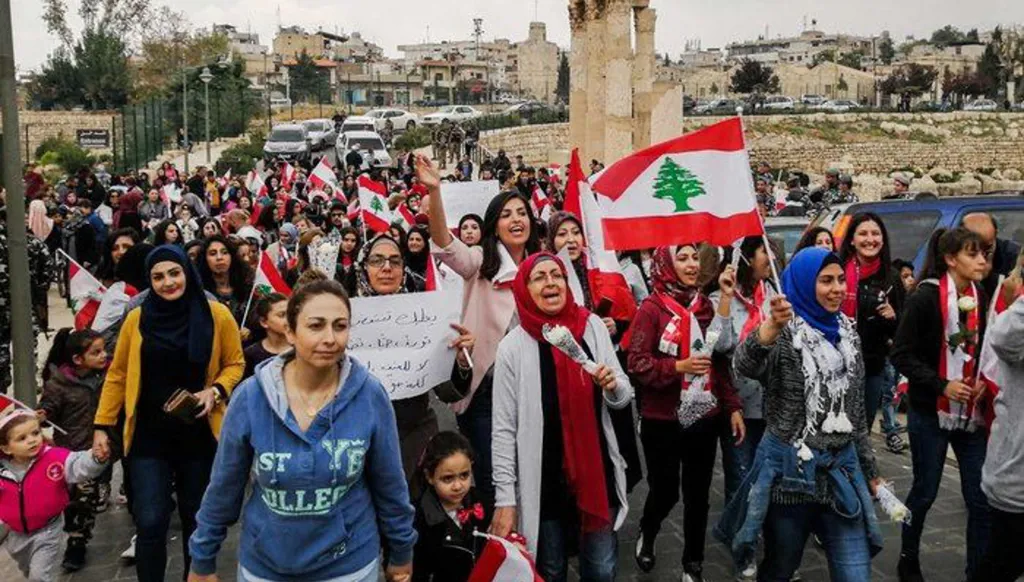
Women's demonstration in Baalbek (archive)


Lina Ismail
Women in the Baalbek–Hermel Governorate have made significant strides across various sectors, signaling profound shifts in their social standing. Their contributions now extend well beyond traditional domestic roles. However, the constraints imposed by conservative values and social customs continue to bear heavily on them.
To highlight the reality of women in the governorate, An-Nahar Newspaper spoke to two prominent women from Baalbek: former Minister Wafaa Diqa Hamzé, one of the pioneering women who has carved out a place for women in politics and public work through her efforts to promote women's rights and pursue development and equality issues and Dr. Batoul Yahfoufi, the academic researcher and leading voice in leadership and women's empowerment who has played an effective role in sustainable development issues.
Wafaa Diqa
As explained by Wafaa Diqa, women in Baalbek-Hermel face challenges similar to those experienced by women across Lebanon, where customs, traditions, and entrenched gender roles limit women’s participation in public life in the region. These roles have traditionally confined women’s responsibilities to the family, restricting access to education, especially in tribal areas.
She notes that while women historically played a leading role, their influence has declined significantly due to the growing dominance of religious control over society, which has adversely affected women’s involvement in political and social spheres in favor of men. Furthermore, despite increased access to education, girls continue to face high school dropout rates due to early marriage. According to previous studies, 18.3% of girls marry before the age of 18, and approximately 2.4% marry before turning 15.
On economic matters, Diqa observes that women encounter discrimination in wages and working conditions. In the agricultural sector, women earn only about one-third of men’s daily wages. Much of women’s agricultural labor is considered unpaid and informal, as it is often tied to family responsibilities, limiting their ability to participate fully in economic and agricultural activities. Nonetheless, Diqa emphasizes that many women in Baalbek continue to lead economic and agricultural projects, acting as entrepreneurs. This achievement is largely due to support from official administrations in collaboration with international organizations, which helps strengthen women’s capacities and awareness of their roles within both family and society.
Concerning political participation, particularly in municipal councils and parliament, Diqa points out that women remain underrepresented. For example, in the 2016 elections, Baalbek-Hermel had the lowest percentage of female candidates at just 3.6%, compared to the capital, Beirut, which recorded the highest rate. No women succeeded in winning municipal seats in Baalbek, despite initial candidacies, as some withdrew under pressure. Diqa emphasizes the need to expand efforts to raise awareness and support women in running for office, while providing them with opportunities to assume leadership roles in local development.
She also notes that women of the new generation in Baalbek-Hermel benefit from greater opportunities than previous generations, thanks to technological advancements, the rise of artificial intelligence, and wider access to knowledge. Today, they are able to express their opinions confidently and clearly and pursue their ambitions.
Finally, Diqa stresses the importance of a comprehensive development strategy that invests in the education of women and youth, considering compulsory education up to the baccalaureate level an essential goal. She advocates for legal reforms to raise the minimum age of marriage to 18, ideally 21—aligning with the age requirement for obtaining a driver’s license—and supports ongoing training programs to equip women with skills across various sectors.
Batoul Yahfoufi
For her part, Yahfoufi agrees with Diqa that women in Baalbek - Hermel face social restrictions and customs similar to those in Lebanon in general. However, these challenges may be more difficult as certain cultural values affect Lebanese society as a whole, limiting women's participation in decision-making and economic life and hindering their ability to access economic decision-making.
Yahfoufi points out that this region has seen a remarkable rise in the level of education among women since the 1970s. As the need for literacy programs that were prominent in the 1990s has diminished, educated women have come to represent the overwhelming majority. University education has been a springboard for women's empowerment and entry into the workforce, especially in Aarsal and Brital. This transformation reflects notable progress in strengthening the role of women within Baalbek society and represents a positive shift in social traditions.
She considers that girls in Baalbek reflect a strong and active personality, noting the high rate of “their engagement in society and departure from the home environment.
According to Yahfoufi, political participation is hampered by negative cultural traditions deeply rooted in Lebanese society in general, which hinder women's candidacy and integration into political life. Despite initiatives to improve the situation since 1995, including support for women's quotas, progress remains slow, and no effective national approach has yet been adopted to guarantee women's political rights, especially given the lack of support from major parties for women's candidacy.
In 1994, the first study on women's political participation in the region was conducted in the city of Zahlé.The results revealed that many consider that politics is not an appropriate arena for women, a belief that endures and continues to hinder women’s ability to challenge tradition and stand for all elections.
Regarding challenges in business, Yahfoufi believes that most women working in the region are employed in marginal, temporary, and seasonal jobs, which negatively impacts their role in the national economy. Nevertheless, they contribute significantly to supporting the resilience of families through small initiatives and cooperatives. She also stresses the urgent need to reform labor laws that discriminate against women and restrict their rights to social and health protections.
However, Yahfoufi is optimistic about the noticeable improvement in the situation of women in Baalbek, while stressing that women's participation in political life continues to lag behind due to the prevailing culture that limits their presence in decision-making positions. Despite positive results in university education and the increase in the number of female graduates, she underscored the urgent need to expand technological and vocational training programs, as well as practical applications that align with the evolving demands of the labor market. Since the region boasts women capable of assuming leadership responsibilities, enhanced support to strengthen the role of women in public affairs is critical.