Lebanon
11-12-2025 | 13:26
Ziad Rahbani: The Echo That Outlived the Stage
A tribute to Ziad Rahbani, whose music, language, and vision reshaped Lebanon’s cultural imagination.


شارك على
 مسنجر
مسنجر
 واتساب
 ثريدز
ثريدز
 بريد إلكتروني
 الطباعة
شارك على


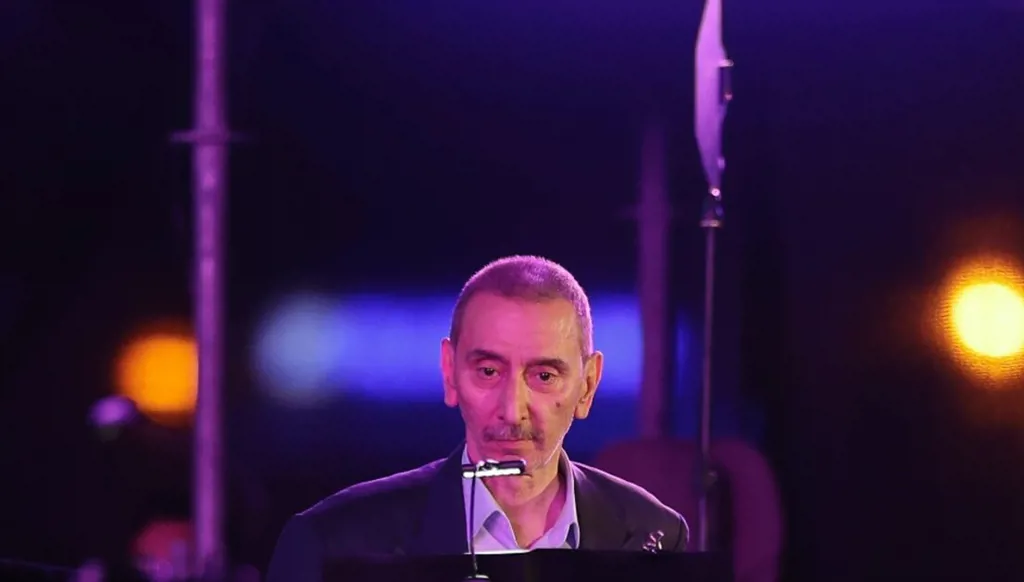
Ziad Rahbani (Annahar)


Jihad Al-Zein
I have always been partial to poetry written in classical Arabic; it is the only genre in which I experience true literary ecstasy. Yet I remain captivated by the poems chosen by the Rahbani father and uncle. And I deeply admire the artistic legacy of Ziad Rahbani—the work that Fairuz sang, and through which she stepped beyond the carefully crafted persona the Rahbani brothers had built
Since Ziad Rahbani’s passing, I have lived—like tens of thousands of others—in the ongoing carnival of his music. We are still in mourning, but it is unlike any mourning we have known. It is a carnival of song, dance, theater, and music. The Guardian described it perfectly in its obituary, calling his sound “Eastern jazz,” borrowing the phrase from Ziad himself.
I wish he had lived to the age of ninety, because losing him at sixty-nine meant bidding farewell to another Mohammed Abdel Wahab—different in style, yes, but equal in brilliance. Perhaps it is more accurate to say that the Lebanese Abdel Wahab remained incomplete.
This brings me to the central question:
Could Ziad’s unmatched mastery of colloquial Arabic have cost him a key part of what would have distinguished him had he ventured fully into classical Arabic poetry? After all, the Rahbani school produced some of the finest compositions set to classical verse—Said Akl’s poems, especially those about Damascus and Mecca; Al-Akhtal Al-Saghir; Mansour Al-Rahbani; Nizar Qabbani; and even the reinterpretation of Ahmed Shawqi’s “Jaret al-Wadi.” I cherish that piece in both its lyrics and its melodies, though I remain convinced that truly great classical Arabic poetry overpowers the singer, no matter how refined, transparent, or dazzling the performance.
Still, it was precisely Ziad’s colloquial poems—those he wrote and Fairuz sang—that opened a new artistic chapter for her. It was his music and his words that led her into an experience distinct from anything shaped by the earlier Rahbani era.
Just as Muhammad al-Maghut opened the door of prose poetry for me, Ziad al-Rahbani, and a few others, introduced me to the world of colloquial verse. My enduring admiration for Said Akl and his brilliant, pioneering classical poetry never managed to reconcile me with the spoken form the way Ziad did with a single line:
“Sabah w masa, shi ma byentasa… taraket el-hob w akhadet el-asa.”
This belonged to the collection that gathered the songs of the Ziad–Fairuz era, alongside pieces from much earlier phases.
We will never know what Ziad might have produced had he written a full poem in classical Arabic, or whether the idea ever crossed his mind. He remained singular—someone who carved an unmistakable artistic path and walked it alone. What we do know is that this inventive musician shaped the cultural outlook of two generations through the theatrical language he crafted. His influence reached beyond imitation, reshaping how many viewed Lebanon and its endless crises. He embedded himself in the Lebanese consciousness and captured the attention of Egypt and the Arab world’s intellectual circles.
Ziad’s political hyperbole functioned like linguistic shrapnel—phrases that the war generation, and those after it, adopted and recycled in countless forms. Words, in his world, became a lifeline—if only during the moments we listened to or watched his programs and plays.
We need to revisit his music more deeply, both the celebrated works and the overlooked ones. One hopes the lesser-known pieces are preserved somewhere, though that responsibility ultimately falls to music historians and the relevant Lebanese institutions.
From his interviews, we know he held a profound respect for Sayed Darwish. And one cannot help but ask: is Ziad, like Sayed Darwish, an unfinished project, despite the fact that Ziad was ultimately able to articulate far more of himself than Darwish ever had the chance to?
I never met Ziad Rahbani, yet—like millions—I owe him countless hours of pleasure and enrichment. Thank you to the great musician, poet, and unparalleled playwright.
I speak not as a music critic but as a devoted admirer of Ziad, Fairuz, and the Rahbani brothers—the trio that set the benchmark for Lebanese music and defined our artistic taste. Through them, we discovered new creative horizons and a modern dimension of Arabic music built on Egyptian foundations: Umm Kulthum, Abdel Wahab, and the irreplaceable Asmahan and Farid al-Atrash.
I have always gravitated toward singer-songwriters who pen their own lyrics—Leonard Cohen, Bob Dylan, Assi Rahbani, and Ziad. And I am equally drawn to those composer-poets who wrote words worthy of their melodies, outshining many traditional poets.
Take this line, written in al-Basit meter and featured in one of Fairuz’s songs composed by Assi and Mansour—often considered among the finest expressions of Arabic poetry, said to be drawn from a poem by Mansour himself:
“Sleep has overtaken your past, and the gardens of life have departed in tears—so rest now.”
Since Ziad Rahbani’s passing, I have lived—like tens of thousands of others—in the ongoing carnival of his music. We are still in mourning, but it is unlike any mourning we have known. It is a carnival of song, dance, theater, and music. The Guardian described it perfectly in its obituary, calling his sound “Eastern jazz,” borrowing the phrase from Ziad himself.
I wish he had lived to the age of ninety, because losing him at sixty-nine meant bidding farewell to another Mohammed Abdel Wahab—different in style, yes, but equal in brilliance. Perhaps it is more accurate to say that the Lebanese Abdel Wahab remained incomplete.
This brings me to the central question:
Could Ziad’s unmatched mastery of colloquial Arabic have cost him a key part of what would have distinguished him had he ventured fully into classical Arabic poetry? After all, the Rahbani school produced some of the finest compositions set to classical verse—Said Akl’s poems, especially those about Damascus and Mecca; Al-Akhtal Al-Saghir; Mansour Al-Rahbani; Nizar Qabbani; and even the reinterpretation of Ahmed Shawqi’s “Jaret al-Wadi.” I cherish that piece in both its lyrics and its melodies, though I remain convinced that truly great classical Arabic poetry overpowers the singer, no matter how refined, transparent, or dazzling the performance.
Still, it was precisely Ziad’s colloquial poems—those he wrote and Fairuz sang—that opened a new artistic chapter for her. It was his music and his words that led her into an experience distinct from anything shaped by the earlier Rahbani era.
Just as Muhammad al-Maghut opened the door of prose poetry for me, Ziad al-Rahbani, and a few others, introduced me to the world of colloquial verse. My enduring admiration for Said Akl and his brilliant, pioneering classical poetry never managed to reconcile me with the spoken form the way Ziad did with a single line:
“Sabah w masa, shi ma byentasa… taraket el-hob w akhadet el-asa.”
This belonged to the collection that gathered the songs of the Ziad–Fairuz era, alongside pieces from much earlier phases.
We will never know what Ziad might have produced had he written a full poem in classical Arabic, or whether the idea ever crossed his mind. He remained singular—someone who carved an unmistakable artistic path and walked it alone. What we do know is that this inventive musician shaped the cultural outlook of two generations through the theatrical language he crafted. His influence reached beyond imitation, reshaping how many viewed Lebanon and its endless crises. He embedded himself in the Lebanese consciousness and captured the attention of Egypt and the Arab world’s intellectual circles.
Ziad’s political hyperbole functioned like linguistic shrapnel—phrases that the war generation, and those after it, adopted and recycled in countless forms. Words, in his world, became a lifeline—if only during the moments we listened to or watched his programs and plays.
We need to revisit his music more deeply, both the celebrated works and the overlooked ones. One hopes the lesser-known pieces are preserved somewhere, though that responsibility ultimately falls to music historians and the relevant Lebanese institutions.
From his interviews, we know he held a profound respect for Sayed Darwish. And one cannot help but ask: is Ziad, like Sayed Darwish, an unfinished project, despite the fact that Ziad was ultimately able to articulate far more of himself than Darwish ever had the chance to?
I never met Ziad Rahbani, yet—like millions—I owe him countless hours of pleasure and enrichment. Thank you to the great musician, poet, and unparalleled playwright.
I speak not as a music critic but as a devoted admirer of Ziad, Fairuz, and the Rahbani brothers—the trio that set the benchmark for Lebanese music and defined our artistic taste. Through them, we discovered new creative horizons and a modern dimension of Arabic music built on Egyptian foundations: Umm Kulthum, Abdel Wahab, and the irreplaceable Asmahan and Farid al-Atrash.
I have always gravitated toward singer-songwriters who pen their own lyrics—Leonard Cohen, Bob Dylan, Assi Rahbani, and Ziad. And I am equally drawn to those composer-poets who wrote words worthy of their melodies, outshining many traditional poets.
Take this line, written in al-Basit meter and featured in one of Fairuz’s songs composed by Assi and Mansour—often considered among the finest expressions of Arabic poetry, said to be drawn from a poem by Mansour himself:
“Sleep has overtaken your past, and the gardens of life have departed in tears—so rest now.”
العلامات الدالة
الأكثر قراءة

لبنان
4/1/2026 2:57:00 PM
الجيش الإسرائيلي: مصدر آخر تم استهدافه هو شبكة الصرافين التي تُعد المصدر المالي الرئيسي والأهم لهذه المنظمة
لبنان
4/1/2026 1:05:00 PM
شهدت منطقة الجناح في بيروت قصفاً إسرائيلياً عنيفاً
لبنان
4/1/2026 2:48:00 PM
إخبار أمام النيابة العامّة التمييزية ضد السفير الإيراني محمد رضا شيباني