

Gulf sides with Kuwait in latest Iraq-Kuwait maritime dispute


 Messenger
 Whatsapp
 Threads
 Email
Email
 Print
Print
 X
X
 Facebook
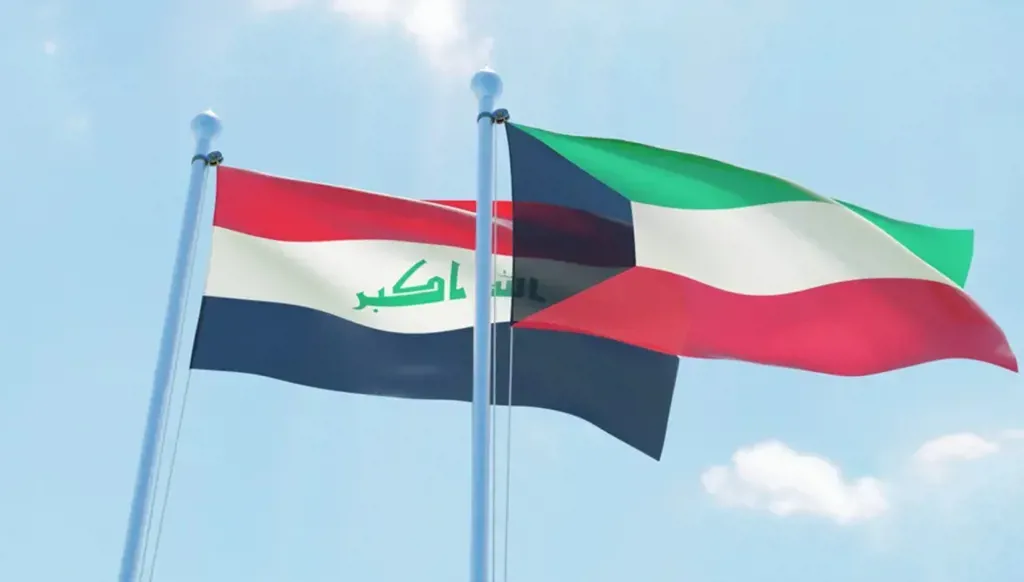


The resolution provided for the division of the waters of Khor Abdullah between the two countries, which the Iraqi government ratified in November 2013. However, in 2023, Iraq’s Supreme Federal Court ruled that parliamentary ratification of the navigation agreement in the Khor was invalid, stating that international treaties must be approved by a law passed by two-thirds of the members of the Council of Representatives.
Iraq now objects to using the “midline” in Khor Abdullah, preferring delimitation based on the “deepest point” of the navigable channel, since the areas on Iraq’s side of the Khor suffer from sediment accumulation. Kuwait insists that Security Council Resolution 833 of 1993 covers both the land and maritime borders, while Iraq contends that the resolution does not cover the entire deep-sea maritime boundary.
Key Reactions
The United Arab Emirates affirmed its full and unwavering solidarity with Kuwait, standing by it against any infringement on its sovereignty or national interests. It also expressed concern and condemnation over the Iraqi coordinates, calling on Baghdad to act responsibly and resolve the matter through constructive dialogue and diplomatic channels, in a way that strengthens security and stability in the region.
Meanwhile, the Saudi Ministry of Foreign Affairs stated that it is “watching with great interest and concern the lists of coordinates and the map submitted by the Republic of Iraq to the United Nations, which include violations covering large parts of the divided submerged area adjacent to the Saudi-Kuwaiti divided zone. Saudi Arabia and Kuwait jointly own the natural resources in this area according to valid agreements between them, based on the provisions of the 1982 United Nations Convention on the Law of the Sea.”
The statement pointed out that “these coordinates violate the sovereignty of the sisterly State of Kuwait over its maritime areas and water heights, such as Fasht al-Qaid and Fasht al-Aij shoals.”
It also reiterated “Saudi Arabia’s categorical rejection of any claims of rights by any other party in the divided submerged area along its defined borders with the State of Kuwait,” according to the statement carried by the Saudi Press Agency (SPA).

In this context, the Saudi Ministry of Foreign Affairs emphasized “the importance of the Republic of Iraq’s commitment to respecting the sovereignty and territorial integrity of the State of Kuwait, honoring bilateral and international agreements and commitments, and complying with all relevant United Nations resolutions, particularly Security Council Resolution 833 (1993), which delineated the land and maritime borders between the State of Kuwait and the Republic of Iraq.” The ministry called for “reason, wisdom, and dialogue to resolve disputes, and for serious and responsible conduct in accordance with the rules and principles of international law and good neighborliness.”
Qatar also expressed its full solidarity with Kuwait, affirming its support for Kuwait’s complete sovereignty over its maritime areas. Doha stated that it “is closely following the Iraqi coordinates that constitute an encroachment on Kuwait’s sovereignty,” calling for “adherence to the 1982 United Nations Convention on the Law of the Sea and compliance with the understandings, agreements, and memorandum of understanding between Kuwait and Iraq.”
Bahrain likewise confirmed that it “is monitoring the Iraqi coordinates,” emphasizing “Kuwait’s full sovereignty over its maritime areas and water heights,” and categorically rejecting any claims by other parties. It also urged Iraq to “take into account the historical relations between the two countries and act seriously in accordance with international law and the 1982 Law of the Sea Convention.”
Oman stated that it “is following with great interest the lists of coordinates and the map submitted by the Republic of Iraq to the United Nations, which affect the sovereignty of the State of Kuwait over its stable and established maritime areas and water heights.”
The Omani Ministry of Foreign Affairs affirmed “its solidarity with the State of Kuwait regarding its sovereignty over all its maritime areas and water heights.”
Oman also called on the Republic of Iraq to “take into account the course of its historical and fraternal relations with the State of Kuwait, the principles of good neighborliness, and the rules of international law, as well as the provisions of the 1982 United Nations Convention on the Law of the Sea, in accordance with the understandings, agreements, and bilateral memorandums of understanding concluded between the two countries.”
Between Kuwait and Iraq...
The Kuwaiti Ministry of Foreign Affairs summoned the chargé d’affaires of the Republic of Iraq’s embassy in Kuwait to present an official protest memorandum.
The summons came after “Iraq submitted a list of coordinates and a map to the United Nations, which included claims over Iraqi maritime areas that, according to Kuwait, infringe on its sovereignty over its maritime zones and water heights, including Fasht al-Qaid and Fasht al-Aij shoals, which had not been subject to any previous dispute,” according to a statement from the Kuwaiti Foreign Ministry.
The ministry called on Iraq to “respect the historical relations between the two countries and address maritime matters in accordance with international law and the 1982 United Nations Convention on the Law of the Sea, in line with the understandings, agreements, and bilateral memorandums of understanding between Kuwait and Iraq.”
Iraq, in turn, noted that “the submission of the maritime map was based on national laws and decisions as well as the 1982 United Nations Convention on the Law of the Sea,” adding that “the determination of maritime zones is a sovereign matter.”
During a telephone call on Sunday evening, Iraqi Deputy Prime Minister and Minister of Foreign Affairs Fuad Hussein discussed with Omani Foreign Minister Badr Al-Busaidi the statement issued by the Kuwaiti government regarding Iraq’s submission of its maritime map to the United Nations.
Hussein pointed out that “Kuwait had previously submitted its maritime maps and baseline points to the United Nations in 2014 without consulting Iraq at the time, whereas the Iraqi government only submitted its map recently.”
Both sides emphasized “the importance of conducting discussions based on clear legal principles and of determining Iraq’s baseline in a manner consistent with internationally recognized standards, as is the case with Kuwait.”
Hussein affirmed that “Iraq respects and is committed to international law in this field, as well as to relevant United Nations resolutions and bilateral agreements,” stressing that “the Iraqi government believes in resolving issues through negotiations and dialogue, respecting the sovereignty of states, and refraining from interfering in their internal affairs.”
Earlier, the Iraqi Ministry of Foreign Affairs stated in a press release that on 19 January and 9 February 2026, it submitted to the UN Secretary-General lists of geographic coordinates for specific points, accompanied by a map, “in accordance with the 1982 United Nations Convention on the Law of the Sea. This submission includes the determination of straight baselines, baselines following the outermost islands for measuring the breadth of the territorial sea, as well as the delimitation of the territorial sea, the contiguous zone, the exclusive economic zone, and Iraq’s continental shelf according to the internationally recognized 1984 geodetic system.”