

Emirati-Syrian Program to train 10,000 Syrian healthcare workers for emergency response


 Messenger
 Whatsapp
 Threads
 Email
Email
 Print
Print
 X
X
 Facebook
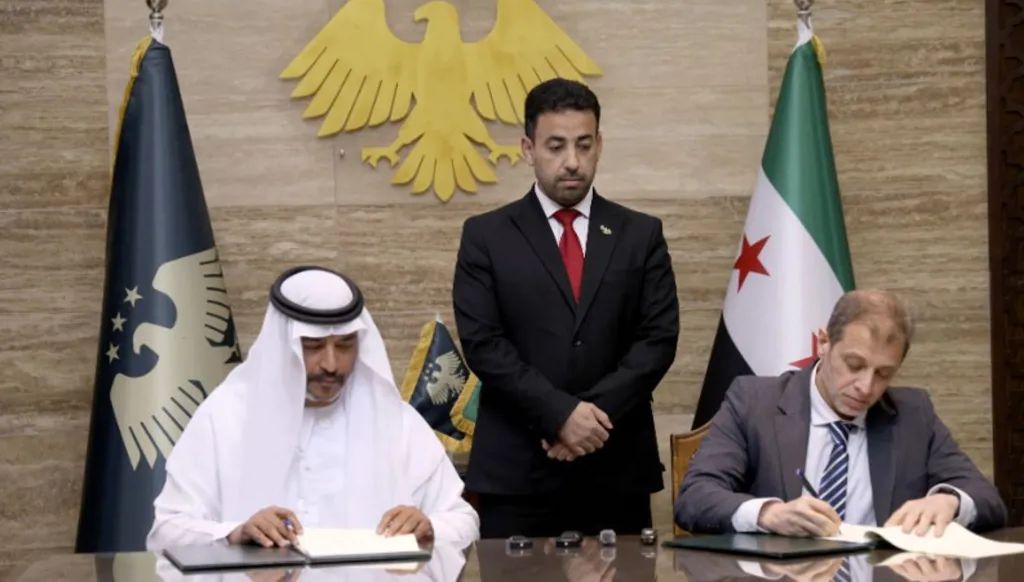


The "Emirati-Syrian Readiness" program was launched yesterday in the Syrian capital, Damascus. The program aims to enhance the efficiency of Syria’s health sector in responding to emergencies and disasters by training and qualifying 10,000 frontline healthcare workers over the next five years.
This will be achieved through a unified and internationally accredited curriculum developed by the European Centre for Disaster Medicine and several specialized training centers in the UAE, the US, and Europe.
The program was officially launched at a press conference where a strategic memorandum of understanding was signed between the Syrian Ministry of Health and the Readiness Academy.
Syrian Minister of Health, Musab Al-Ali, emphasized that the Syrian Readiness Program will contribute to activating partnerships between health institutions, attracting experts, and adopting initiatives that will contribute to developing the health sector. This includes investing in human capital and training certified trainers according to best global practices within a five-year operational plan.
Dr. Adel Al-Shamry Al-Ajami, CEO of the Zayed Giving Initiative, Chairman of the Emirates Doctors, and Head of the Emirates National Readiness & Response Program-Jaheziya, stated that the launch of the Syria Readiness Program aims to build national preparedness in Syria, enhance the efficiency of medical response, standardize procedures, and provide advanced training to strengthen hospital capacity and improve ambulance services.
He explained that the target groups include healthcare workers in public and private hospitals, first responders from ambulance and national defense personnel, and emergency teams.
Dr. Iyad Baath, Director-General of the Syrian Board of Medical Specialties, indicated that the program aims to train and qualify ten thousand frontline healthcare workers. It relies on a modern scientific methodology and internationally recognized standards, focusing on sustainable national capacity building.
The program begins with a three-month pilot phase during which two hundred healthcare professionals will be trained.