

Conflicting signals deepen Yemen’s political and military crisis



 Messenger
 Whatsapp
 Threads
 Email
Email
 Print
Print
 X
X
 Facebook
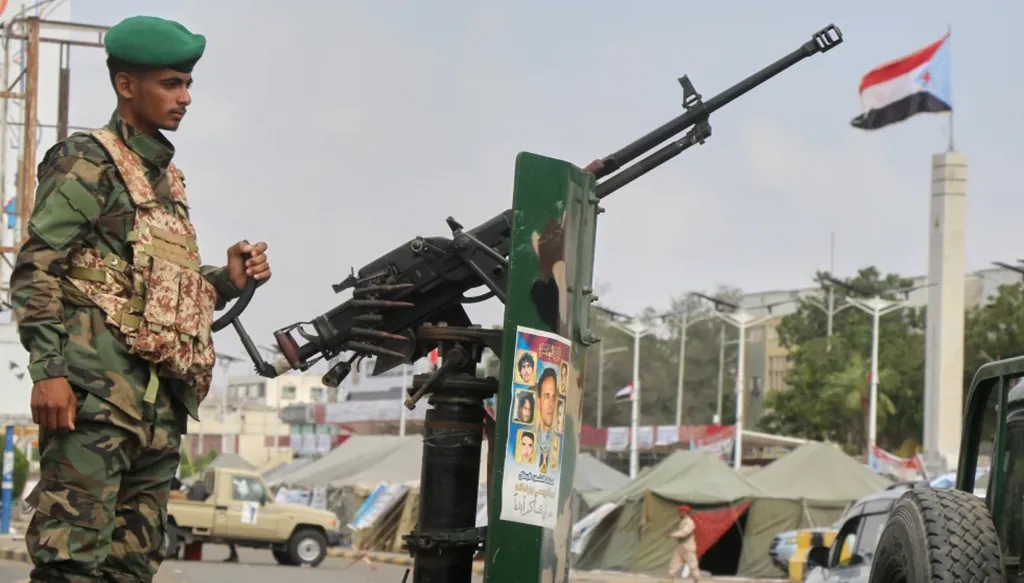


Conflicting developments emerging from Yemen are clouding the trajectory of a crisis that has erupted between the internationally recognized Yemeni government and the Southern Transitional Council (STC), further complicating an already intertwined political and military landscape.
While the Southern Armed Forces affiliated with the Southern Transitional Council announced an agreement providing for the deployment of another government force in areas they seized in recent weeks in Hadramawt governorate, the government announced new restrictions on flights to and from the United Arab Emirates. This move prompted the council’s transport minister to issue an order suspending air traffic entirely at the airport.
Between these two parallel tracks, the complexity of the Yemeni scene is once again coming into focus, as local calculations intersect with regional dynamics, amid growing concerns that this divergence could lead to further confusion, one that could be exploited by the Houthis and other extremist groups.
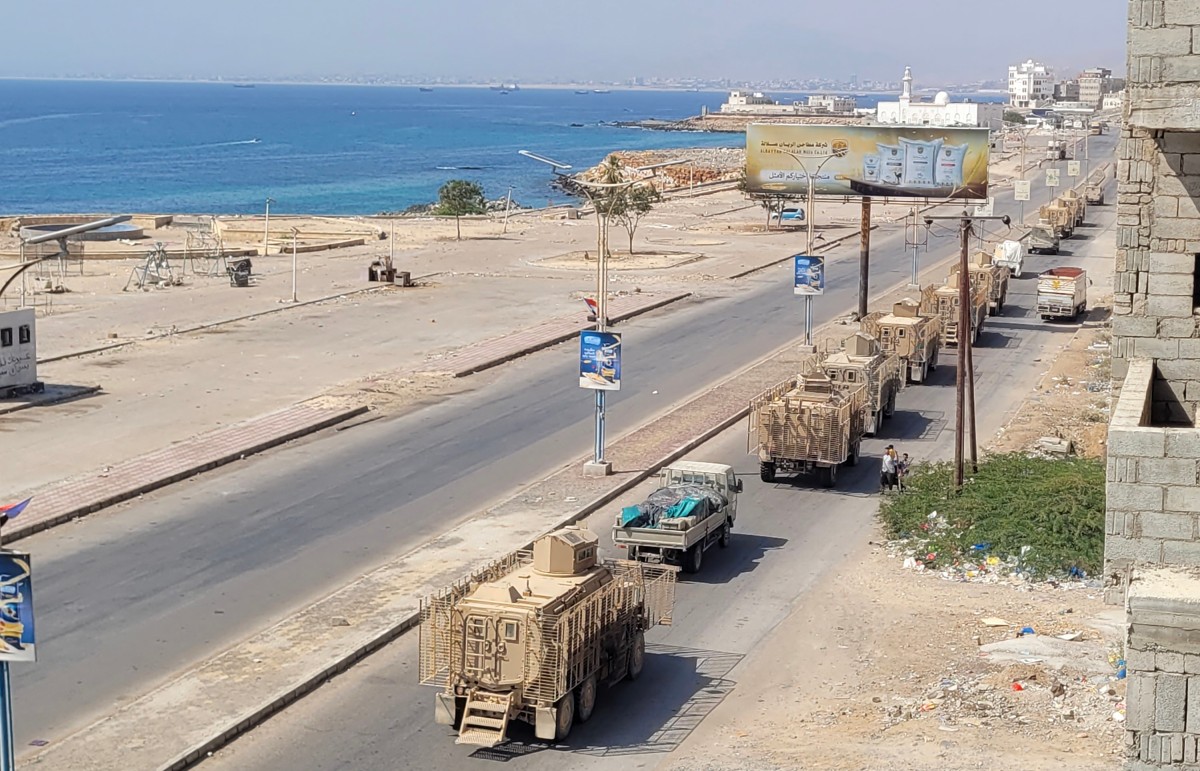
Mohammed Al-Basha, founder of Basha Report, a Washington-based advisory group, says there are no tangible indications that the Southern Transitional Council is moving toward a withdrawal from Hadramawt or Al-Mahra. On the contrary, available field data point to the arrival of additional reinforcements, particularly from the Southern Giants Brigades, suggesting a further entrenchment of the military presence rather than a pullback.
As for the statement issued late last night by Southern Forces spokesman Mohammed al-Naqeeb, he described it as “a unilateral step by the Southern Transitional Council,” with no official confirmation from the Nation’s Shield Forces (affiliated with the Presidential Leadership Council), the internationally recognized Yemeni government, or the Saudi-led Arab coalition regarding any arrangements to share military bases, coexist in the same areas, or conduct joint operations.
He also noted that there is no confirmed information about allocating exclusive bases to the Nation’s Shield Forces at strategic locations such as Thamud or Ramah near the Saudi border, nor about the establishment of joint camps with the First Military Region command in Wadi Hadramawt.
Who Controls What?
The Promising Future operation was a military campaign launched by the Southern Transitional Council between December 3 and 9, 2025, resulted in the group taking control of most of the territory that once formed the former state of South Yemen. The governorates now under its control include Aden, Lahj, Al-Dhale, Abyan, Shabwah, and the Socotra archipelago, in addition to most of Hadramawt, including Wadi Hadramawt, and Al-Mahra up to the border with Oman, as well as the entire southern coastline.
By contrast, areas under government control have shrunk to Marib governorate, parts of northern Hadramawt, and border areas near Al-Abr and Al-Wadi’ah, in addition to limited pockets in Taiz and Al-Jawf along front lines with the Houthis.
Forces loyal to Tareq Saleh, the nephew of former Yemeni president Ali Abdullah Saleh, which control parts of the southern Red Sea coast and are based in the port city of Mokha, announced their support for the steps taken by the Southern Transitional Council.
Meanwhile, the Houthis continue to control most of northwestern Yemen, including Sanaa, Saada, and Hajjah, with no change in their areas of control.
The United Arab Emirates said on Tuesday it had withdrawn “what remains” of its forces from Yemen, following a Saudi air strike that targeted what was described as an “arms shipment” en route to the port of Mukalla.
While a spokesman for the Saudi-led coalition supporting Yemen’s internationally recognized government said the shipment reached Mukalla port for the benefit of Southern Transitional Council forces, the UAE said the vessels were not carrying any military cargo and were not intended to support separatist forces in the country, but solely to support its own forces.
UAE: De-escalation
Al-Basha noted that the United Arab Emirates appears to be seriously engaged in a de-escalation track, as reflected in the continued withdrawal of forces over the past 48 hours, in addition to the pullout of Emirati commanders from Hadramawt, a move widely interpreted as a clear signal of an intent to contain tensions.
By contrast, Al-Basha said he sees no similar indications of de-escalation on the Saudi side, noting that media outlets aligned with Riyadh continue to exert pressure on Abu Dhabi. In this context, he pointed to a New Year message broadcast by Saudi state-owned Al-Ekhbariya channel, which suggested that the new year had begun with the UAE’s exit from Yemen.
This crisis has revived memories of past experiences that showed how infighting and divisions within the anti-Houthi camp have only strengthened the group, as well as Al-Qaeda, the transnational Islamist militant organization, and other armed extremist groups active in Yemen. According to al-Basha, the Houthis do not derive their strength from any inherent superiority or “divine advantage,” but rather from the fragmentation and weakness of their opponents resulting from internal conflicts.
He concludes that the spillover of tensions between Abu Dhabi and Riyadh has become increasingly evident to regional and international observers, warning that this could further undermine the cohesion of the anti-Houthi front at a highly sensitive moment.
Dan Shapiro, a former US diplomat who now works at the Atlantic Council, said the situation is “concerning because it undermines efforts to address multiple flashpoints across the region, from Yemen and Gaza to Syria, Lebanon, and Sudan. Resolving each of these crises will become more difficult if Saudi Arabia and the United Arab Emirates fail to align on their shared interests.”