

Ted Chaiban: The "Calm Authority" Steering UNICEF Through Lebanon’s Darkest Hour


 Messenger
 Whatsapp
 Threads
 Email
Email
 Print
Print
 X
X
 Facebook
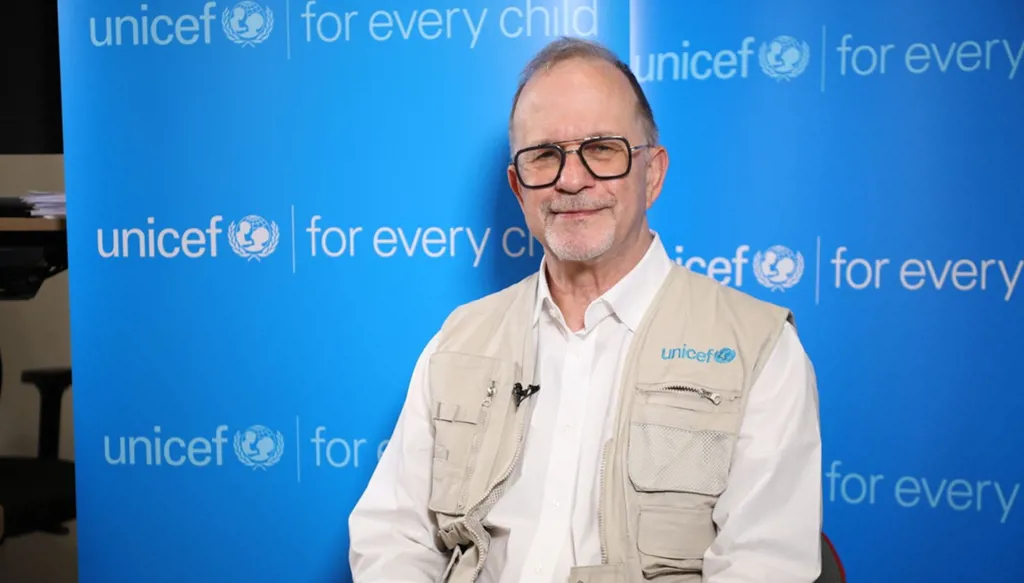


As the Deputy Executive Director for Humanitarian Action and Supply Operations at UNICEF, Ted Chaiban is no stranger to global catastrophe. Yet, for the prominent Lebanese diplomat, the current escalation in his homeland is deeply personal. Drawing on his own childhood experiences of displacement during the Lebanese Civil War in the 1970s, Chaiban is now the leading voice advocating for a generation of children caught in the crossfire.
A Crisis of Unprecedented Scale
The humanitarian toll in Lebanon has reached a breaking point. In just two weeks, the country has seen one million people displaced, with 350,000 of them being children who have lost their homes, schools, and sense of safety.
"On the ground, we see a lot of children suffering; they are paying the highest price of this war," Chaiban warns. The statistics are staggering:
111 children killed and over 330 wounded in a recent 15-day period.
over 130,000 individuals are currently seeking refuge in over 600 designated shelters.
90% of the displaced are relying on the dwindling resources of friends, relatives, or expensive rentals rather than formal shelters.
The UNICEF Response: Beyond Survival
Chaiban explained, how UNICEF in coordinating with the Lebanese Ministry of Social Affairs is providing more than just basic survival.
The response focuses on essential Supplies, delivering clothes and blankets to combat the cold.
Water & Sanitation: Ensuring functional toilets and clean water, which Chaiban defines as a "non-negotiable human right".
Mental Health: Prioritizing psychosocial support and counseling to return a "sense of normalcy" to frightened children through play and education.
Chaiban was known for his spearheading the "Back to Learning" campaign in Gaza, an ambitious initiative aimed at returning 700,000 children to classrooms across the region.
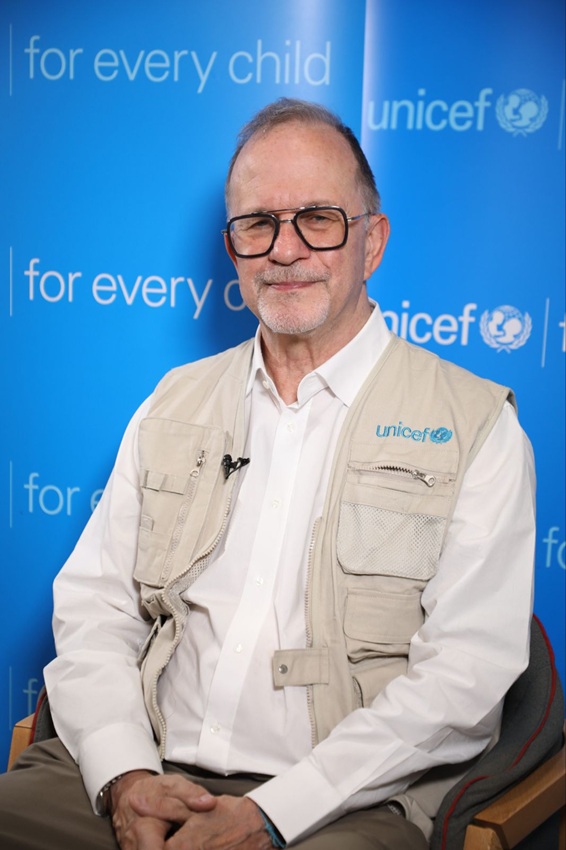
The Logistics of Hope
The challenge is not just what to deliver, but how to deliver it. While thousands have fled north, a "few thousand" remains trapped in the South. UNICEF relies on a humanitarian notification system to send convoys of food and water to isolated families in areas like Tyre.
To sustain these operations, the UN has launched a US$ 308 millionflash appeal, with $48 million specifically dedicated to UNICEF’s efforts. "We need our donor partners to continue to be generous and to step up," Chaiban urges, noting that while there are currently no obstacles to aid access, resources are limited.
A Plea for De-escalation
Despite the celebrated "resilience" of the Lebanese people, Chaiban cautions that this strength has its limits. Families are under "enormous pressure," and the "shield that protects children"—international humanitarian law—is rapidly deteriorating.
"The war must stop," Chaiban insists, expressing a haunting hope that Lebanon "will not become another Gaza from a humanitarian point of view". His final message to his compatriots is one of unity: "Continue the social cohesion".