The fall of Iran’s Regime weakens its proxies, no new war with Israel


شارك على
 مسنجر
مسنجر
 واتساب
 ثريدز
ثريدز
 بريد إلكتروني
 الطباعة
شارك على


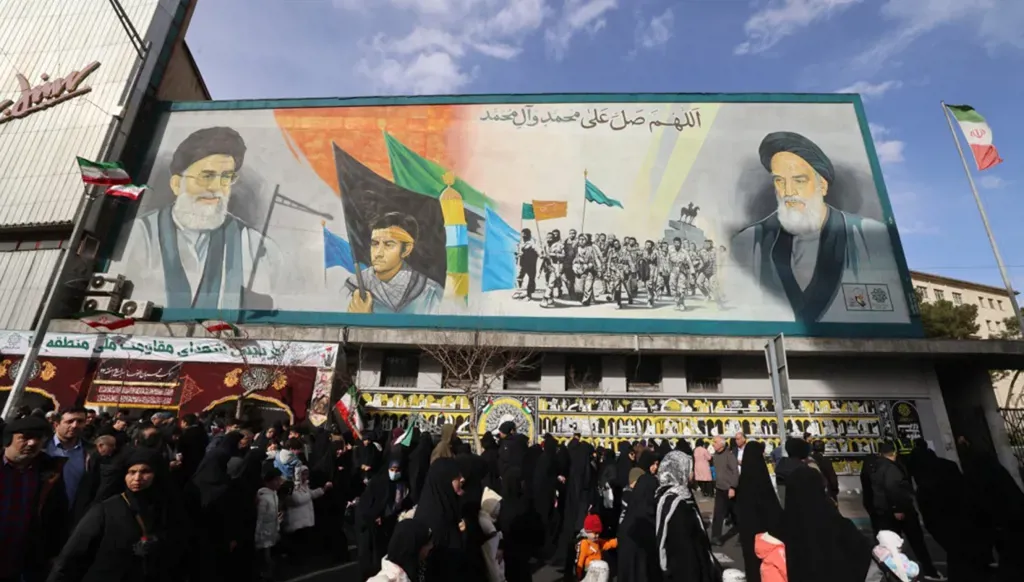


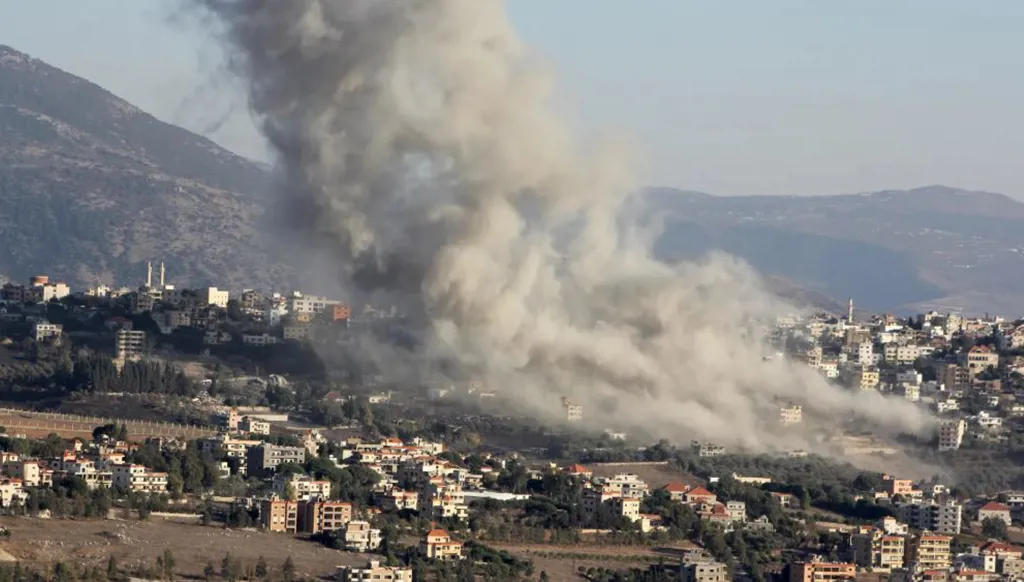
The past three weeks' activities are not just limited to this. They also occur amid a rapid decline in Iran's regional role. More than two years of war in Gaza have resulted in severe injuries to Iran's allies in Lebanon and Gaza, and the fall of its ally, Bashar al-Assad, in Syria.
This was accompanied by a 12-day war with Israel, ending with the U.S. "Midnight Hammer" targeting nuclear program facilities.
All these losses have left the Islamic Republic in a troubled geopolitical position, with internal movements raising serious questions about the regime's sustainability and U.S. threats of intervention.
The issue of regime change or collapse is unpredictable, but the rapid international and regional developments, along with the internal confusion exacerbated by international sanctions, must lead this path one way or another.
Researchers of Iranian affairs from the Middle East and the United States linked the regime's fate to U.S. actions, warning of "civil war" risks.
Relative Calm
Regionally, any change in the Iranian regime inevitably means the fall of influence that had reached controlling four Arab capitals, though it doesn't mean the end of Iran-backed factions' roles, which may take a different political shape.
The decline of Iranian influence must be filled by other regional powers, notably Turkey, given its role in Syria and its border influence struggle with Israel.
Iranian affairs specialist Dr. Nabil Al-Atoum explains that changing or toppling the Iranian regime means "a significant weakening of proxies, reduced funding and support for Hezbollah, the Popular Mobilization Forces, and the Houthis, which changes power balances and exposes them more to internal and external targeting... enabling a return to national decision-making amidst temporary security turmoil."
He elaborated in his conversation with "Annahar" that should this occur, "there will be a de-escalation with Israel, with declining chances of proxy wars, shifting the conflict to politics."
The implications will also extend to the Gulf region, according to the same researcher, reflecting "relative calm and broader economic and security openness." It also "enhances" American and Western political and security influence, particularly in energy and maritime passage issues.
The discussion of energy and maritime passages leads us towards the broader conflict map amid the world's shift towards establishing a new global system.
Before delving into Iranian affairs, it's necessary to consider a related issue, the kidnapping of Venezuelan President Nicolas Maduro and the continuation of the ruling structure. While the declared aim is drug and oil trade, it becomes apparent that Venezuela's oil is among the world's worst, with high_processing costs. Behind this, one must search for China's influence in America's backyard and the struggle over changing the global order to a multipolar one.
Here lies the core issue if we examine the Iranian file in its international context.
No More Civil Wars
Removing Iran's regime without a genuine alternative capable of controlling the streets and, more importantly, the security institutions will have grave risks. Starting from its geographic location, if it erupts into a civil war, its sparks will affect a large region from the Middle East to Central Asia.
Secondly, and importantly, Iran possesses a massive arsenal of ballistic missiles, drones, enriched uranium, and nuclear knowledge. Therefore, if this arsenal falls into the hands of unregulated international or regional groups, the risks will be much greater than maintaining the regime.
U.S. foreign affairs expert Harley Lippman offers an insight into the new American policy that "does not want to slide into another civil war." He tells "Annahar" that the U.S. policy "does not seek to change the (Iranian) regime but to achieve stability. They do not want to repeat the scenarios of Vietnam, Afghanistan, or Iraq."
He explains that Iran's influence in Iraq today is much greater than before. After 2003, U.S. intervention in Iraq led to a civil war. Thus, the United States does not want to repeat that, nor see chaos in the region.
Discussing Latin America, he says: "Look at what happened in Venezuela, where the leader (President Nicolas Maduro) was captured, and the leaders were not killed. Unlike Iraq, there was no large military force used, only a small special unit... If we take this as a model, U.S. influence will achieve what it wants without war."
As for a figure capable of managing Iran should the regime fall, the American expert suggests "the son of the Shah, Reza Pahlavi, could be a transitional figure."
Energy and China
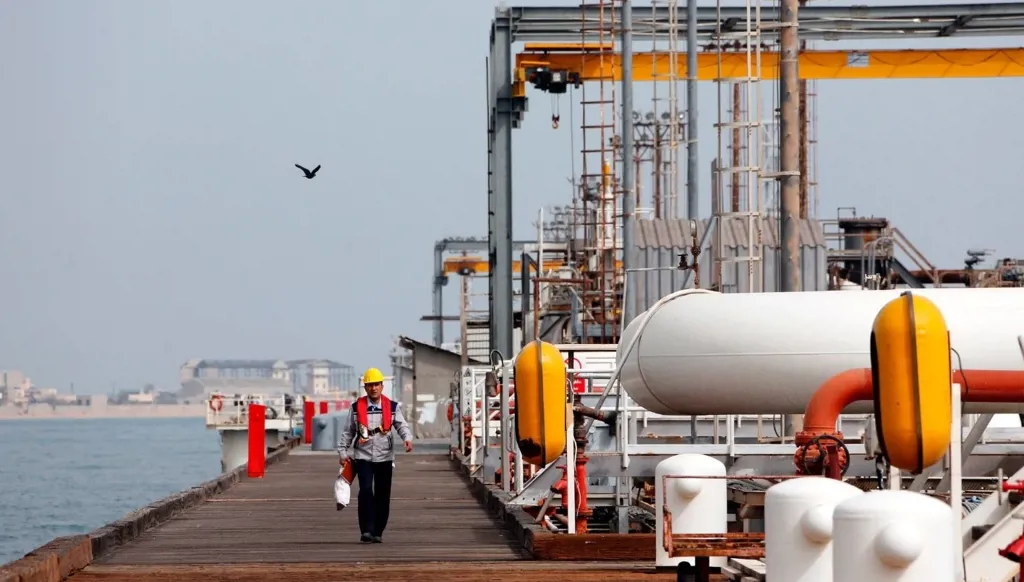
On the same global map, we find economic interests and a struggle over energy resources and maritime passages, with Iran present in both contexts. It has the world's third-largest oil reserves, estimated to be second in natural gas, and can control the Strait of Hormuz.
Despite international sanctions, Iranian oil mostly finds its way to China at significantly lower prices than global rates. This brings us back to the same issue regarding Venezuela and removing influence cards from Beijing.
American researcher Lipman, based in Miami, summarizes this stance by stating: "We must understand that the whole matter is about China, which relies on oil supplies from three main sources: Russia, Venezuela, and Iran."
He notes that America wants to strike a deal with Iran regarding oil, nuclear energy, and ballistic missiles. "The agreement could include not selling oil to China and reaching an agreement on ballistic weapons... achieving this will contribute to economic development for the Iranian people, positively impacting their daily lives."
However, he reiterates that the United States does not want to repeat its experiences in Vietnam, Afghanistan, and Iraq.
On his part, Iranian affairs researcher Dr. Al-Atoum sees no option for Iran "other than sitting at the negotiation table, but the price will be harsh, especially since Iran views any negotiation with Washington at this time as surrender." He points to three main issues for discussion: the Iranian nuclear program, uranium surrender, centrifuges, and preventing enrichment. The second issue is the missile program, setting missile ranges to no more than 500 km. The third file relates to Iran's regional role, according to the Amman-based researcher, "Iran views negotiating on these issues collectively as a political, military, and strategic surrender."
In all cases, the biggest concern remains replicating the Syrian war experience in Iran, with its minorities, ethnicities, and internal conflicts, creating unforeseen repercussions, which would be the worst-case scenario.
العلامات الدالة
الأكثر قراءة