




 Messenger
 Whatsapp
 Threads
 Email
Email
 Print
Print
 X
X
 Facebook
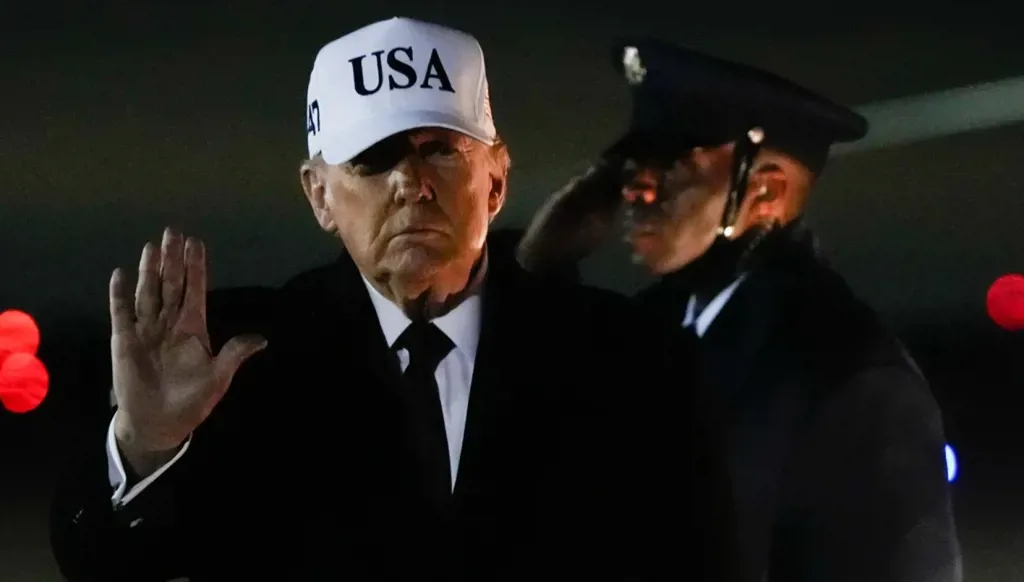


It was a shock. Although it should not have been.
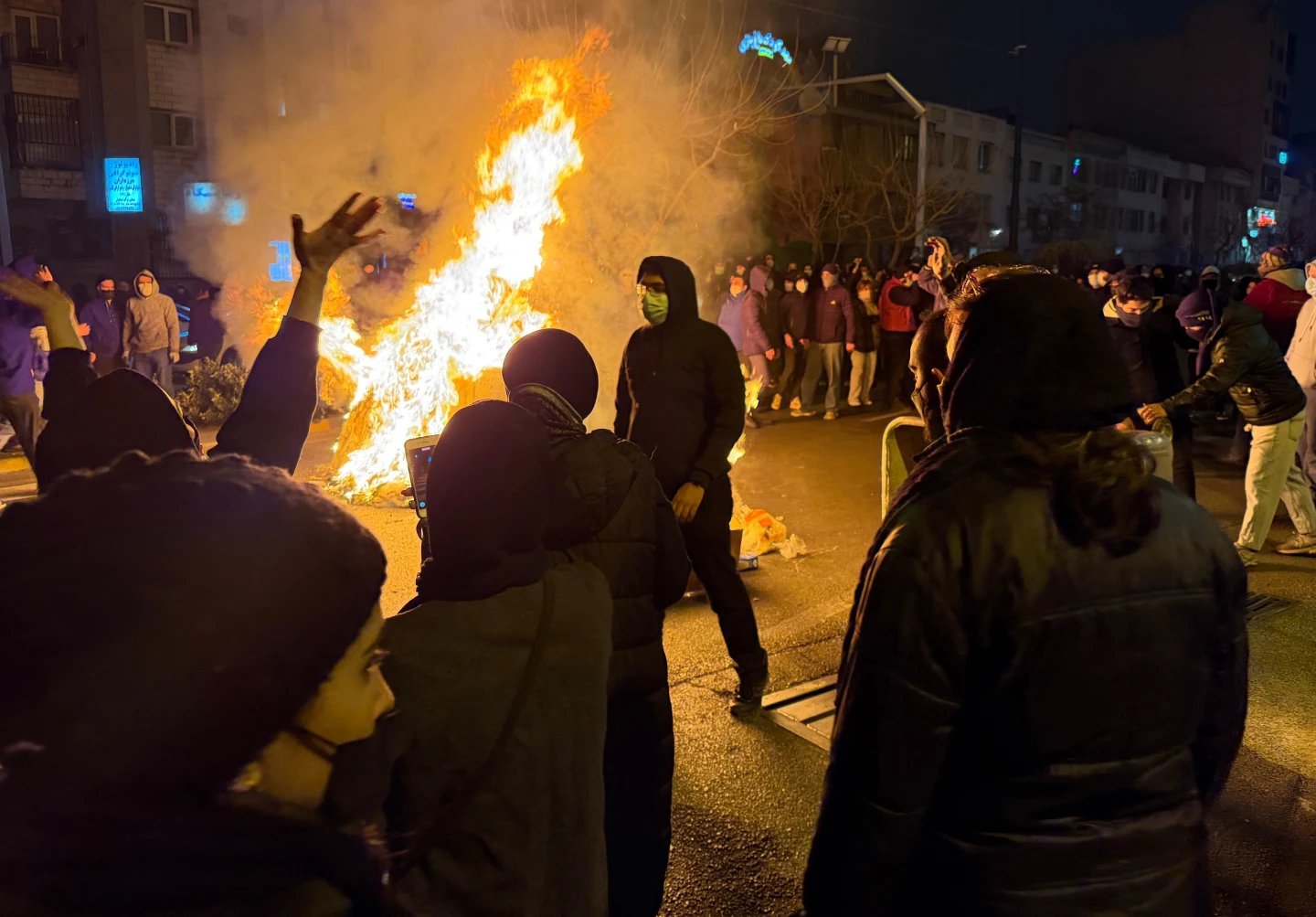
After the region was prepared for an imminent military attack on Iran, U.S. President Donald Trump backtracked on his threat. The justification for stepping back was stranger than the retreat itself. Trump issued his threat due to the regime's killing of protesters, as he stated. Suddenly, he was informed that "executions have stopped in Iran."
The bewilderment spread first among his team. "Every indicator I saw says that the Iranian regime's killing of protesters is still in full force. The death toll rises by the hour." In fact, this wasn't just surprise from Trump's close Republican senator Lindsey Graham. It was more of a denial of presidential information. "I hope the assistance (is still) on its way," added the Republican senator in a post on X. But his hope that the president would not back down from his promise might hit a wall of disappointment.
Venezuela as a Pivot
The arrest of former Venezuelan President Nicolas Maduro provided observers with a platform to predict an imminent American strike on Iran, immediately after Trump's threat to Iranian leaders. Since the president had previously bombed the Iranian nuclear program, "subsequent" strikes would be easy. However, there are differences between all developments, which can explain Trump's hesitation towards Tehran.
In Maduro's case, the victory was clear, even extraordinary. Observers agree that the operation was very complex, but the skill of the American army made it seem easy. Even if the American army had failed in the mission, Trump could claim that the operation was worth the risk because keeping America safe from drugs and hostile regimes is a priority for him. Since it is impossible to reach a tangible conclusion about bombing Iranian nuclear facilities one way or another, Trump could always claim victory, especially since he wasn't the one who initiated the attack. However, bombing Iran to support the protesters is a different issue.
Between Temptation and Fear
Perhaps the exceptional success in Venezuela tempted the American president to reuse American force in Iran. He has reasons to try to repeat the experience with some modifications. The Iranians rejected his diplomatic offers several times and allegedly tried to kill him, according to the U.S. Department of Justice.
The problem is that no matter the American military and political prowess, it is impossible to replicate the "absolute resolve" operation with the same success. Regardless of the form of military intervention, the chances of failure remain present, because attacking Iranian military targets won't topple the regime or tame it for sure. The United States is not inclined towards a long-term military campaign, not to mention deploying troops on the ground. Iran is not only thousands of miles farther from the United States compared to Venezuela, but it's also about twice as large. And the Revolutionary Guard alone is larger than the entire Venezuelan army.
Thus, if protests and bloodshed continue after the strike, it will negatively reflect on the image of the American president, at least as he sees it. He won't be able to brandish a card of victory, or an "urgent" interest for the United States.
Trump's Behavior... Trumpian
It's true that backing down from striking Iranian targets isn't final. But the American president has shackled himself with justification. Will he say once again that new news reached him about the regime "resuming" executions of opponents to explain the reason for the strike, if and when he decides to execute it?
The president's problem is more significant than weak justification. Even Trump's political opponents advised him to fulfill his promise after asking protesters to take control of government buildings and wait for the "coming assistance." It might be beneficial to have unpredictable behavior, as Trump likes to describe himself. But potential benefits can change if the addressed audience is the people, not a government.
What is Inevitable
Throughout his first term, Trump sought to demonstrate that he was the opposite of his predecessor. His withdrawal from the nuclear deal, bombing Assad's military bases, and the assassination of Qassem Suleimani after protesters threatened to storm the American embassy in Iraq are clear examples of that.
During the "Green Revolution" in 2009, the famous protesters' slogan "Obama, are you with us or with them?" was a clear indication of peoples holding the president of the superpower morally responsible for their afflictions.
Today, after Trump drew his red line around "not killing protesters" in Iran, he seems hesitant to implement it, similar to how Obama behaved with his red line in Syria regarding "not using chemicals."
It's true that Trump's personality and policies differ greatly from Obama's, and that Iran finds it hard to pressure Washington today, as opposed to between 2009 and 2016, due to Obama's significant concessions. However, backing down from striking Iranian targets invites comparisons with his predecessor, regardless of how accurate and comprehensive they might be.