

Israel’s plan for "Economic Zone" on Lebanese border draws outcry from Speaker Berri


 Messenger
 Whatsapp
 Threads
 Email
Email
 Print
Print
 X
X
 Facebook


During the last two meetings of the Mechanism Committee in Naqoura, the office of Israeli Prime Minister Benjamin Netanyahu was quick to state that the discussions were not limited to security matters, but also included economic issues with Lebanon—something that is not mentioned in the statements issued by the Lebanese presidency.
Undoubtedly, one of the main tasks of the Lebanese delegation, led by Ambassador Simon Karam under the guidance of President Joseph Aoun and in coordination with Prime Minister Nawaf Salam, is to implement the provisions of the ceasefire agreement without exceeding the framework of UN Resolution 1701.
However, the Israeli side has shown no willingness to withdraw from the occupied areas or to allow residents to return normally to their towns threatened by encroachment. Instead, Israel is advancing plans to establish an economic zone on the lands of several border towns, stretching from Naqoura to Marjayoun-Hasbaya. This project would effectively function as a security buffer zone, serving Israel’s interests alone.
Naturally, this proposal is officially rejected by Lebanon—not only at the state level, but also by the local populations of these Shiite, Sunni, and Christian towns, who refuse to be uprooted from their homes under any pretext, regardless of international justifications, particularly those advanced by the United States.
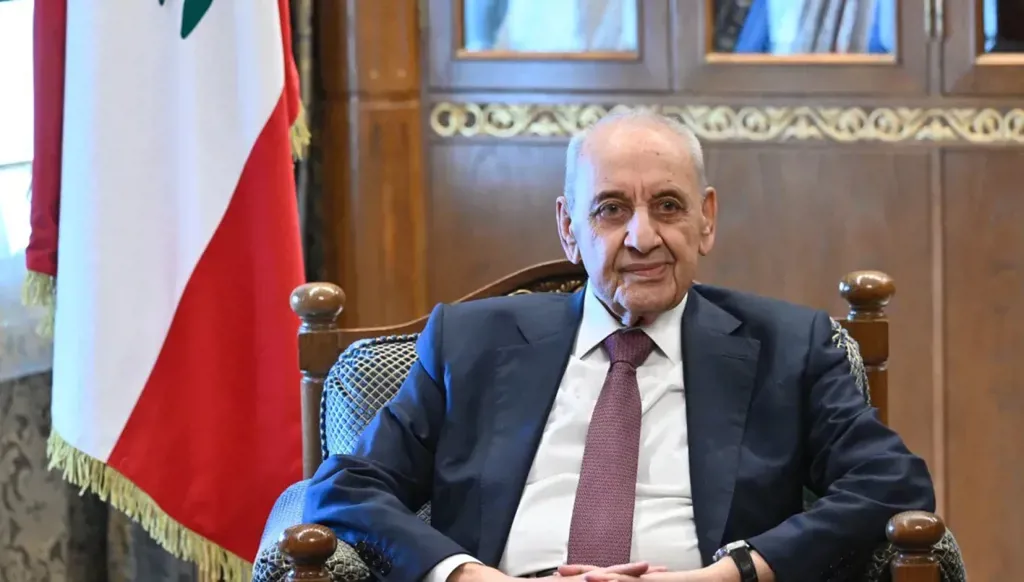
As for the reality of this proposed “zone,” Speaker Nabih Berri confined his response to a firm “God forbid” when asked by Annahar. MP Ali Fayyad went further, warning that “emptying the border area of its residents would lay the groundwork for a Hundred Years' War.” The Israeli push for such a project is rooted in the belief that Hezbollah has lost the war and that preventing any future presence in these towns is therefore inevitable.
Although the U.S. administration has not officially commented on the proposed “zone,” figures within influential political circles have voiced support for its establishment—most notably Senator Lindsey Graham, who has consistently argued for defending Israel and preventing any future threats from Gaza, Syria, or southern Lebanon.
The proposal to establish this type of zone comes from research centers and intelligence bodies aligned with Tel Aviv, aimed at safeguarding Israel's strategic security depth.
According to diplomatic assessments, proponents of this idea argue that international companies with substantial financial resources could establish dozens of factories and facilities across the lands of these towns. They point to a similar model currently being prepared in Haifa through international firms.
Advocates of the project argue that disarming Hezbollah alone is insufficient; their goal is to prevent its supporters from living in—or infiltrating—these towns, even if they are native residents.
Graham did not propose this project based solely on his own views, nor is it opposed by U.S. envoy Tom Barrack or his predecessor Amos Hochstein. In diplomatic meetings, they have agreed that after neutralizing all of Hezbollah’s military capabilities, it is equally important not to abandon the group’s youth and communities to uncertainty. Providing employment opportunities through the establishment of factories and commercial centers in the border towns is seen as a key part of this strategy. A Western diplomat, who does not object to altering the geography of the border towns, noted that Lebanon has significant human resources abroad—including a large number of Shiites working internationally—whose skills and energies could potentially be mobilized for this “zone.”
Disclaimer: The opinions expressed by the writers are their own and do not necessarily represent the views of Annahar.