

Israel’s multi-front strategy: Lebanon at the heart of a regional chessboard
From Hezbollah’s strongholds to the Arab Mashreq, Israel leverages war, geopolitics, and the “Al-Aqsa Flood” moment to reshape security, influence, and regional dominance.


 Messenger
 Whatsapp
 Threads
 Email
Email
 Print
Print
 X
X
 Facebook
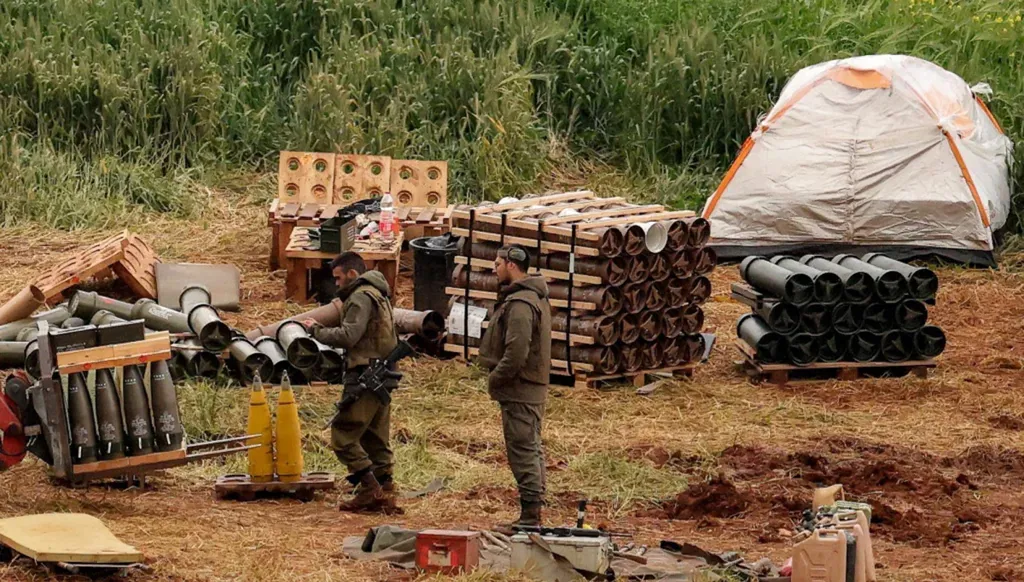


Israel does not consider the war it wages against Lebanon merely as part of the US-Israeli war against Iran. It also views it as a special war for Israel's own existence, security, and self-perception, taking into account the historically tense or warlike relationship between Lebanon and Israel—whether during the era of the armed Palestinian presence in Lebanon or the rise and dominance of Hezbollah over war and peace decisions in Lebanon.
In reality, Israel sees the current international, regional, and Arab circumstances, resulting from the "Al-Aqsa Flood" operation, as a golden opportunity to be seized—not merely to enhance its security and restore its image as a deterring state, but also to reposition itself as the dominant force in the Arab Mashreq, and perhaps in the entire Middle East, after Iran has been challenging and competing for that position for two decades (2003–2023).
Three matters for consideration
Against the backdrop of the ongoing war, three matters can be observed. Firstly, Israel, in fighting a multi-front war, does not entirely link the combat paths against one party or another, as it harbors distinct agendas and targets for each. This means that halting the American war against Iran in any way does not imply stopping Israel’s agenda toward Lebanon, which includes neutralizing Hezbollah's military capabilities, establishing a buffer zone within Lebanese territory, and creating a weapons-free safe area up to the Litani River—with all the political implications this entails for Lebanese-Israeli relations—knowing that this is the same agenda Israel applies against Syria.
The second matter is that Israel, in its multi-front war, appears to have adopted—or put into action—the "unity of arenas" motto, proclaimed by factions of the "resistance and rejection" axis, in an effort to assert its position as a deterring superpower, holding the exclusive authority to decide on war and peace in the region.
The third matter indicates that Israel seeks to exploit the current circumstances to the fullest extent, including Iran's reckless policies—not just to draw the United States into a direct war against Iran to undermine its nuclear and missile capabilities and its militia forces in multiple countries, weakening its military and economic strength, and potentially threatening the regime’s survival—but also, as the main beneficiary of the war, Israel, in cooperation with the US, aims to attract the broadest international, regional, and Arab participation in the conflict. In this way, small Israel uses the armies of others to achieve what it desires, according to its interests and priorities.
The Al-Aqsa Flood: A turning point
Since the US invasion of Iraq (2003) and its subsequent handover to Iran through its armed sectarian militias, Iran appeared as the most influential actor in the Arab Mashreq (and Yemen) for two decades until the "Al-Aqsa Flood" operation (2023), bearing in mind that this situation arose from the US and Israeli investment in Iranian policies—or the grace period—which led to the fragmentation of state and societal structures in the Arab Mashreq by creating armed militias acting as states within states and inciting sectarian tensions that divided those countries' societies.
In reality, Israel remained wary of this arrangement, especially since Iran continually sought to exceed its defined or constrained limits by aiming to enhance its military, nuclear, missile, and militia capabilities, which has now exhausted its utility after all the transformations in the Arab Mashreq and the “Al‑Aqsa Flood” operation that ended the grace or investment period.
Now, one of the main conditions required from Iran to end the war is the deprivation of its capacity to produce nuclear energy, the stripping of its ballistic missile arsenal, and ending support for its militia arms, particularly Hezbollah in Lebanon.
Currently, Israel is attempting, amid the wartime—whether it continues or halts by any means—to impose facts on the ground in Lebanon by continuing to destroy Hezbollah's infrastructure, whether military, financial, or political, creating significant challenges for what it considers Hezbollah's supportive environment. This includes destroying the urbanization of Southern Lebanon and the southern suburbs of Beirut, dismantling this environment, and ensuring its dispersion in a manner that could extend as far as the Litani, in order to establish safe buffer zones and prevent any return of Hezbollah.
Thus, Israel operates in two directions in Lebanon: as part of the US-Israel war against Lebanon, and as a challenge to Israel itself—this is Lebanon’s dilemma in the war, both before and after.
Disclaimer: The opinions expressed by the writers are their own and do not necessarily represent the views of Annahar.