

Gaza beyond the headlines: The untold struggle and resilient spirit of Palestine
While the world watches destruction, the heart of Palestine endures—its people, history, and hope survive efforts to erase them from memory.


 Messenger
 Whatsapp
 Threads
 Email
Email
 Print
Print
 X
X
 Facebook
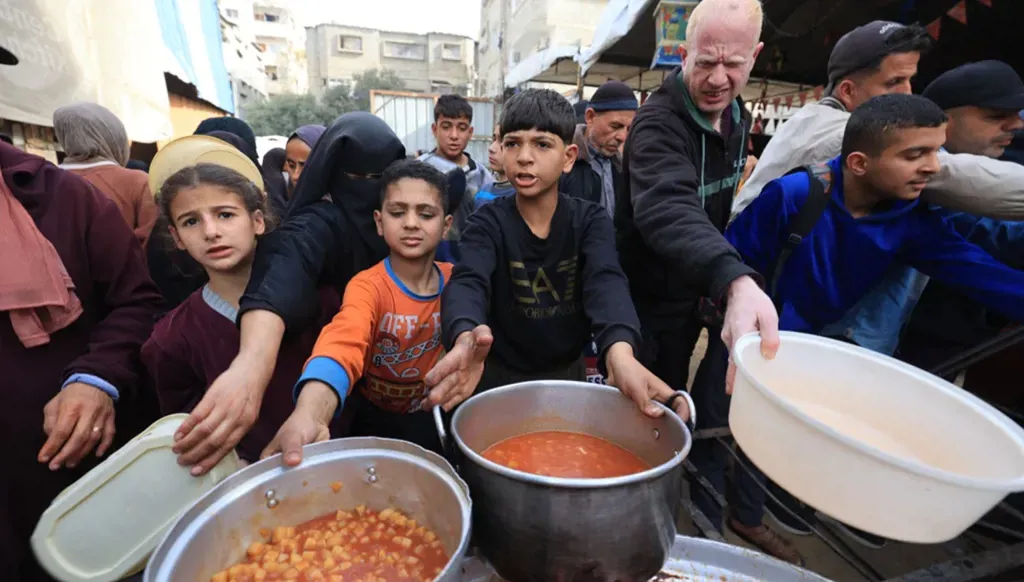


The world is preoccupied with a war that has no resolution. We no longer discuss peace in the region, the Palestinian cause, or the global mobilization for Gaza. However, there are two key points that draw attention to the matter of this global movement for peace for Gaza:
Firstly: the absence of the name Palestine from the meetings, as if the nation were an extraneous word that could be deleted without altering the meaning.
Secondly: the implicit determination by some to eliminate the Palestinian people, making the scene appear as land without owners and memory without witnesses.
Focus is placed on Gaza as if it were a city descended from another orbit, not part of Palestine, neither in Arab geography nor in the pulse of history.
Meetings are held and adjourned without any discussion of people or a nation; we talk about development, coordination, and de-mining, then slide into conflicts over corporate objectives concerning real estate, security, and services, shedding terms like rights, return, and people of the land—much like the dry leaves of autumn falling.
The second matter has already begun: ceasing to reference Palestinians or even Gazans—essentially beginning to forget the people themselves. Soon, as in an oblivious dream, we’ll awaken to a language that speaks of land without inhabitants, as if people were mere footnotes in the margin.
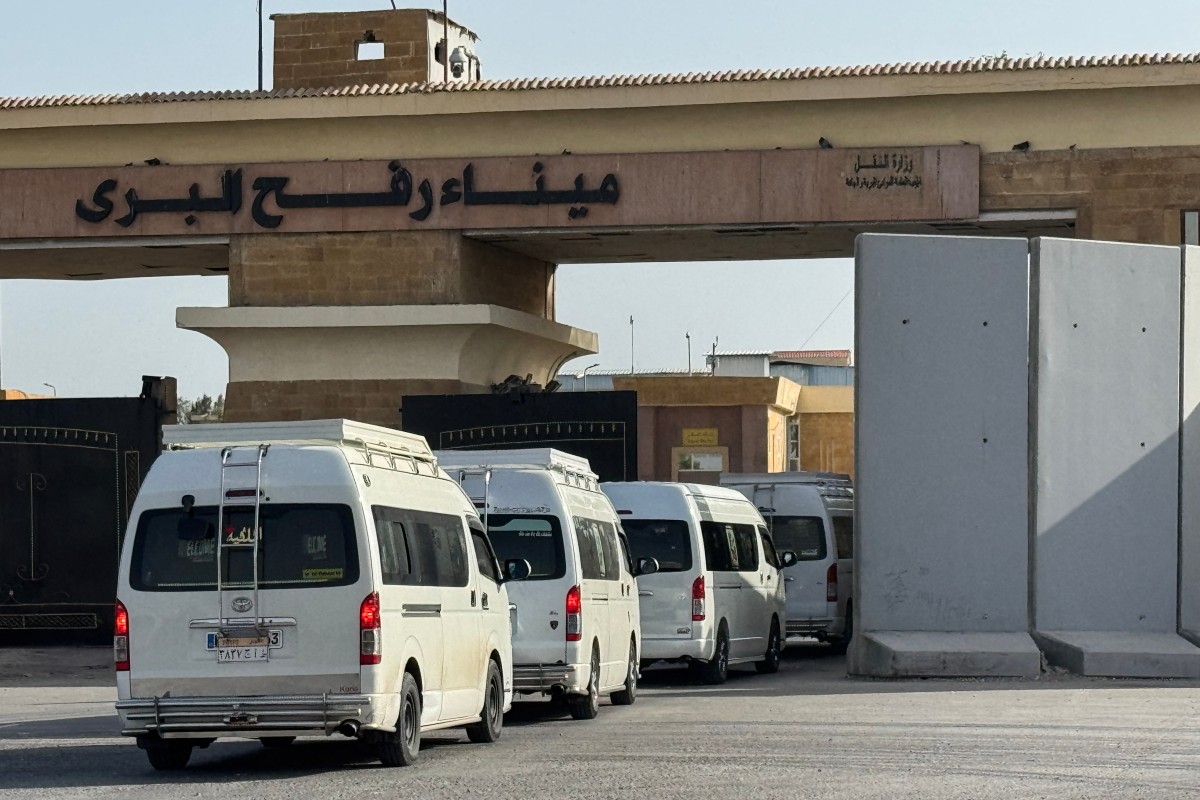
The story began years ago, when the Arab media—through guided awareness—focused on the issue of Gaza and not the issue of Palestine; when the term "Palestinian people" was replaced with "Gaza residents," narrowing the spotlight to reveal only a segment of Gaza’s wound, leaving the entire Palestinian body in darkness.
While we stare at the rubble in Gaza, we fail to see how the West Bank is quietly being annexed. Operations there are managed with cold ruthlessness: legal rights are confiscated, systematic political annulment occurs, history is distorted, and a harsher reality is imposed than the war itself.
In the West Bank and Jerusalem, the intention is for the cause to die in a neglected corner, in a dark nook, without anyone noticing. With the stroke of a pen, people are killed, imprisoned, their homes destroyed, and their addresses erased from memory—without an expressive image in the media or a resonance in the international conscience.
Intensive disinformation campaigns aim to keep us in a parallel universe, where the international media tells us that soon a "Gaza council" will be presented—another imaginary picture. It will be presented as a project for a piece of land overlooking the beautiful Mediterranean, with dazzling markets and stock exchange towers, and new residents with bright ties and briefcases full of tender contracts, rather than poems of steadfastness or documents of land ownership.
Thus, Gaza is meant to be transformed from the lung of the Palestinian homeland into an international company… no more. As for the inhabitants, their fate is being reshaped through forced or “voluntary” displacement, integration into scattered geography and remote exiles, the opening of crossings for migration and diaspora, or inevitably, new cemeteries. And if some of the perseverant remain, they will be intended as remnants of memory—like the distant shadow of the Native American tribes. Even without the image of the red Indian warrior, we will be without spears for assault and without horses for charge, reduced to merely symbolic activities for some civil society, without tools of resistance or actual presence.
This is not an imaginary picture, but a declared dream repeated by those coveting Gaza—a vision reflected in the cowboy mentality that reduces the scene to a familiar shot from thrill movies: he walks with his gun belt dangling from his waist, takes the last drag of his cigarette, and then tosses it behind him to burn the final tents of resilience.
What these visionaries miss—or what they refuse to believe—is that Palestine is not like other places on earth. It is not merely barren land. They forget that the site of these tents is a landing for divine religions and the homeland of a people who have learned to stand alone against the storms of invaders. Repeatedly, with the patience of the confident, they declare: “Take your share of our blood and depart.”
This land has witnessed invasions and campaigns, leaving destruction that exceeds what we see today, only to fade away, while the children of Palestine continue to guard the stones, the mountains, and the sky. They rebuild resilient cities from the rubble.
This is our equation, which leaves us afflicted with the “contagion of hope.” We say that amidst this rubble lies something worth living for: “moss on stone, mothers standing on the string of a flute, and the invaders’ fear of memories.”
Otherwise, we are ashamed to look into the mirrors of the Arab morning, when the light rises mingled with fear.
Disclaimer: The opinions expressed by the writers are their own and do not necessarily represent the views of Annahar.