

The vacuum of action: Who speaks for Arab and Islamic unity?


 Messenger
 Whatsapp
 Threads
 Email
Email
 Print
Print
 X
X
 Facebook
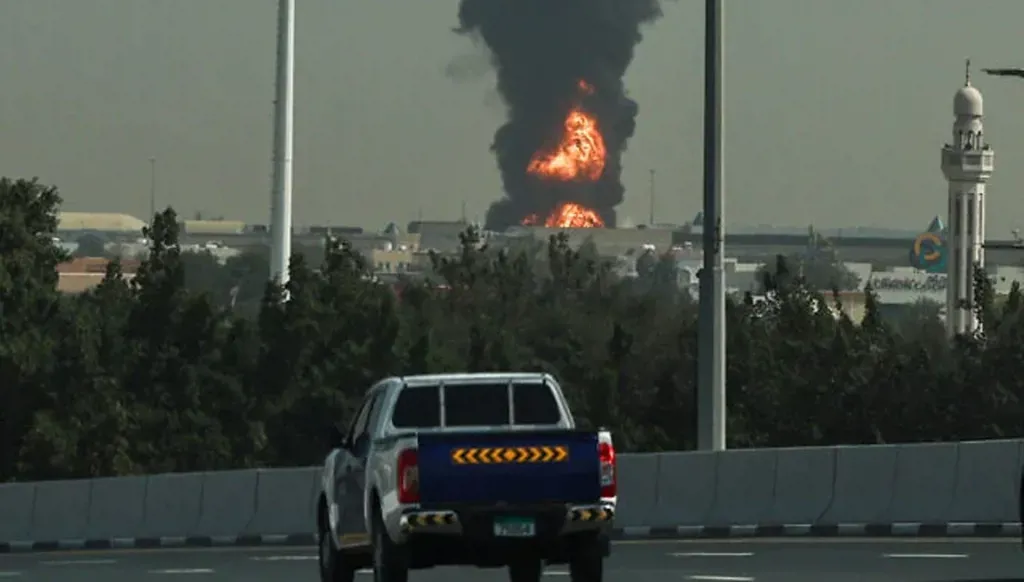


As the war in the Middle East enters its fourth week, it has become clear that the problem is not in understanding what is happening, but in understanding who is supposed to act, especially when the Arab Gulf states are being targeted. What we are witnessing today is not merely a passing escalation, but a direct test of an idea we have long heard about: joint Arab and Islamic action.
In this context, a post by His Excellency Dr. Anwar Gargash on the platform X came as a reference point that places the question where it belongs. He said that the Gulf states have every right to ask: where are the institutions of joint Arab and Islamic action, foremost among them the Arab League and the Organization of Islamic Cooperation? And where are the major Arab and regional states? He then added a point of equal importance: in light of this absence and inability, it is no longer acceptable to later speak about the decline of the Arab and Islamic role or to criticize the American and Western presence. The Gulf states have been a source of support and a partner to all in times of prosperity, so where are you today in times of hardship?
Arab and Islamic institutions exist in name, but at moments of danger, as the Emirati saying goes when the situation becomes critical, these entities behave as if they are public relations bodies rather than organizations responsible for collective security.
The Arab League and the Organization of Islamic Cooperation are not being asked to fight, but to activate their natural tools: a clear emergency meeting, a firm and unambiguous position, coordinated diplomatic action, and a decision that imposes political costs on the aggressor instead of leaving matters to individual efforts.
To keep the question grounded rather than emotional, it is enough to look at facts and figures. Gulf reports indicate that since the beginning of the Iranian attacks on the Gulf states until today, around 5,000 drones have been dealt with. This is a significant number that should make it clear to any reader that talk of a threat to the Gulf is neither exaggerated nor overstated, and that what is required from these institutions is not polite statements, but a stance that matches the scale of the threat.
The issue here is not the ability of the United Arab Emirates, the Gulf states, and Jordan to protect themselves, because this point is already settled by facts and evidence. These countries are cohesive, their institutions operate with high efficiency, their decisions are sovereign, and their people stand united behind their nations and leaderships. The real problem lies elsewhere: the absence of effective Arab and Islamic institutional action creates a vacuum, and a vacuum does not remain empty. It gets filled by social media narratives, conflicting slogans, and sometimes, more dangerously, by justifications for the aggressor or downplaying what is happening, as if targeting the Gulf were a minor detail that can be overlooked.
This is where the remarks of His Excellency Dr. Ali Rashid Al Nuaimi, Chairman of the Defense, Interior, and Foreign Affairs Committee in the Federal National Council, become relevant. He offered a candid reading of what lies behind some of these positions, stating that some Arabs had bet on the downfall of the UAE and the Gulf. They created media narratives that supported the aggressor and justified its actions, promoting the idea that the UAE is a fragile state that would shatter at the first strike, and that the aggressor’s path was the only path to survival. Yet after two weeks of resilience, unity, and the aggressor’s failure to achieve its goals, it became clear that their calculations were wrong and their bets had failed.
In my view, this perspective explains why an institutional Arab and Islamic voice at this stage is essential. It helps set the direction, reduces confusion, and prevents further escalation. The absence of a clear institutional stance does not leave the situation unchanged; rather, it opens the door to disorganized and conflicting narratives. This is when voices emerge that justify the aggressor, minimize the seriousness of the attacks, or try to shift attention away from the core issue. Therefore, responsibility falls first and foremost on institutions to take a clear and direct position, to call the aggression by its name, condemn it without hesitation, and affirm that Gulf security is an integral part of regional security, and that any leniency at this moment will carry political and security costs for everyone.
In conclusion, those who are absent today will have no right to object tomorrow if others step in to fill the vacuum. As the Arab poet said, if you are absent when I need you, then your absence is even more justified when my needs are met without you. Institutions that hesitate to fulfill their duty in times of crisis will find themselves outside the equation when the post-crisis balance of power is drawn. This is not a matter of political luxury or a side debate; it is a test of responsibility, and whoever fails it effectively redefines their own position.
That is why the UAE’s question remains both valid and directed primarily at institutions: where is the Arab League, where is the Organization of Islamic Cooperation, and where are the major Arab and regional states? Because the answer today is not a passing matter, but part of what will shape the region after this crisis.
Disclaimer: The opinions expressed by the writers are their own and do not necessarily represent the views of Annahar