

Gulf leaders face growing Iranian aggression: Coordinated defense and diplomatic efforts


 Messenger
 Whatsapp
 Threads
 Email
Email
 Print
Print
 X
X
 Facebook
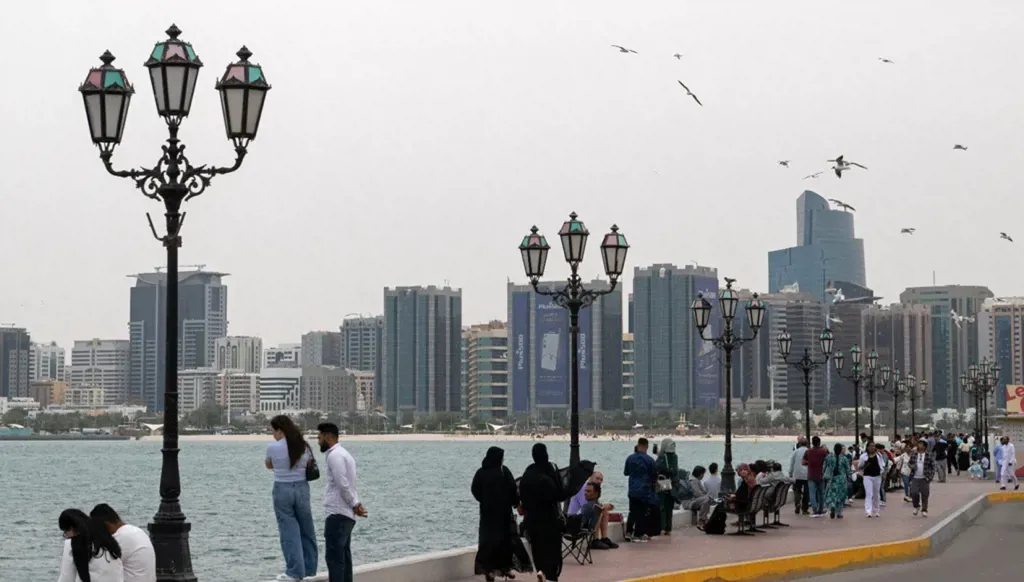


When the U.S.-Israeli war on Iran began on February 28, the Islamic Republic responded by striking Israel. On the same day, however, it also targeted several Gulf cities, putting all the countries of the Gulf Cooperation Council within the range of Iranian fire.
This aggressive Iranian behavior toward its neighbors continues to escalate. Although the new Supreme Leader, Mojtaba Khamenei, and several officials still speak of wanting good relations with the Gulf states, such rhetoric is now viewed with skepticism in regional political circles because it contradicts the current military reality.
So far, the Arab Gulf states have exercised what can be called “strategic patience,” defending themselves, coordinating jointly in defensive operations, and exchanging intelligence and military information to counter Iranian drones and ballistic missiles.
At the same time, there have been constant communications among the leaders of the Gulf Cooperation Council countries, as well as foreign and defense ministers, along with continuous coordination in logistical support and ensuring these countries’ access to food, medicine, and other essential supplies. This has been handled efficiently, ensuring the availability of both essential and luxury goods across various stores.
On the international level, a notable development was the adoption of United Nations Security Council Resolution 2817 by a vote of 13 in favor, with Russia and China abstaining and no country voting against it. This step provides important legal and political cover for the Gulf states. Saudi Foreign Minister Prince Faisal bin Farhan praised the “international support for the resolution and the global condemnation of these brutal Iranian attacks, calling for their immediate cessation without condition.” Meanwhile, Gulf Cooperation Council Secretary-General Jassem Al-Budaiwi stated that “this international condemnation, achieved through an unprecedented global consensus, is clear evidence of Iran’s violation of international laws, norms, and treaties by targeting civilians, civilian sites, and infrastructure.”
The resolution issued on March 12 was followed by an expanded ministerial meeting in the Saudi capital, Riyadh, during which participants called on Iran to “immediately cease its attacks, respect international law, international humanitarian law, and the principles of good neighborliness as a first step toward ending the escalation and achieving security and stability in the region,” while emphasizing that “diplomacy must be activated as a way to resolve crises.”
Although the meeting stressed diplomacy, the events have caused a major rift in the Gulf Cooperation Council’s relations with Iran, leaving “trust” entirely absent between the two sides. According to Saudi Foreign Minister Prince Faisal bin Farhan at a press conference after the ministerial meeting, this is because Iran “planned in advance the reprehensible attacks we are witnessing today. This behavior is not accidental but rather an extension of a historical record based on blackmail, supporting militias, and backing attacks against neighboring countries to destabilize them.”
The lack of trust is not due to the Gulf states’ unwillingness to maintain good relations with Iran, but rather the result of Iranian attacks targeting civilian, tourist, economic, and oil-related sites, endangering the safety of citizens and residents. This led the United Arab Emirates to close its embassy and recall its ambassador from Iran on March 1, a step the UAE Ministry of Foreign Affairs described as “reflecting the state’s firm and resolute position in rejecting any aggression that threatens its security and sovereignty, amid the continuation of aggressive and provocative behavior that undermines opportunities for de-escalation.”
Saudi Arabia, for its part, announced on March 21 that it had “notified the military attaché at the Iranian Embassy in the Kingdom, the assistant military attaché, and three other members of the mission staff to leave the Kingdom and designated them as persona non grata, requiring them to depart within 24 hours.”
These diplomatic measures are part of the Gulf states’ broader strategy to pressure Iran, aiming to curb Iranian hostile actions. They send a clear message that while these countries do not wish chaos to spread in the region, they have a phased response plan that safeguards their interests and security.
In this context, Anwar Gargash, the diplomatic adviser to the President of the UAE, emphasized the importance of finding “solutions that ensure sustainable security in the Gulf, restrain nuclear, missile, and drone threats, and prevent coercion in the straits,” adding, “It is unacceptable for aggression to become a permanent state of threat.”
Gargash also noted on his X account that “Iran’s brutal aggression against the Gulf countries carries deep geopolitical consequences,” highlighting that Iranian attacks reinforce “the Iranian threat as a central focus in Gulf strategic thinking” and strengthen “our security partnerships with Washington.”
Addressing these consequences is a top priority for the leaders of the Arab Gulf states. It will be the subject of open and practical discussions at the leaders’ and ministers’ table once the war ends, as the upcoming phase will require increased continuous joint efforts, high-level defense coordination, and carefully considered foreign policies toward Iran and other threats to the Gulf.
Disclaimer: The opinions expressed by the writers are their own and do not necessarily represent the views of Annahar