

Egypt’s role in Gulf security: Balancing diplomacy and stability


 Messenger
 Whatsapp
 Threads
 Email
Email
 Print
Print
 X
X
 Facebook
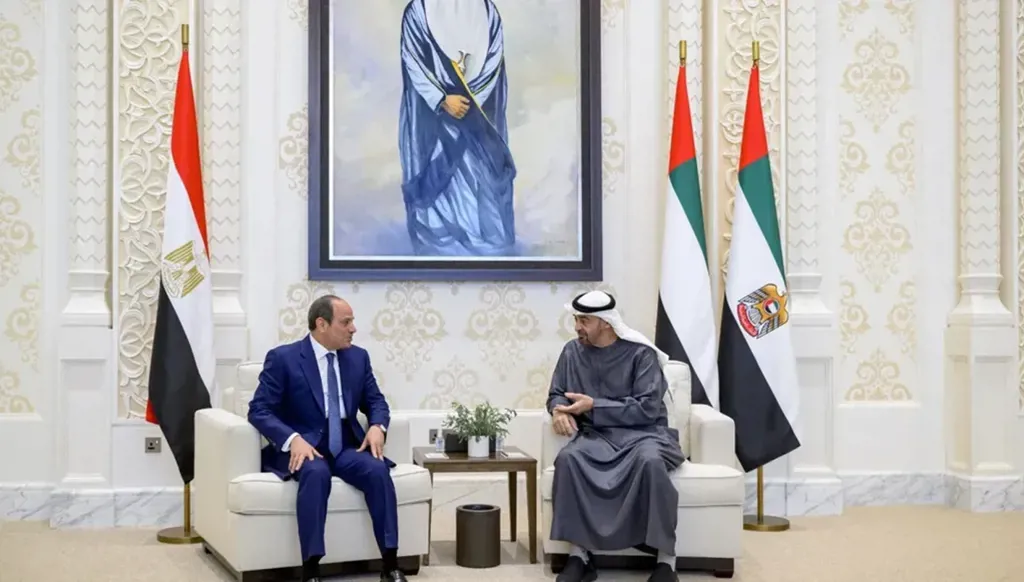


In a highly sensitive regional timing, President Abdel Fattah El-Sisi’s recent actions, including his visits to Saudi Arabia and Bahrain, preceded by trips to the United Arab Emirates and Qatar, as well as his phone conversations with Saudi Crown Prince Mohammed bin Salman and several Gulf leaders, reaffirm that Egyptian policy does not operate in reaction to events. Instead, it follows a coherent strategic vision based on a unified Arab approach to confronting escalating challenges.
These efforts were complemented by Foreign Minister Badr Abdel Aati’s tour of Gulf capitals and his participation in an important ministerial meeting in Riyadh. This demonstrates a coordinated political initiative that sends clear messages both domestically and internationally. This activity is not simply traditional diplomacy; it is a practical expression of a longstanding Egyptian principle that Gulf security is a direct extension of Arab national security.
Since regional tensions escalated, Cairo has made its position unequivocally clear: rejecting any aggression against Arab countries and emphasizing that Gulf stability is an integral part of the overall regional balance. This ensures the unification of perspectives and the exchange of assessments regarding potential escalation paths and ways to contain them.
In the same context, the Egyptian Foreign Minister’s tour carried direct and supportive messages, reaffirming Egypt’s full solidarity with its Arab brothers while stressing the importance of prioritizing political solutions and avoiding open confrontations that could reshape the conflict map in the Middle East in a more dangerous way.
Despite the clarity of this position even before the outbreak of war, organized media campaigns emerged to challenge it. These campaigns used traditional information warfare techniques, such as quoting statements out of context, recycling old content, or amplifying individual opinions on social media and presenting them as official positions. In many cases, these campaigns were linked to forces led by the Muslim Brotherhood, which has historically exploited regional issues to cast doubt on the Egyptian state’s intentions.
This phenomenon reveals a deeper dimension of the ongoing conflict in the region, where competition is no longer limited to geography or military power. It has expanded to include the battle of narratives and influence over public opinion. In every crisis, there are those who exploit it, followed by others who look only at their immediate surroundings without recognizing higher interests or the level of coordination among Arab brothers at official levels.
In this context, international relations literature notes that stirring divisions between closely related states or peoples is a classic tool to weaken regional blocs. This aligns with the principle of "divide and conquer," which seeks to feed internal divisions to weaken larger entities and prevent the formation of unified positions capable of influencing power balances. Egypt represents a unique case in the regional environment, as its vision on war and peace has been shaped by decades of experience managing major conflicts directly tied to its national security and its role within the Arab regional system. Therefore, the Egyptian approach to regional security issues is based on a practical understanding of the costs of conflict, not merely on theoretical or temporary political considerations.
At the strategic level, Egyptian actions can be understood through three integrated paths: first, the historical commitment to supporting the Arab collective security system; second, recognition of the dangers of uncontrolled escalation in a highly fragile regional environment; and third, maintaining Egypt’s role as a balancing power capable of simultaneously supporting its brothers while promoting de-escalation.
Within this framework, Cairo adopts a dual approach that combines clear support for its Gulf brothers with active engagement in efforts to contain crises through diplomatic channels. This delicate balance reflects a deep understanding of the complexities of the current moment, where regional interests intersect with international power calculations, and the risks of slipping into broader conflicts are increasing.
In conclusion, Egypt’s recent actions confirm that Cairo’s foreign policy operates according to principles that do not change with shifting pressures or media campaigns. By supporting Gulf stability and maintaining regional balance, Egypt reinforces its role as a key actor seeking to prevent crises rather than merely manage their aftermath.
Amid the rise of media noise, the realities on the ground—reflected in diplomatic moves, communications, and meetings—remain the most reliable indicators of the nature, scope, and objectives of this role.
In this specific context, Egyptian policy appears focused on balancing support for Arab brothers with the preservation of regional stability. It is a challenging equation, yet it reflects a deep understanding of the historical moment the region is experiencing.
No matter how intense the campaigns of distortion or attempts to sow doubt, the core principles of Egypt’s policy regarding Arab security will remain a central pillar in the regional stability equation.
Disclaimer: The opinions expressed by the writers are their own and do not necessarily represent the views of Annahar