

The war within: How Iran’s decision-making is being decapitated
As U.S. and Israeli operations decimate Iran’s political and military elite, the country faces a war not just on the battlefield, but at the very heart of its decision-making system.


 Messenger
 Whatsapp
 Threads
 Email
Email
 Print
Print
 X
X
 Facebook
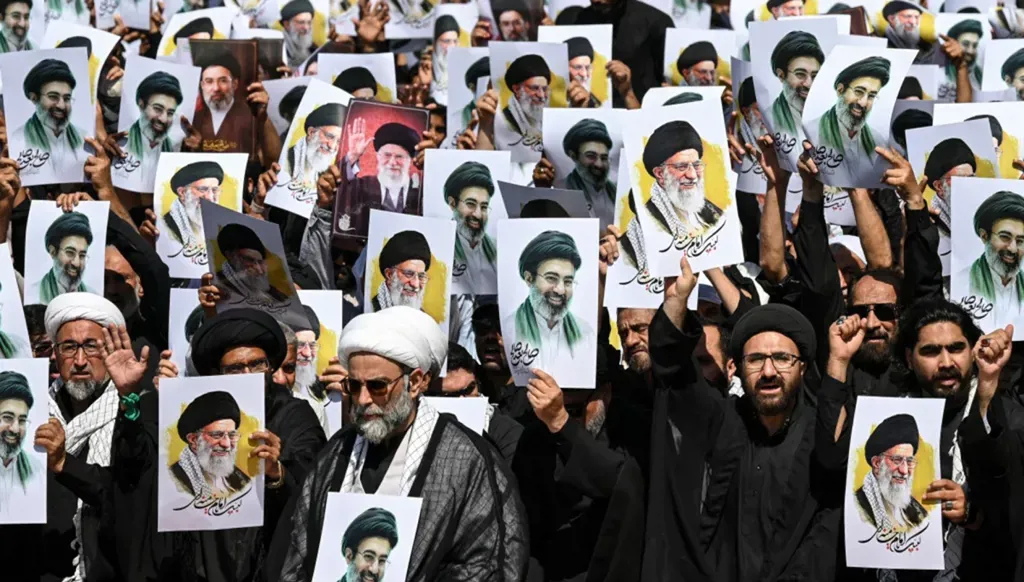


Since the outbreak of the American‑Israeli war on Iran over two weeks ago, political, military, and security leaders have been falling one after another in what resembles a focused attrition operation.
The first phase of what has been termed the “Leadership Decapitation Strategy” began with the downfall of Supreme Leader Ali Khamenei at the start of the military operations in his country. It continued on Tuesday with Israel’s announcement, via Defense Minister Yisrael Katz, that Ali Larijani, Secretary of Iran’s Supreme National Security Council, was killed in an Israeli airstrike, along with Gholamreza Soleimani, Commander of the Basij forces, a branch of the Revolutionary Guards.
With Iran’s official confirmation of Larijani and Soleimani’s deaths, Israel’s prior announcement once again suggests that there is no smoke without fire, underscoring the reach of Israeli intelligence within Iran and its penetration of the governing system. Combined with its military capabilities and a relentless media campaign, this gives the impression that the war is being waged not only in the skies and on the battlefield but also deep within Iran’s security apparatus.
During this brief period of war, the strikes also targeted Abdolrahim Mousavi, Chief of Staff of the Armed Forces; Azizi Nasirzadeh, Defense Minister; Mohammad Pakpour, Commander of the Revolutionary Guards’ Ground Forces; and Ali Shamkhani, Advisor to the Supreme Leader and one of the country’s top security decision-makers, along with dozens of other security officials.
The continuity of strikes and the targeting of leaders reveal that the ongoing confrontation goes beyond traditional military superiority, relying heavily on deep intelligence dominance, with the primary goal of dismantling the decision-making system of the “Islamic Republic.”
Mossad, the Israeli foreign intelligence agency, has for years built a complex operations network inside Iran, focusing on three main axes:
The regime boasts that Iran is a nursery for leaders, able to replenish any losses in the power hierarchy. But the question remains: for how long, especially after the United States and Israel have removed so many of them from the map of existence.
Producing these leaders does not happen overnight. The Supreme Leader has died and been succeeded by his son, Mojtaba Khamenei—a move that appeared aimed at preserving regime cohesion amid intense attack pressure. But the new leader had barely settled into his position when doubts arose about his ability to govern effectively.