

The rise of Mojtaba Khamenei and the future of power in Iran
Gulf states will deal with the coming Iran through deterrence, prevention, and building partnerships, because the experience of war has shown that the region’s security is not managed by promises but by the ability to stop a threat before it arrives.


 Messenger
 Whatsapp
 Threads
 Email
Email
 Print
Print
 X
X
 Facebook
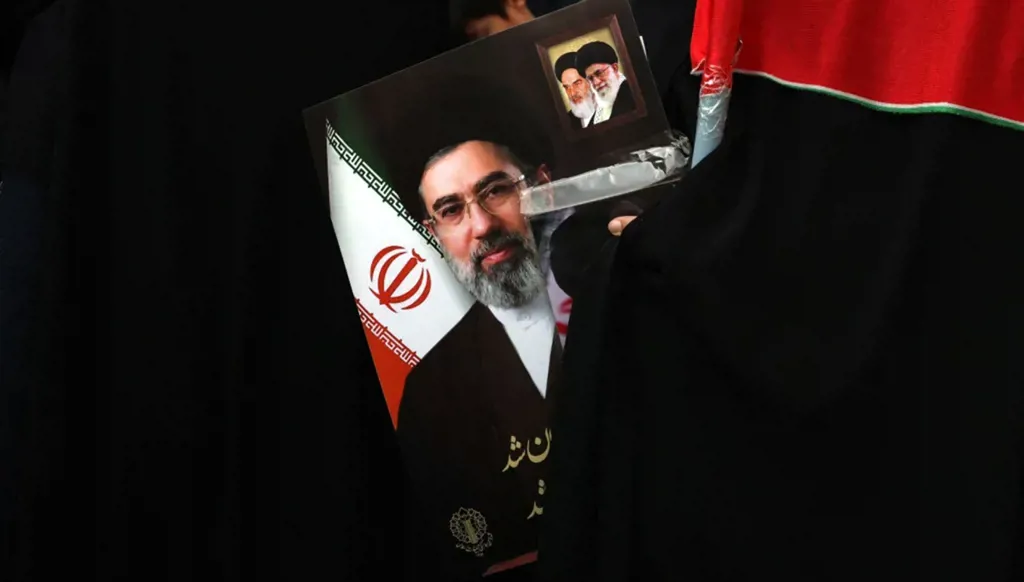


The killing of Ali Khamenei, the former Supreme Leader, did not bring down the regime, but it exposed the question of power within it. The American and Israeli strikes weakened military capabilities and command centers, but they have not yet produced an alternative or an organized transition. With the rise of Mojtaba Khamenei as the new Supreme Leader, the key question becomes who rules Iran and what kind of state is taking shape after the war.
The difference now is not in how the war is described, but in its objective. Israel believes that the survival of the Islamic Republic means the survival of an existential threat and therefore pushes toward breaking the regime or crippling it fundamentally. Washington, however, deals with Iran within broader global calculations and seeks specific results that can be announced quickly by striking what remains of the nuclear and missile capabilities and reducing Tehran’s ability to threaten shipping and energy.
The first path inside Iran is managed institutional cohesion. The state does not rest on a single person but on a network of institutions built since 1979 to ensure continuity and absorb shocks. In this path, the post Khamenei phase is handled through transitional arrangements and understandings within the ruling circles.
The second path is the rise of a broader security state. In this scenario, the Revolutionary Guard shifts from being a powerful partner to the real center of decision making, while the position of the Supreme Leader is used to provide political and religious cover and maintain cohesion among the regime’s supporters. Choosing Mojtaba Khamenei, as the son of the former Supreme Leader, gives the transition a clearly hereditary character within a system that originally rose against hereditary rule. But the impact of war pushes toward security and a tightening of control rather than political openness.
The third path is chaos and the fragmentation of control. Not because it is anyone’s preferred option, but because it is the most dangerous possibility if economic pressures combine with the weight of war. In that case, decentralization within the security apparatus could expand, and provinces far from the center such as Kurdistan, Baluchistan, and Khuzestan could become loose spaces contested by rival loyalties and weapons, with the emergence of local realities operating outside central decision making.
Mojtaba Khamenei enters the scene more as an emergency option in a time of war than as a traditional religious choice. He represents continuity used to rally the domestic base and send a message of defiance abroad, yet his image remains ambiguous. His public presence is limited, and his first speech sounded more like a carefully managed text than the voice of a leader openly taking charge. Continuing along a hard line raises the cost of targeting the regime, while moving toward compromise requires the backing of the Revolutionary Guard, which views the war as a tool to reorganize power and wealth before any settlement.
The Strait of Hormuz has become a direct pressure point in the calculations of the war. Iran may not close it, but it can partially disrupt navigation in ways that raise energy prices, increase insurance and shipping costs, and place the American decision under pressure from the markets. Alongside Hormuz, Kharg Island remains central in American calculations as the main artery of Iranian oil exports, a financial pressure point that could be used if the war drags on or if a political exit becomes difficult.
Iran’s blatant attacks on Gulf states and neighboring countries reflect an attempt to shift the cost of the conflict onto states that are not directly involved in it. The aim is not to change the balance of confrontation with Washington and Tel Aviv, but to raise the economic and political price for the region in order to push it to pressure for an end to the war. In practice, however, these actions undermine what remains of regional trust and push neighboring countries to accelerate joint defense and security arrangements, reinforcing the belief that Iran operates with the mindset of coercion rather than that of a state. Geography will not change, and neighboring countries will remain after the war ends. For that reason, the narrative of targeting bases rather than states will not be convincing when cities, civilian facilities, and vital infrastructure are the actual targets.
Iran after Khamenei faces two choices: either reposition itself as a normal state that reorganizes its priorities at home and reassesses its regional behavior, or move toward deeper security driven rigidity led by the authority of the Revolutionary Guard under the banner of protecting the regime. A ceasefire, if it happens, would stop the bleeding but would not resolve the question of power or the direction of the state. That decision will come only when Iran’s internal dynamics impose a viable governing formula, or when arrangements are imposed on the regime that restrict its ability to threaten neighboring countries, shipping, and energy.
Until then, the Gulf states will deal with the coming Iran through deterrence, prevention, and building partnerships, because the experience of war has shown that the region’s security is not managed by promises but by the ability to stop a threat before it arrives.
Emirati writer
Disclaimer: The opinions expressed by the writers are their own and do not necessarily represent the views of Annahar