

Iran vs. U.S.: Kharg Island and the oil gamble that could shake the world


 Messenger
 Whatsapp
 Threads
 Email
Email
 Print
Print
 X
X
 Facebook


Is the third week of the war going to be the decisive and final one? This is what the world hopes for, but it does not control the military or political decisions. The second week witnessed the most intense American strikes on Iran, aimed at pushing it to what the American president called the "point of defeat," as he still awaits and expects its surrender, even though the latest intelligence reports indicate that its regime is far from collapsing. Furthermore, its new Supreme Leader, in his first statement and without showing his face, vowed revenge and the closure of the Strait of Hormuz "as a leverage." He also addressed the "proxies" in Lebanon, Iraq, and Yemen, renewing reliance on them, while seemingly blessing the attacks directed against the neighboring Gulf states—days after the Iranian president offered them an "apology."
The war revealed what was already known, which Tehran used to cover up with superficial appearances: there is no authority except the Supreme Leader and the Islamic Revolutionary Guard Corps, who have now effectively become one entity.
Donald Trump made significant efforts to overshadow the "energy crisis" troubling the G7 countries and others east and west, but he had to acknowledge it after confirming that prices are steadily rising—an influential factor in American voters’ orientations. He attempted to downplay it by saying that "the rise in prices means lots of money for American producers." Trump did not demonstrate the special and exceptional concern expected for the losses and damages faced by allied and friendly countries in the Arabian Gulf, including the threat of attacks on water desalination plants, as it has become evident that Iran deliberately engages in a war against them to compensate for its inability to confront military and Israeli superiority.
All of the administration’s institutions in Washington and the concerned capitals knew that the president and his staff were discussing possible scenarios to stop the war—either because it had achieved most of its military objectives, or because Iran, anticipating worse, remained prepared for conflict, so its military responses had not faltered after the "decapitation" of its leadership. After the president said he would consult with Benjamin Netanyahu on ending the war and "involve him in drawing any settlement," it became clear that the hawks of the administration and the Israeli Prime Minister managed to postpone the decision to cease hostilities, as, like Trump, they were still seeking any means to overthrow the regime. Although the option of inciting minorities (armed) against the regime had been strongly considered since the end of the first week, it automatically dropped out of discussion following Trump's rejection—possibly as a tactic or mere postponement, since Washington had repeatedly indicated in previous years to these minorities, especially the nearly combat-ready Kurdish factions. Still, the lack of a plan for the "day after" revealed that they had not diligently worked on recruiting the Azeris, Balochs, and Ahvaz Arabs or preparing them for the mission.
Finally, Iran’s pivotal "weak point" was identified: oil, and only oil. Iranians intensified attacks on Gulf countries to pressure them into, in turn, pressuring Trump to halt the war. American media personality Tucker Carlson, the most candid at the moment, stated in one of his interventions that Iranian attacks "have harmed our friends in the Gulf countries, but they achieved Israel’s goal of inflicting damage and spreading chaos in these countries." Iran wielded the "weapon" of disrupting oil supplies to fabricate a global crisis for which America—Trump—bears responsibility, attacking tankers in or near Gulf ports and threatening to prevent a "single liter of oil" from passing through the Strait of Hormuz if the war does not stop.
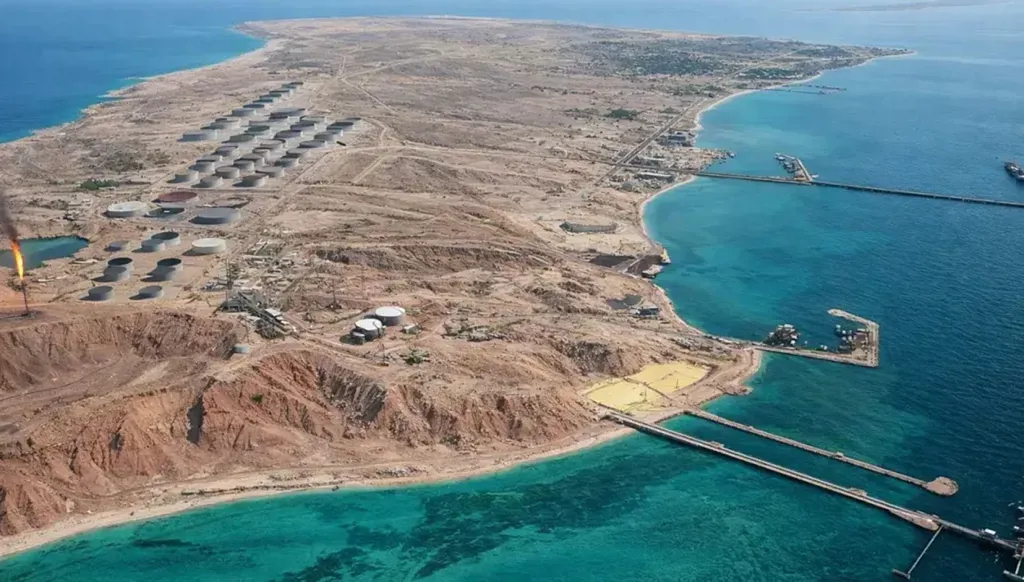
At the beginning of the third week, after striking military targets on Iran’s Kharg Island, the Trumpian exchange map became clear: safe passage of oil tankers and commercial ships through the Strait of Hormuz in exchange for refraining from destroying Kharg's infrastructure—Iran’s "oil crown jewel." This represented a clear threat that Tehran could neither downplay nor confront without risking "economic suicide," and it came after Iranian officials emphasized that they had informed regional mediators attempting to open a dialogue for a ceasefire, replying that "no ceasefire, no talks, and no agreement" would occur until the Americans and Israelis halted their attacks. Meanwhile, Trump adopted these three no’s and cut off contact with the mediators, and after banning Israel from attacking Iranian oil facilities, he might command U.S. forces to seize Kharg Island.
Before that, military sites on the island were attacked and may have been destroyed, as Trump himself announced, meaning Iranian presence is now limited to those managing the facilities. The Pentagon sent additional Marine forces to the region, reinforcing expectations that the plan includes a landing to control the island and provide protection for ships passing through the Strait of Hormuz. How can the Iranians respond to this strategic breach? Missiles and drones will be ineffective if Kharg is removed from their control, and they cannot impose their conditions for passage through the strait if American escorts accompany "unwanted" ships. Only negotiations remain—but will Tehran seek them?
Disclaimer: The opinions expressed by the writers are their own and do not necessarily represent the views of Annahar.