

Signs of fracture: Tehran’s security under siege


 Messenger
 Whatsapp
 Threads
 Email
Email
 Print
Print
 X
X
 Facebook
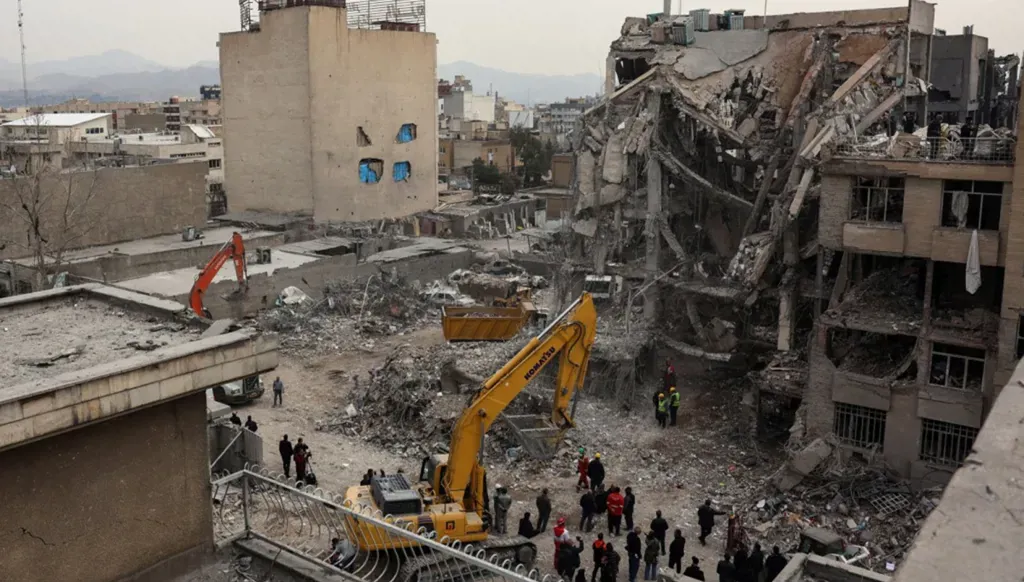


Despite the noise surrounding the Iranian missile attacks, it is clear that the precise U.S.-Israeli strikes have inflicted—and continue to inflict—significant losses on Iran’s military, security, and industrial hierarchy, which is beginning to show visible cracks.
Scenes emerging Wednesday night from the heart of Tehran and its streets suggest that the regime’s grip on major cities is starting to weaken, particularly in the capital, Tehran, where such weakness carries symbolic significance and could spread like wildfire to other major cities and the 31 provinces of the “Iranian mosaic.”
The scenes we are referring to involve drones—reportedly Israeli—flying over neighborhoods and streets in the capital, targeting Basij checkpoints, barriers, and security forces deployed throughout the city to suppress any potential street movement by citizens against the regime.
This boldness from the Israelis would not have occurred if the regime’s security grip had not weakened to the point that the skies over the capital are open to low-flying drones operating in the streets and neighborhoods and engaging the regime’s security forces. This suggests that decisive control in the air is beginning to extend to the ground, creating conditions that could facilitate the Iranian people taking to the streets.
Moreover, the drones mentioned are not the large ones used in strategic military contexts. They are medium-sized drones that take off from the outskirts of the capital and return freely to their launch points. Moving during the night, these drones may, over time and through repeated engagements with Basij forces in the city, gain fire control over the streets—offering citizens a golden opportunity to take to the streets themselves, on the basis that the regime’s downfall will not come solely through an aerial military campaign, as the decisive card for regime change ultimately lies in their own hands.
Of course, we cannot assert that this scenario will unfold. Yet we believe that the deployment of American and Israeli commando forces on the ground reflects a serious decision that the war will not be limited to achieving the initially stated goals, such as destroying the nuclear and ballistic missile programs and undermining regional proxies.
The carefully selected strategic targets and strikes speak for themselves: they point to a gradual effort to overthrow the regime by dismantling its military, security, technological, and dual-use industrial capabilities (civilian–military).
Information has begun to emerge from inside the country, painting a surreal picture of clashes in some areas between groups from the regular army and others from the Basij, reflecting the growing tension between members of two security institutions. This tension has intensified as confidence declines that the regime will emerge safely from the current war.
A regime that allows its supreme leader to be killed without publicly announcing a successor signals that it is in a serious dilemma and that succession is uncertain and unstable—something that could suddenly collapse, just as happened with its predecessor. This sends a negative message first and foremost to its supporters before its opponents. It encourages opponents to return to the streets to challenge the regime, while demoralizing supporters and those tied to the network of interests managed by the regime.
Returning to the statements of President Donald Trump, which many complain appear contradictory and conflicting, it can be said that his positions have not, to date, deviated from the ultimate goal he returns to from time to time: the fate of the Iranian regime, which is being dismantled from one end of the country to the other.
In this context, the figure of the new supreme leader, Mojtaba Khamenei, emerges. Observers largely agree that his elevation reflects a decision shaped by the Revolutionary Guards, presenting him as someone who combines the legitimacy of blood and family with the alliance between the hardline religious establishment and the Revolutionary Guards institution, which currently holds decisive power in the country.