

After Khamenei's Departure, Will the Clerical State Disappear?


 Messenger
 Whatsapp
 Threads
 Email
Email
 Print
Print
 X
X
 Facebook
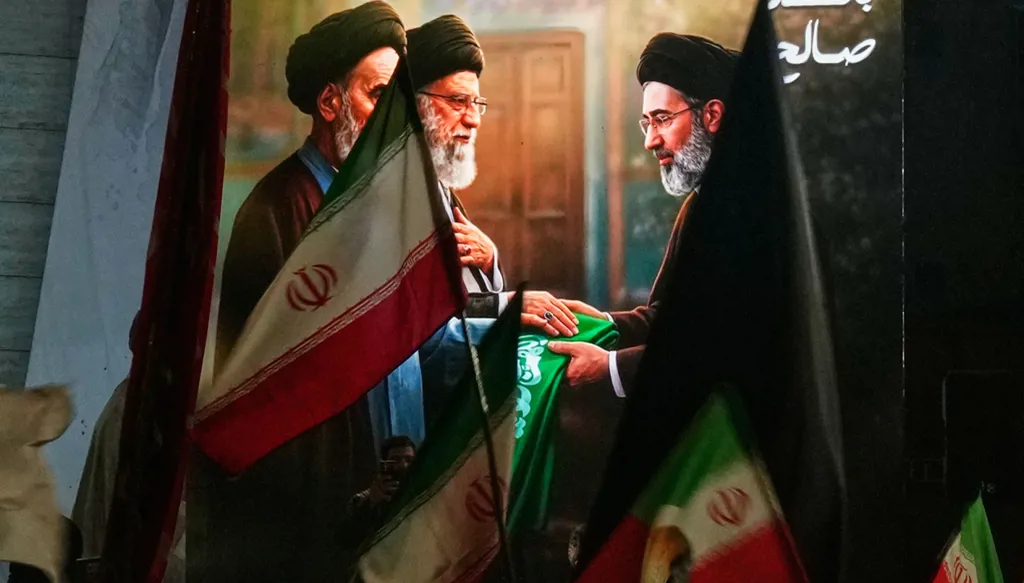


The era of Ali Khamenei has ended with his sudden and sharp, yet expected, assassination. The titles "Supreme Leader and Guide of the Revolution" are not government positions; although they represent a monopoly on dual authority, both religious and secular, they simultaneously reinforce the idea of continuing Khomeini's line, originally based on the principle of exporting the revolution. This means remaining in the so-called "Islamic resistance," through which Iran has sought to destabilize security and stability in the region, and through its militias that aimed to create chaos and breach the sovereignty of the countries where they operate, refusing to recognize their authority.
These are the main features of the Khamenei era, where the judgment of its disappearance derives its legitimacy from fundamental changes witnessed in the region since October 7, 2023, ending with Iran's failure in its recent nuclear negotiations with the United States, which failed in its second round. The decision for war had been prepared and announced, and Iran was previously aware of it.
A War Unlike Any Other
The fiery declarations exchanged between the parties involved in the current war before the direct clash are not as significant as the facts, which were sufficient to convince Iran's political leadership of the need to spare its people the ordeal of facing a comprehensive war this time, compared to the twelve-day war that took place in June 2025. That war was a theatrical rehearsal for any subsequent war. Were the Iranians unable to grasp that lesson? This can be said if we realize that they did not positively handle the shock of being expelled from Lebanon and Syria, prevailing instead with a desire to revisit their theoretical premises, which entangled them in creating their imaginary empire that turned out not to have the strength to defend its existence. The setback began in Gaza, then extended to Lebanon and Syria. All these pivotal events in the region's history passed by the Iranian political mind but left no trace from which the Iranian leadership could be guided to understand that its path had become blocked.
The Imam's Line Still Stands
Anyone unfamiliar with Iran's ruling mechanism might be shocked to hear that Khamenei was responsible for that deadlock. "Khamenei" here does not only refer to the person killed on the first day of the current war but represents the approach that the Iranian leadership blindly follows in their commitment to Imam Khomeini's line. If we look back at the struggle between moderates and hardliners for power during Iran’s successive presidential elections since 1979, we never heard even a subdued voice questioning the utility of continuing the expansion project, which is a map of spreading beyond borders. In Iran, both the doves and hawks agreed to continue down the path chosen by the Imam, which in political language can be called an ongoing war.
For more than forty-five years, Iran has spent enormous sums to nurture that loyal exterior not to be its cushion or backyard, but to construct through it its paradisiacal imagination.
Religious Misdirection Greater Than the Truth
The Khamenei era crafted a golden age for its expansion project when Iran received a reward from former U.S. President Barack Obama after the signing of the nuclear agreement in 2015. That convinced Iranians that their cunning was celebrated as a national trait and that they had maneuvered past danger without making concessions. Meanwhile, no one pointed to their reserves in the region, their areas of influence controlled through extensions they fortified with the principle of defending the sect. Even when those arms were severed, the Iranians didn't believe that the human bloc they succeeded in subjecting to their approach would abandon them, because they were confident that the scale of religious misdirection was greater than the average person's ability to reach the truth.
Iran thrived during the Khomeini era. If Khomeini were alive, he would have thanked Khamenei for his deeds and achievements. The emptied empire of its content was a Khomeini dream that, in the absence of Khamenei, it is difficult for Iran's political class to remain captive to. This will push them, as I expect, to abandon the religious metaphor symbolized by Khamenei. In order to preserve the state, the position of Supreme Leader and Guide of the Revolution will be redundant despite the hereditary implications. Time has run out, and any delayed Iranian option will be belated amid a war that the Israelis announced was launched to topple the regime.
And if we view the war from the American side, toppling the political regime in Iran is not a declared goal, but that does not mean the U.S. administration isn't considering an Iran stripped of the Supreme Leader and the religious guide's power. This means the war will not end until Iran removes the Khomeini cloak that cast its darkness upon it. Whether with the current ruling political system in Iran or another, the war will end, but the clerical state will disappear.