

How the Limits of American Power in the Middle East Were Exposed


 Messenger
 Whatsapp
 Threads
 Email
Email
 Print
Print
 X
X
 Facebook
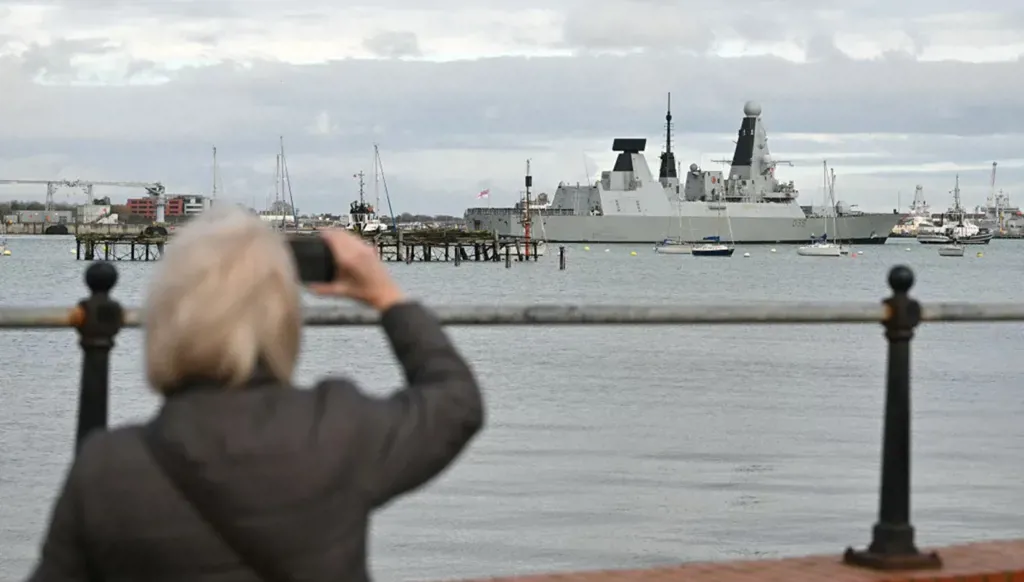


The recent war between the United States and Israel on one side and Iran on the other was not just another military confrontation in a region accustomed to conflicts. What happened was closer to a strategic revelation where many assumptions that governed the regional order in the Middle East for decades fell apart. Perhaps the old Egyptian saying sums up the scene precisely: "Those who rely on America are exposed."
This phrase is neither a political outburst nor a propaganda slogan but a description of a truth that has gradually unfolded over the past few years and reached its peak with this war. The confrontation revealed the limits of American power and the fragility of some regional deterrence concepts, as well as debunking the repeated talk about a "New Middle East," which does not necessarily mean a more stable Middle East, but perhaps one that is more exposed and complex.
Since the US invasion of Iraq in 2003, some decision-making circles in Washington have held the belief that military power can reshape the Middle East. The idea seemed simple on its face, to remove or severely weaken the antagonistic power center would automatically pave the way for a regional order more aligned with American interests.
This same logic was present in the latest war, when the American administration bet that the intense military strikes targeting the Iranian leadership and the military infrastructure of the state might lead to one of two outcomes: either the collapse of the regime under the pressure of war, or its transformation into an exhausted state engrossed in internal crises to the point of losing its ability to threaten the region.
However, this hypothesis ignores a fundamental truth in the Middle East’s structure. Iran is not merely a political regime that can be easily toppled and replaced, but a state with deep security and military institutions and a complex national fabric. Therefore, its collapse or severe weakening does not necessarily signify the end of the problem but may open the door to even bigger problems. The recent experiences in Iraq, Libya, and Afghanistan indicate that toppling regimes by military force does not necessarily lead to building a stable order, but may create a political vacuum where chaos becomes the new basis for conflict.
The most sensitive transformation revealed by the war relates to the future of the security system in the Gulf. Since the end of World War II, a clear formula was established: the United States provides security protection, and the Gulf states remain an essential part of the global energy system linked to the international economy. However, the recent war exposed a significant paradox. The American military bases, which are supposed to provide protection, have also turned into potential targets, meaning their presence could be a source of danger as much as a means of deterrence. This fact did not appear suddenly. Its features began to form since the attack on Saudi Aramco installations in 2019 when the heart of the global energy industry suffered a major blow without a direct American military response.
But the recent war made the question clearer: Does the United States protect the Gulf, or could its military presence make it a battleground?
This question reflects a profound shift in Gulf strategic thinking. In recent years, regional countries have started exploring new pathways to reduce the likelihood of direct confrontation with Iran, notably the Saudi-Iranian rapprochement renewed with Chinese mediation in 2023. This move was not just a passing diplomatic initiative but an expression of an increasing acknowledgment that complete reliance on an external security umbrella is no longer a sufficient guarantee for stability.
Iran did not enter this war expecting a conventional military victory over the United States or Israel. The military gap between the parties is clear, to increase the cost of the conflict to demonstrate that the US-led security regime in the region is not as strong as it appears.
As for Israel, its military superiority does not automatically translate into a stable regional system. The paradox is that weakening Iran may, in turn, increase Arab concerns about Israel itself if it appears to be the only virtually unchecked military power in the region. This means the war may not produce a new balance as much as create a new imbalance in the power equation.
The new map of the Middle East will not be based on a simple equation of "a weak Iran and a strong Israel." Rather, it will be based on a more complex equation, with Iran wounded but remaining, Israel dominant but concerning, and the Gulf rich but less confident in external protection umbrellas.
Among these three sides, the rest of the region's countries will navigate. Turkey will monitor the voids to expand its influence, and Egypt will hold on to the priority of preventing regional chaos and protecting trade and energy routes, while Iraq, Syria, Lebanon, and Yemen will remain arenas receiving the aftermath of the conflict more than contributing to it.
The impact of the war is not limited to the region alone, but extends to the international system. The more the United States gets embroiled in the Middle Eastern front, the wider the maneuvering space becomes for Russia and China in other arenas. Moscow sees it as an opportunity to ease the pressure on it in the Ukraine war, while Beijing watches the distribution of American power globally, looking for opportunities to enhance its influence. Thus, the regional conflict turns into an integral part of reshaping the international power balance.
Talking about a "New Middle East" requires considerable caution. The new here is not the birth of an alternative stable system but the decline of the validity of the old system. The absolute American deterrence system no longer appears as it once was, and the complete Gulf confidence in the external protection umbrella is no longer as it was before, and the assumption that military pressure on Iran alone can produce a more secure region seems less convincing today than ever.
What is forming now is a more fluid Middle East, with less stable alliances, less certain deterrence, a more shock-sensitive economy, and regional powers more inclined to test each other's limits. The recent war has not yet created a new Middle East, but it has dispelled many of the illusions of the old Middle East. And perhaps the most important lesson the region has learned from this confrontation is as simple as it is profound. True security cannot be fully imported from outside, and alliances may provide protection but cannot permanently replace building more stable regional balances.