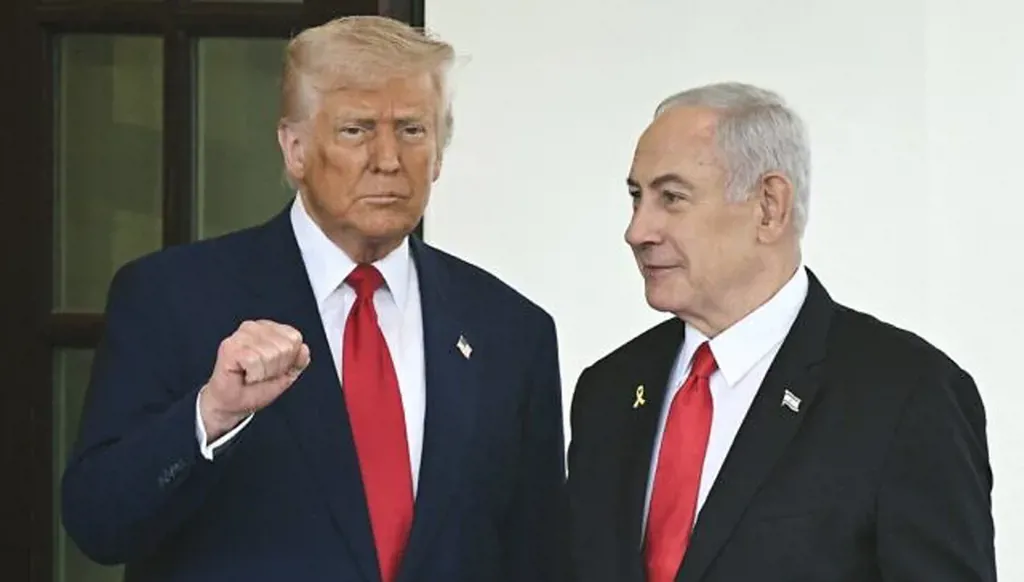
U.S. President Donald Trump and Israeli Prime Minister Benjamin Netanyahu are waging war on Iran while each faces elections they hope to win, because the outcomes could significantly shape their political legacies.
Trump faces midterm elections this coming November. According to a poll conducted by Reuters and the Ipsos Institute, only one in four Americans support strikes on Iran. The primary elections began last Tuesday in the swing states of Texas and North Carolina, which could determine who will control Congress in the fall.
Trump does not want a long or broad war. He is working to shorten its duration to avoid getting caught in another "forever war" in the Middle East, a type of conflict he has often sharply criticized in his predecessors.
This does not mean Trump does not relish using power; he often boasts that he rebuilt the U.S. military during his first term. He prefers quick strikes that create a dramatic image of himself as a president who achieves peace through strength. For example, 14 months into his second term, Trump ordered U.S. forces to strike Iranian nuclear reactors at Fordow, Natanz, and Isfahan on June 22 last year as part of Operation Midnight Hammer, and then announced a ceasefire two days later, claiming the attack had effectively “erased” Iran’s nuclear program. He also launched strikes against ISIS in Syria, Iraq, Somalia, and Nigeria. In January, Venezuelan President Nicolás Maduro was captured in Operation Absolute Resolve in Caracas, which lasted several hours, and Trump is now blockading Cuba.
Since February 28, Trump announced Operation Epic Fury, a joint U.S.–Israeli military campaign against Iran, saying the war could last four to five weeks with the aim of destroying Iran’s missile systems, nuclear‑related capabilities, and naval forces. He initially framed the goal as toppling the Iranian regime so that “Iranians could regain their freedom” for the first time since 1979.
However, Trump understands that becoming involved in a prolonged war would not benefit Republicans in the midterm elections, especially if Iran continues to close the Strait of Hormuz to oil tankers and carries out attacks on infrastructure in the Arabian Gulf countries. Such actions would drive global energy prices higher, including in the United States, even though America does not import oil from the Middle East.
Therefore, Iran seeks to expand the war and prolong it to draw America into a long conflict in the Middle East. Trump understands Iran's intentions, which is why he threatens harsher and more severe American strikes to force the Iranian regime to surrender.
If the war drags on, it is likely that Democrats will regain control of both houses of Congress, leaving Trump a "lame duck" during the remaining two years of his term.
For Netanyahu, the outcome of the war will play a major role in determining his political fate. Most polls since October 7, 2023, indicate that he is unlikely to win the elections, as a majority of Israelis blame him for the failure against Hamas on that day, and he also faces corruption accusations.
If the war ends with the fall of the Iranian regime, Netanyahu will portray it as a victory over the "existential threat" this regime posed to Israel, potentially boosting his support enough to secure his political survival and avoid accountability for the failures of October 7, 2023.
Considering all these factors, both Trump and Netanyahu have pinned great hopes on winning the war, aiming to achieve a strategic shift in the Middle East unprecedented in decades and to lay the foundation for new geopolitical balances.
Disclaimer: The opinions expressed by the writers are their own and do not necessarily represent the views of Annahar.



 Messenger
 Whatsapp
 Threads
 Email
Email
 Print
Print
 X
X
 Facebook