

Global political economy enters its most dangerous phase


 Messenger
 Whatsapp
 Threads
 Email
Email
 Print
Print
 X
X
 Facebook


When military confrontation erupts between major regional actors, markets do not wait for damage assessments. They price probabilities; they price escalation; and increasingly, they price fragmentation.
The recent escalation involving Israel, the United States, and Iran is not merely a security episode. It is a political-economic shock with three transmission channels: energy, finance, and geopolitical alignment. Each operates at a different speed. Together, they reshape risk perception globally.
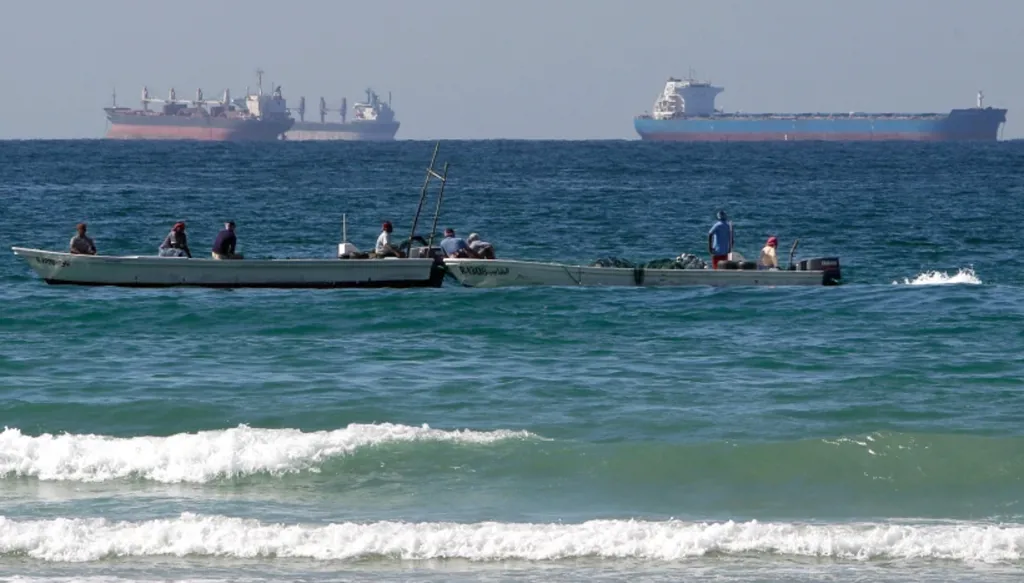
The first and most immediate transmission channel is no longer theoretical risk; it is energy disruption. Roughly one-fifth of globally traded oil and a significant share of liquefied natural gas flows transit through the Strait of Hormuz. With the strait now closed to maritime activity, the world is confronting not a probability premium, but a physical bottleneck in one of its most critical arteries. This distinction matters. Markets previously priced the possibility of interference. They are now pricing the fact of interruption layered with uncertainty about duration, retaliation, and regional spillover. The immediate consequence is a sharp spike in crude prices, widening volatility bands, and a surge in maritime insurance and freight costs. Tanker rerouting options are limited. Strategic petroleum reserves may cushion the blow temporarily, but they cannot replicate uninterrupted flow. Supply elasticity in the short run is structurally constrained.
Energy markets react to expectations, but when expectations become constraints, the macroeconomic transmission accelerates. Elevated oil prices feed directly into headline inflation and quickly filter into core inflation through transportation, manufacturing inputs, and food supply chains. The world had only begun to anticipate monetary easing cycles after prolonged tightening. A sustained energy shock complicates that trajectory. Central banks now face a renewed dilemma: tolerate inflationary persistence or risk tightening into geopolitical fragility.
The spill over into financial markets is immediate. Bond yields adjust upward as inflation expectations reprice. Yield curves may steepen if markets anticipate prolonged price pressures. Currency markets reallocate quickly: energy-importing economies face depreciation pressure, while commodity exporters gain temporary support. Equity markets widen risk premiums, compressing valuations particularly in energy-intensive sectors such as aviation, transportation, and manufacturing. Defense and upstream energy stocks typically rally, reflecting both demand shifts and risk hedging.
But the deeper risk is structural. Energy is not simply another commodity; it is a foundational input across the entire production chain. When its price spikes, the shock is economy-wide. It alters corporate margins, sovereign fiscal balances, and household purchasing power simultaneously. For emerging markets with current account vulnerabilities, the shock is amplified: higher import bills widen deficits, sovereign spreads expand, and external financing conditions tighten.
A prolonged closure also reshapes geopolitical risk pricing. Markets begin to ask whether the security of maritime chokepoints can still be treated as an implicit constant in the global economic model. If safe passage through critical corridors is no longer guaranteed, the global system must internalize higher baseline uncertainty. That translates into persistently elevated insurance costs, higher structural risk premium, and slower capital deployment.
The economic consequences, therefore, extend well beyond oil prices breaching symbolic thresholds. They penetrate monetary policy frameworks, sovereign debt sustainability metrics, trade balances, and global portfolio allocation strategies. An energy shock of this magnitude does not remain confined to commodity screens; it embeds itself in bond yields, currency spreads, equity risk premiums, and long-term growth projections.
But the burden is not distributed evenly. Developing economies, particularly those with mounting sovereign debt and fragile external balances, will absorb the shock disproportionately. Higher energy import bills widen current account deficits. Currency depreciation amplifies imported inflation. Rising global interest rates, driven by renewed inflation expectations, tighten refinancing conditions precisely when debt servicing costs are already elevated. For highly leveraged sovereigns, this is a compounding dynamic: higher oil prices strain fiscal accounts, weaker currencies inflate external debt burdens, and elevated global yields raise rollover risk. What may appear as a commodity shock in advanced economies can quickly evolve into a balance-of-payments and debt sustainability crisis in emerging markets.
In this sense, the energy disruption is not merely cyclical; it is potentially destabilizing for the most financially vulnerable states. The shock transmits through inflation, financing costs, and capital flows simultaneously, narrowing policy space at the very moment when resilience is most needed.
In short, this is not merely a price spike. It is a stress test for a global economy that had assumed energy transit security as a given. When geopolitics interrupts physical supply, macroeconomics adjusts swiftly and rarely painlessly.
The second channel runs through the financial system. The United States retains unparalleled leverage via the dollar clearing system and the sanctions machinery administered by the Office of Foreign Assets Control. Escalation reinforces the credibility of that enforcement regime in the short term: safe-haven flows move into U.S. Treasuries and the dollar appreciates. Yet this very leverage simultaneously incentivizes long-term alternatives. Coalitions such as BRICS have neither the cohesion nor the institutional depth to displace the dollar system tomorrow. But each episode of financial weaponization accelerates experimentation with local-currency trade settlement, gold accumulation, and parallel payment infrastructure. Paradoxically, the dollar strengthens precisely as the world debates how to hedge against it.
The third channel is geopolitical realignment. Higher oil prices benefit exporters in the short run but complicate the fiscal outlook for import-dependent economies in Europe and Asia. China, a significant purchaser of Iranian oil, faces a balancing act between energy security and strategic caution. Russia benefits indirectly from elevated energy prices and from the diffusion of Western strategic attention. Meanwhile, Gulf states must navigate between security alignment and regional stability. This is not a bipolar confrontation; it is a multi-layered recalibration.
Financial markets respond predictably in the early phase of such shocks. Gold rises as a hedge against both inflation and systemic risk. Defense stocks rally. Airline and transport equities fall. Emerging-market spreads widen. Insurance premiums increase. None of this requires sustained conflict; it requires uncertainty. And uncertainty is now abundant.
The deeper issue is not whether oil briefly spikes above a given price threshold. It is whether escalation normalizes a higher geopolitical risk premium across the global system. For the past three decades, globalization was priced as a baseline assumption. Supply chains were optimized for efficiency. Capital flowed toward yield. Sanctions were episodic. Today, geopolitics increasingly sets the floor for economic calculation. Trade fragmentation, sanctions layering, and security-driven industrial policy are no longer exceptions. They are structural features.
For fragile economies, this shift is particularly unforgiving. Countries with high external debt, import dependence, and weak monetary credibility face immediate pressure when global risk appetite contracts. Fuel bills rise. Sovereign spreads widen. Negotiations with the International Monetary Fund (IMF) become more complex. Remittance flows may fluctuate. Currency pegs become more expensive to defend. External shocks do not create structural weakness, but they expose it.
The world is not on the brink of economic collapse, but it is moving into a less predictable regime. Three forces now coexist: short-term market volatility, medium-term inflation persistence risk, and long-term systemic fragmentation. Each escalation event chips away at the assumption that trade and finance operate above geopolitics. They do not.
If confrontation remains contained, markets will eventually recalibrate. Energy risk premiums will narrow. Monetary policy will resume its pre-shock trajectory. But if escalation broadens through maritime disruption, sustained sanctions expansion, or regional spillover, the cost will not be measured only in oil prices. It will be reflected in permanently higher risk premiums, slower global growth, and accelerated financial fragmentation.
In the end, the missiles matter. But what matters more is how the global political economy internalizes them. Markets can absorb shocks. Systems struggle with sustained uncertainty. And uncertainty, once embedded into expectations, is costly to remove.
The next phase will not be decided on the battlefield alone. It will be determined by whether the world manages this escalation as a contained episode, or whether it becomes another brick in the wall of a more divided global order.
Written by Mohammad Ibrahim Fheili, Risk Strategist, Political & Monetary Economist, and Executive in Residence at the Suliman S. Olayan School of Business (OSB) at the American University of Beirut (AUB).