

Iran will change no matter what: Lessons from Ibn Khaldun


 Messenger
 Whatsapp
 Threads
 Email
Email
 Print
Print
 X
X
 Facebook


The ongoing transformations in Iran do not require a decisive climax.
It is enough for the incentives of governance to shift from within, for the old instruments of control to erode, and for questions of succession and legitimacy to mingle with the concerns of day to day administration.
Whether Tehran avoids a wide war through calculated concessions or slides into a prolonged confrontation with the United States and Israel, it faces structural pressures: a tense political economy, declining performance based legitimacy, and a ruling coalition in which vetoes are multiplying. This does not point to imminent collapse so much as it signals a transition from one phase to another.
Ibn Khaldun, the foremost theorist of the life cycle of states, reminds us that rule begins with group solidarity, and when a state exhausts its founding energy, it shifts from a unifying project into a machine for protecting privileges. In his words, injustice heralds the ruin of civilization. That ruin does not come suddenly. It begins with contraction: trust narrows, taxation expands, and the public sphere suffocates.
The Islamic Republic displays features of what might be called mature authoritarianism. After sectarian revolutionary narratives and promises of resistance and purity in governance, time has taken its toll. The revolutionary bureaucracy has turned into networks of patronage, and the center of gravity has shifted from exporting the revolution to protecting the centers of power. Ideology has become a tool for sorting loyalty and justifying repression more than a promise of salvation or a transformative social project.
At the same time, a clearer security and economic cartel has risen within the system: semi-governmental institutions, monopolistic state capitalism, and commercial interests managed according to a logic of quotas rather than a logic of the market.
In such a structure, the social contract falls into tatters. The system is no longer capable of delivering, either domestically or externally. Decision making centers multiply, and the preferences of key actors diverge: security officials who see hardline policies as a guarantee, ideological extremists who despise compromise, economic monopolists who fear reforms that would threaten their rents, and religious networks whose legitimacy depends on the continuation of a state of exception.
This explains the pattern of Iranian fluctuation: tactical flexibility followed by retreat, talks followed by a wave of escalation, moderate language followed by ideological tightening. This is not random behavior but a balancing strategy within a fragmented authoritarian coalition trying to survive under enormous pressure.
The economy accelerates this transition. Inflation, currency depreciation, and the friction of sanctions strain the implicit social contract, especially among business groups that historically played the role of cautious intermediaries between state and society.
In authoritarian systems, numbers become instruments of rule. When the state can provide a minimum level of predictability, many accept quiet adaptation. When rules erode and greed expands, the economy turns into a field of hedging: capital flight, expansion of informal markets, intermittent strikes, or low intensity resistance.
As Ibn Khaldun wrote, rule rests on soldiers, soldiers on money, money on taxation, taxation on development, and development on justice. If the link of justice breaks, the entire chain unravels, and wealth becomes spoils rather than revenue.
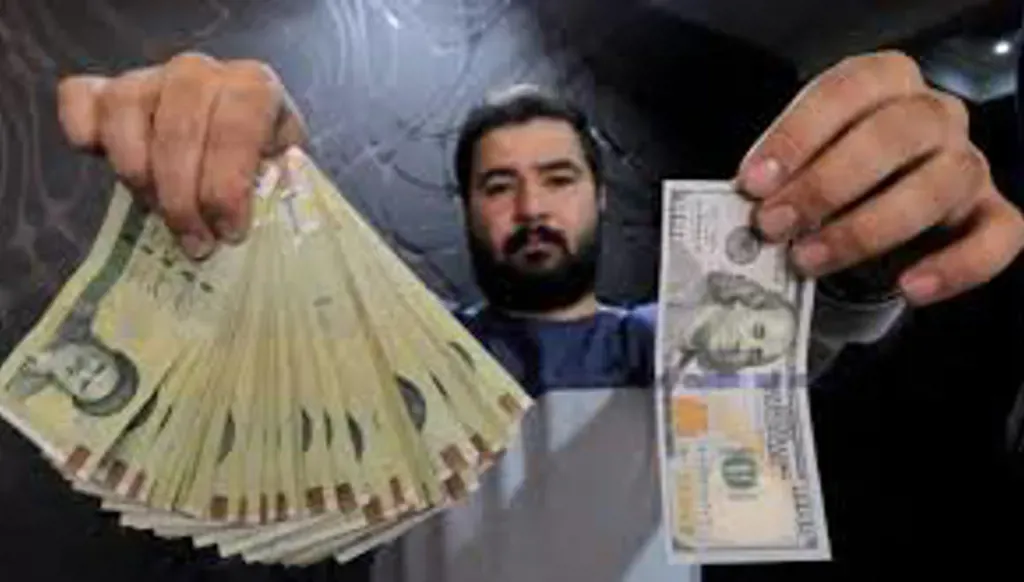
In recent years, inflation rates have hovered between 30 and 50 percent, eroding wages faster than households can adjust, and the rial has lost more than nine tenths of its value since the re tightening of sanctions in 2018.
The numbers reveal the limits of the so-called resistance economy. The rent generated from roughly one and a half million barrels of oil per day is not enough to close the investment gap needed to stabilize the labor market. Official unemployment hovers around 8 to 10 percent, while youth unemployment continues to trouble decision makers. As a result, the relationship of tolerance in exchange for compliance with the bazaar collapses into a daily bargaining process: a merchant shields himself through speculation, an industrialist shifts toward imports, and an investor remains constrained by uncertainty. When taxation expands and rules become unstable, development contracts before its ruin is openly declared.
Internal and external security shocks then further undermine the legitimacy of deterrence. Grand narratives of resistance, strategic depth, and the promise that sacrifice protects the nation begin to erode. Losses accumulate, and the shock of the 12 day war accelerated cracks in defensive efficiency and resilience. Conflict within the system crystallizes between harsher escalation to regain deterrence or pragmatic bargaining to avoid disintegration, making the external threat a contest over internal legitimacy.
At the same time, the question of succession to Ali Khamenei intersects with present transformations. Succession is not merely about names but redistributing authority, privileges, and immunities, which deepens uncertainty and weakens the ability to forge internal bargains within the ruling system.
In such a climate, the bazaar hedges through alternative networks, the bureaucracy tightens its grip over institutions, and external pressure raises the stakes of the game.
Internationally, Iran negotiates while burdened by a dilemma of mutual suspicion and commitment between the parties. A clean agreement becomes difficult even when both sides prefer it to war. In the absence of credible enforcement guarantees, strategies drift toward confrontation: coercion to prevent cheating and resistance to prevent exploitation. The outcome is not a single game but a series of repeated games that reshape Iran’s internal order. Resources shift toward security agencies, emergency governance expands, and the economy is reorganized around resilience and sanctions evasion. Even if war does not occur, the mere expectation of it is enough to deepen the militarization of the political economy.
The trajectory diverges at two major points. The path of accommodation and concessions opens the door to internal transformation—not promising democracy, but a rebalancing within the ruling coalition: greater space for technocrats and pragmatists, and a subdued defensive ideological discourse that narrows the scope of “exporting the revolution.”
This path buys time to manage succession and ease tensions, but it deepens contradictions.
The path of prolonged war, on the other hand, unfolds under fire and hardened elites, where revenge becomes a tool for preserving reputation and the revolutionary narrative, and war drains infrastructure and fuels resentment. A trap of mutual escalation emerges: to avoid appearing weak, each side makes compromise increasingly difficult.
The regime may temporarily succeed in rallying support “around the flag,” but war also exposes governance failures and amplifies grievances. This trajectory tends to shift the system from authoritarian stability toward contested stability: extended emergencies, rising nominal values in the economy, mutual blame, and harsh competition both within and outside the centers of power.
Iran stands between two possibilities for transformation.
If the regime restores stable economic balance, navigates succession smoothly without fracturing the coalition, and rebuilds deterrence without internal cost, the Iranian system would enter an era of deep internal transformation.
If, however, economic monopolies deepen under the control of security networks, the discourse shifts away from the “message of the revolution,” and recurring business sector disruptions accompany currency shocks, Iran will face a far more difficult path of transformation.
Iran is therefore not at a single crossroads but entering a new era in which the old balance is unraveling.
The question remains: Will transformation in Iran be managed in a way that preserves development, or will expanding taxation and greed turn collapse into an outcome rather than a choice?
Disclaimer: The opinions expressed by the writers are their own and do not necessarily represent the views of Annahar.